Christmas Laser-Cut Greeting Cards: Bulk Order Specifications & Pre-Shipment Quality Checks

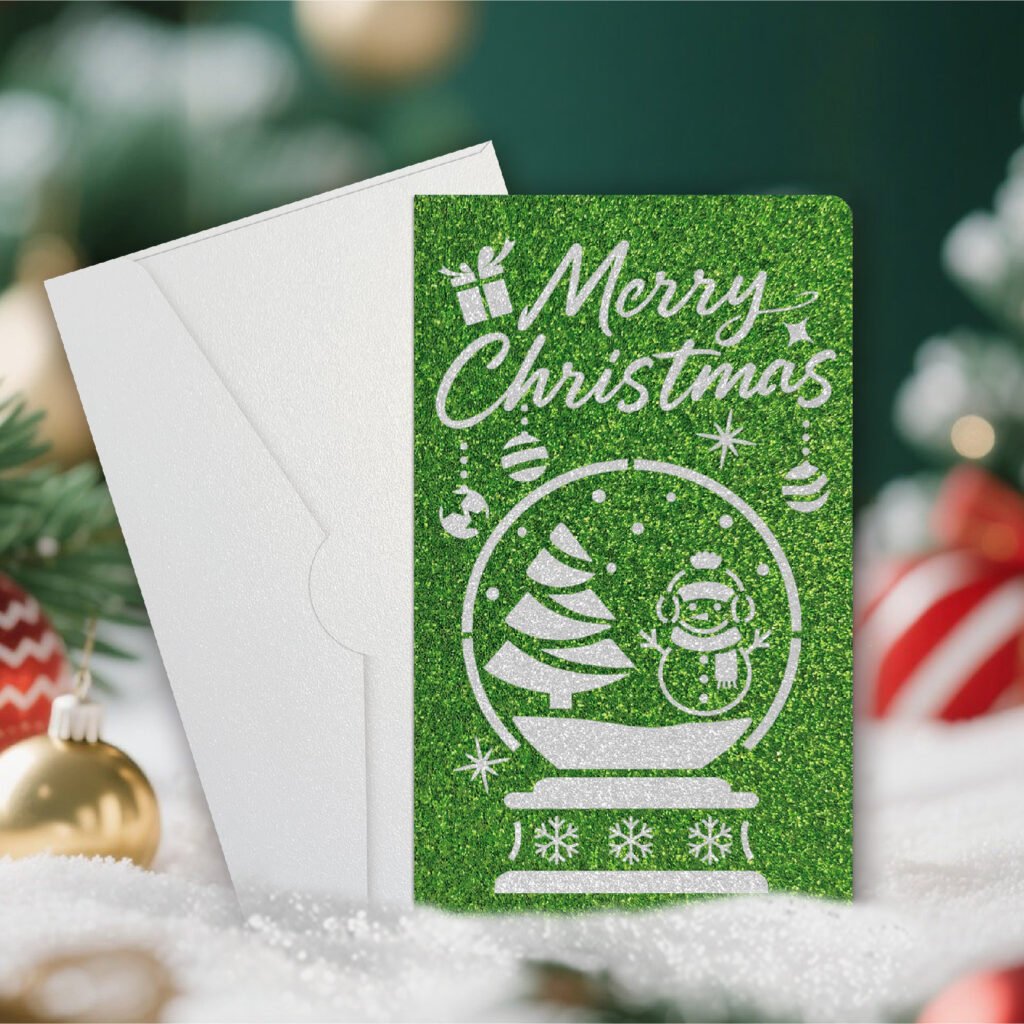
Christmas laser-cut greeting cards can look impressive in a digital file or approved sample, but bulk production introduces practical risks[1]. Fine cut lines may break, folded layers may shift, and small defects may become expensive after packing. I recommend turning every visual request into a measurable specification before production and using a shipment-wide inspection plan before approval.
Christmas laser-cut greeting cards should be approved for bulk production only after the buyer and supplier confirm the finished size, paper construction, folding method, cut-detail limits, artwork file, packaging, and inspection criteria[2]. Pre-shipment checks should sample cartons from different production areas and look for incomplete cuts, broken connections, rough edges, scorch marks, stains, deformation, and inconsistent assembly.
Quick Answer
- Confirm the finished dimensions, folded size, paper weight, number of layers, folding direction, and envelope requirements before quotation approval.
- Convert phrases such as “make the cutout more delicate” into measurable artwork and production instructions.
- Treat the approved sample as a reference standard, not proof that every bulk unit will match it.
- Check Christmas laser-cut greeting cards from multiple cartons, batches, or production periods before shipment release.
- Separate critical defects, major appearance defects, and minor cosmetic variation in the purchase specification.
- Ask the supplier to document packing quantities, carton marks, inner protection, and the agreed corrective-action process.
The sections below explain how I would structure the specification and inspection discussion with a factory or OEM/ODM partner. The goal is not to make every design maximally delicate. The goal is to select details that remain attractive, complete, packable, and commercially reliable.
What Should Christmas Laser-Cut Greeting Cards: Bulk Order Specifications Include?
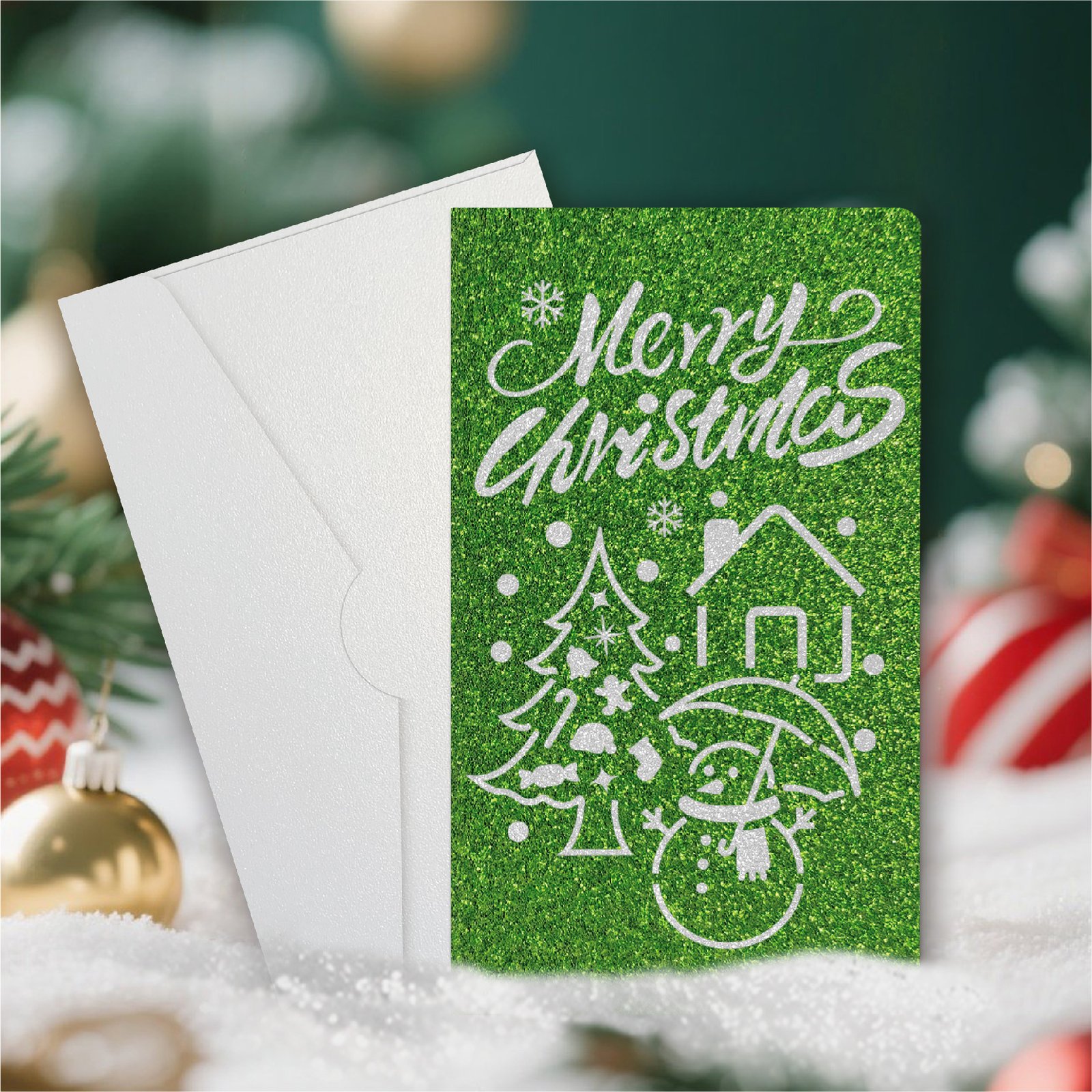
A vague request can create a clear commercial problem. A buyer may ask for a “premium layered card with very fine snowflake details,” while the supplier interprets the request through production capability, available paper, laser settings, and packing limitations. I recommend creating one written specification sheet that both sides can review before sampling.
Christmas laser-cut greeting cards need a specification covering the finished format, materials, artwork, cut structure, folding, accessories, packaging, and acceptance criteria. The supplier quotation should refer to the same version of the specification, artwork file, and approved sample. This reduces disagreement when the buyer evaluates the bulk goods.
Start with the finished format
- Open size and folded size
- Portrait or landscape orientation
- Fold position and number of folds
- Front, back, and inside-page artwork
- Whether the design is flat, layered, pop-up, or partially assembled
- Envelope size and fit
- Greeting message and language versions
- Quantity per design and total order quantity
- Retail packaging requirements
- Carton quantity and shipping marks
The folded size matters because it affects the envelope, retail display, carton cube, and freight calculation.[3] A design that looks suitable on a large screen may become crowded after folding or may not fit the intended envelope without pressure on the cut layers.
Specify the paper construction
A layered card may combine a printed cover, laser-cut decorative layer, backing sheet, and message insert. Each layer can behave differently during cutting, folding, gluing, and packing. The specification should therefore list the construction by component.
| Component | Questions to confirm | Commercial reason |
|---|---|---|
| Cover sheet | What paper or board is used? Is it coated, uncoated, textured, or metallic? | Surface affects print appearance and laser marks |
| Cut layer | What stock carries the detailed pattern? | Thin details may lose strength during cutting |
| Backing layer | Is a contrasting color or support sheet included? | It affects visual contrast and rigidity |
| Insert | Is a separate message sheet required? | It adds assembly and packing steps |
| Envelope | What size, color, and paper type are required? | The card must fit without bending or friction |
If the buyer requires a particular recycled content claim, paper origin, or destination-market documentation, I recommend listing the requirement separately and asking for supporting documents. I would not treat a verbal material description as sufficient evidence.
Define the artwork and cut structure
The artwork package should include the editable source file when appropriate, a production-ready vector file, a visual PDF, and a marked proof showing cut lines, crease lines, print areas, and glue areas. The final file name and revision should appear on the purchase documentation.
- Minimum detail areas that must remain open
- Lines that must remain connected
- Decorative pieces that must not detach
- Fold or crease lines
- No-cut zones near edges and folds
- Areas where laser marks are unacceptable
- Direction of grain or texture, if relevant
- Front-facing and reverse-facing surfaces
- Required color references for printed areas
I would ask the supplier to return a production drawing or annotated proof rather than accepting a simple “file received” message. This step gives both sides a chance to identify a fragile bridge, crowded pattern, or confusing layer before sampling.
Put commercial information beside technical information
- Quantity by design
- Assortment ratio
- Target packing method
- Required individual barcode or label
- Retail price-ticket position
- Carton labeling
- Delivery window
- Inspection timing
- Approved sample reference
- Procedure for nonconforming goods
How Can Buyers Turn a Beautiful Design into a Manufacturable Card?
A beautiful design can still be a weak bulk-order design if its smallest cut elements are unsupported or difficult to protect.[5] Buyers often focus on the front visual while suppliers must also consider cutting stability, waste, handling, glue, folding, and packing. The safest approach is to evaluate each decorative feature as both an image and a physical structure.
A manufacturable Christmas laser-cut greeting card has a clear visual hierarchy, enough structural support, and a production method that can be repeated. I recommend reviewing the design at actual size, not only at enlarged artwork scale.[6] I also recommend asking the supplier to identify high-risk details before the sample is approved.
Examine the weakest parts first
- Very narrow snowflake branches
- Thin reindeer antlers
- Small stars connected by fine bridges
- Long unsupported lines
- Tight lettering
- Repeated windows or miniature ornaments
- Cutouts close to a fold
- Large open areas surrounded by narrow borders
Separate visual delicacy from physical fragility
- Two-layer color contrast
- A shadow layer
- Printed background color
- Metallic or textured paper
- Controlled spacing between repeated motifs
- A larger central silhouette with smaller surrounding details
| Design approach | Visual effect | Main production concern | When I would consider it |
|---|---|---|---|
| Very fine single-layer cut | Elegant and light | Broken details and handling damage | Small runs after careful sampling |
| Layered cut design | Strong depth and contrast | Alignment and glue control | Premium seasonal collections |
| Printed background with cut overlay | Clear motif and efficient contrast | Print-to-cut registration | Larger wholesale programmes |
| Bold silhouette cut | Strong retail visibility | Less intricate appearance | High-volume or rougher handling |
| Pop-up or dimensional insert | Strong presentation value | Folding, assembly, and packing | Gift-focused assortments |
These are not universal production rules. The suitable choice depends on the specific paper, artwork, equipment, operator process, and packing method. I would ask for a physical sample whenever a buyer considers a high-detail design for a significant order.
Use a sample review checklist
- Can workers count and pack it without frequent damage?
- Does the card resist normal opening and closing?
- Does the envelope cause pressure on the cut areas?
- Does the product need special protective interleaving?
Which Material and Finishing Choices Affect Bulk Reliability?
Paper selection affects more than color and tactile appeal.[7] It influences cutting behavior, fold quality, stiffness, surface marking, glue performance, and the ability to protect the card during export packing. A buyer should compare materials as part of the total commercial solution rather than choosing the most decorative stock automatically.
For Christmas laser-cut greeting cards, the best material is the one that supports the required appearance while remaining stable through cutting, assembly, packing, transport, and retail handling. I recommend asking for material samples and checking the complete finished construction rather than judging an uncut paper swatch alone.
Compare common material decisions
| Choice | Possible benefit | Risk to investigate |
|---|---|---|
| Uncoated paper | Natural touch and easier writing | Fiber behavior, dust, and edge appearance |
| Coated paper | Smooth print and strong color | Surface marks or less natural writing experience |
| Textured stock | Premium tactile effect | Cut consistency and visual variation |
| Metallic paper | Strong festive impact | Reflection, scorch visibility, and print adhesion |
| Heavy board | Greater stiffness | Folding, cracking, and higher shipping weight |
| Thin layered stock | Fine visual detail and lower weight | Fragile bridges and deformation |
| Gloss or protective finish | More surface protection | Compatibility with cutting and writing |
The supplier should confirm which surfaces receive printing, coating, foil, embossing, or other treatments. A finish added before cutting may behave differently from a finish added afterward.[8] I would ask for a sample that represents the actual sequence planned for bulk production.
Pay attention to edge quality
Laser-cut edges may show slight darkening or a different texture from the surrounding paper.[4] The acceptable level depends on the paper, artwork, color, and position of the edge. A dark edge on a black or deep red design may be less visible than a dark edge on a white snowflake.
I would distinguish between an inherent process characteristic and a rejectable defect. The distinction should be agreed after viewing the production-representative sample. I would not promise a universal “mark-free” result without confirming the material and process.
Check finishing compatibility
- Foil may create a premium appearance but needs registration review.
- Embossing may improve tactile value but can distort nearby cut details.
- Glitter or raised coatings may affect folding and envelope friction.
- Adhesive layers may show through open cut areas.
- Printed gradients may make small color variation more visible.
- Double-sided printing may create alignment expectations between front and back.
For a seasonal wholesale programme, I would compare the visual gain against extra process steps. A simpler card with stable construction may produce fewer complaints than a highly decorated card that is difficult to assemble consistently.
How Should Buyers Inspect Christmas Laser-Cut Greeting Cards Before Shipment?
An attractive approved sample does not prove bulk consistency. The pre-shipment inspection should test whether the finished shipment matches the approved reference across cartons, production periods, designs, and packaging units. It should also separate defects that affect function from defects that affect appearance only.
Pre-shipment checks for Christmas laser-cut greeting cards should cover quantity, assortment, materials, artwork, cutting, folding, assembly, accessories, packaging, and carton condition. I recommend agreeing on the inspection method before production starts. Any formal sampling level, tolerance, or acceptance standard should be verified for the specific purchase rather than treated as a universal rule.
Build the inspection around risk
- Missed cuts
- Partially connected cuts that should be open
- Broken bridges that should remain connected
- Rough or visibly damaged edges
- Scorch marks in unacceptable areas
- Deformed layers
- Misaligned folds
- Loose or missing components
- Stains, fingerprints, glue marks, or dust
- Printing scratches or smears
- Incorrect foil or finish
- Color differences beyond the agreed reference
- Uneven layer alignment
- Wrinkling, bending, or warping
- Correct unit count
- Correct inner and master-carton packing
- Adequate separation or protection
- Correct carton marks
- Carton damage or moisture exposure
- Product movement inside cartons
- Barcode or label readability where required
Sample across cartons and production periods
Supplier-selected samples may show the best available units. A buyer or independent inspector should, when practical, select units from different cartons and locations. The exact number depends on the order, risk, destination, and agreed inspection plan.
- Carton numbers opened
- Quantity checked
- Designs checked
- Production or packing information available
- Defects found by category
- Photos of representative defects
- Count of rechecked or replaced units
This record is useful even when the shipment passes. It gives the buyer a common factual basis for release and helps identify whether a recurring issue is concentrated in one carton, one design, or one production period.
Use a defect classification
| Defect category | Example | Suggested commercial response |
|---|---|---|
| Critical or functional | Unsafe component, wrong product identity, or unusable card | Hold shipment and investigate immediately |
| Major | Broken decorative layer, severe misalignment, incorrect quantity, damaged packaging | Request correction, sorting, or agreed remedy |
| Minor | Small cosmetic variation that does not affect use or retail presentation | Record and assess against the approved standard |
The exact classification must be agreed by the buyer and supplier. I would not assign a formal acceptance number without a confirmed inspection plan. The important point is to avoid treating all defects as equal or allowing a supplier to dismiss a structural problem as a minor visual issue.
Test function, not just appearance
- Open and close a selection of cards.
- Confirm that layered elements remain attached.
- Place the card into the actual envelope.
- Remove it without snagging the cut details.
- Check whether the card stays acceptably flat.
- Review the card after repeated normal handling.
- Inspect whether glue joins separate under light handling.
- Confirm that retail packaging does not compress fragile areas.
These checks do not replace professional testing where a buyer has a specific safety, material, or regulatory requirement. They provide a practical procurement review and should be documented alongside the visual inspection.
What Packaging Details Protect Christmas Laser-Cut Greeting Cards in Transit?
Packaging can undo good production work. Fine cut layers may bend when cards move inside a carton, while heavy compression can create permanent marks or deformation. Seasonal products also have a narrow selling window, so discovering packing damage after arrival can create more than a replacement cost.
Packaging for Christmas laser-cut greeting cards should protect the product from movement, compression, moisture exposure, abrasion, and counting errors. I recommend approving the packed configuration as part of the production sample, especially when the card has raised, layered, or pop-up elements.
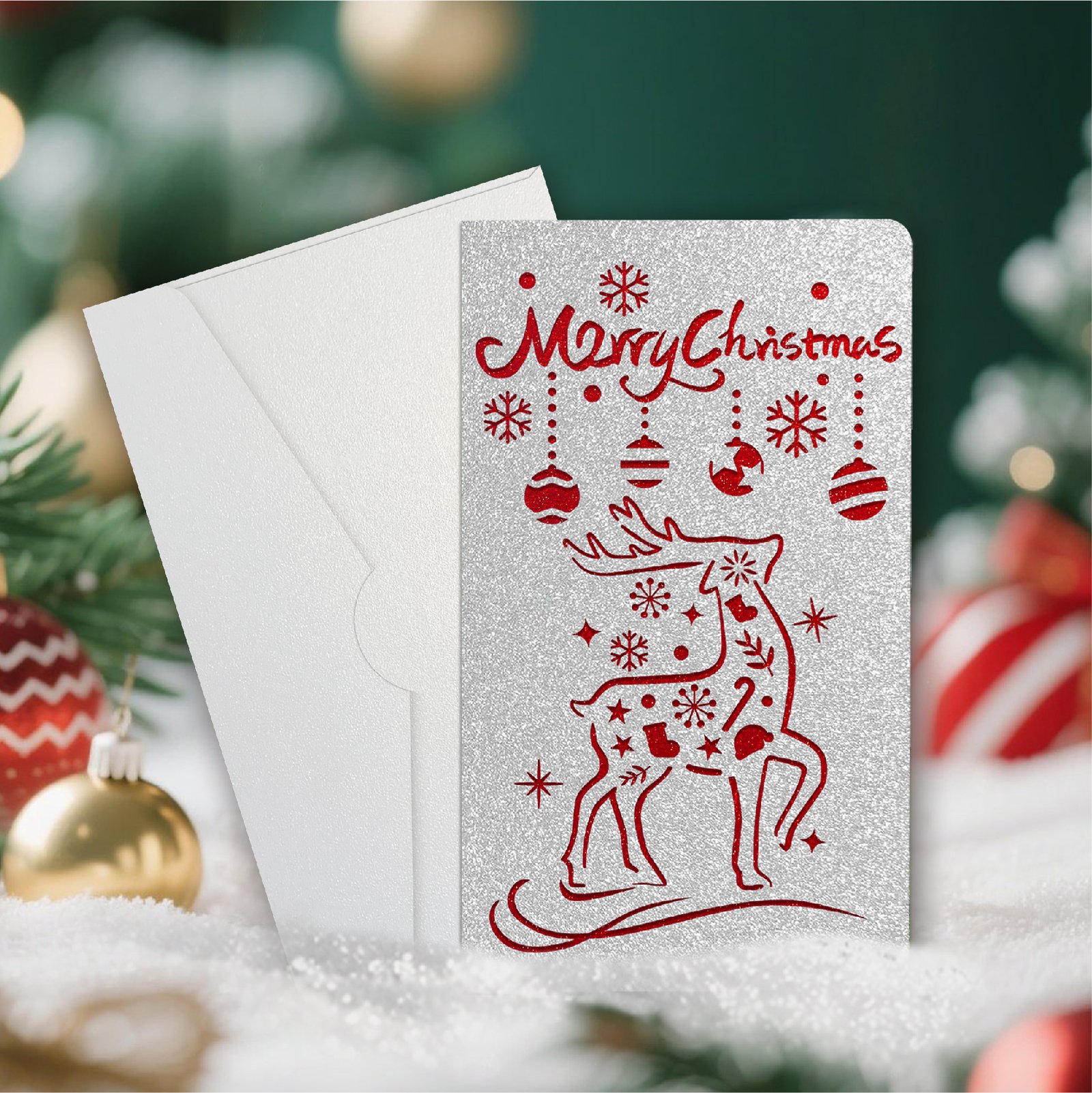
Review the unit and inner pack
| Packaging option | Advantage | Point to verify |
|---|---|---|
| Individual sleeve | Protects surface and keeps components together | Fit, plastic requirement, and compression |
| Paper band | Lower material use and clear presentation | Whether the card can slide or snag |
| Backing board | Adds stiffness | Extra weight and carton volume |
| Small retail box | Premium presentation | Internal movement and cost |
| Multi-unit inner pack | Efficient counting and packing | Separation between fragile cards |
I would check whether the envelope is packed with the card or separately. If it is inserted, the buyer should confirm that it does not press against a delicate cut area. If it is separate, the packing process must prevent assortment errors.
Confirm master-carton protection
- Inner-pack quantity
- Master-carton quantity
- Carton dimensions
- Gross and net weight, once confirmed
- Orientation marks if needed
- Moisture protection
- Corner and edge protection
- Carton label content
- Pallet or consolidation requirements
I would ask the supplier to show photographs of a packed carton before shipment. I would also compare the packed sample with the shipping plan. A carton that is too full may compress the cards, while a carton that is too loose may permit movement and edge damage.
Plan for consolidation
Many importers combine several seasonal products in one shipment. This creates additional coordination needs. Christmas cards may need to share space with envelopes, gift packaging, ornaments, party supplies, or other lightweight products. The loading plan should avoid placing heavy cartons on fragile card cartons.
- Carton dimensions and weights for each SKU.
- A proposed loading sequence.
- Identification of cartons that should remain upright.
- Confirmation of whether mixed cartons are permitted.
- Product and carton marks that match the packing list.
- A final carton-count reconciliation before dispatch.
These are practical export-documentation and consolidation recommendations. The correct method depends on the carrier, destination, packaging, and shipment arrangement, so I would confirm the final plan with the responsible logistics and compliance professionals.
How Should Buyers Compare Suppliers for Christmas Laser-Cut Greeting Cards?
Supplier selection should include more than unit price and catalogue appearance. A buyer needs to know whether the supplier can translate artwork into production instructions, communicate limitations early, control multiple layers, protect the product, and provide useful pre-shipment evidence.
For Christmas laser-cut greeting cards, I would compare suppliers on specification discipline, sampling transparency, production communication, quality control, customization capability, and export coordination. A supplier that identifies a fragile detail before production may create more value than one that accepts every request without discussing risk.
Ask for evidence of process, not unsupported promises
- How artwork revisions are recorded
- How cut lines and crease lines are separated
- How the approved sample is referenced during production
- How multiple designs are controlled
- How finished cards are counted
- How defects are sorted
- How packing damage is prevented
- How pre-shipment inspection is arranged
- Which documents can be provided for the destination market
A buyer should verify any certification, material declaration, test report, or compliance document directly and confirm that it applies to the actual product, material, and destination. I would not accept a general certificate as proof that every seasonal card meets a buyer’s requirements.
Use a supplier comparison table
| Evaluation area | Supplier A | Supplier B | Supplier C |
|---|---|---|---|
| Artwork revision control | |||
| Sample reflects final material | |||
| Cut-detail discussion | |||
| Layer and glue consistency | |||
| Packaging sample available | |||
| Multi-carton inspection support | |||
| Private-label packaging | |||
| Low-to-medium MOQ discussion | |||
| Consolidation capability | |||
| Destination documentation support |
This table does not create a universal supplier score. It gives the buyer a disciplined way to compare offers that may otherwise look similar. I would add a notes column for unresolved questions and a date column for each supplier response.
Consider the full seasonal programme
A buyer may need a coordinated collection rather than one card. A supplier with AI-assisted design and China supply-chain resources may help develop related patterns across Christmas cards, gift tags, tableware, packaging, ornaments, and promotional products. However, collection capability still requires specification control.
- A consistent color story
- Related motifs across product types
- Common packaging language
- Matching retail labels
- Assorted-carton planning
- Different quantities by design
- Private-label artwork
- Product consolidation for export
The commercial value lies in a complete, manageable programme. A supplier should not claim that every item will match perfectly unless the materials, finishes, and production processes support that expectation.
Frequently Asked Questions
Are Christmas laser-cut greeting cards suitable for large wholesale orders?
They can be suitable when the design, material, cutting process, assembly method, and packaging are confirmed before production. I would not judge suitability from appearance alone. The buyer should review a production-representative sample and agree on inspection criteria before placing a large order.
What is the most important specification for a laser-cut Christmas card?
The most important specification is the complete production reference, not one isolated measurement. It should identify finished size, paper construction, artwork version, cut and fold lines, structural connections, finishing, accessories, packaging, and acceptable defect categories.
Can a supplier guarantee that every fine cut detail will be identical?
A supplier should explain the expected production consistency and the controls used, but a buyer should avoid relying on an unsupported absolute guarantee. The buyer should define acceptable variation, inspect multiple cartons, and ask for corrective action when units fall outside the agreed reference.
Should buyers inspect every Christmas greeting card before shipment?
The appropriate inspection scope depends on order size, product risk, destination, inspection arrangement, and commercial terms. A documented sampling plan is often more practical than opening every unit, but fragile or high-value designs may justify additional checks. Any formal sampling level should be agreed and verified for the purchase.
What should a buyer do if bulk cards do not match the approved sample?
The buyer should record the difference with photos, quantities, carton references, and defect categories. The buyer should then compare the goods with the written specification and approved reference before requesting sorting, rework, replacement, price adjustment, or another remedy under the agreed purchase terms.
Conclusion
Successful Christmas laser-cut greeting cards require more than an attractive festive pattern. I recommend confirming the full construction, translating delicate details into production instructions, approving a representative sample, and inspecting goods from different cartons before shipment release. Buyers should also review packaging, documentation, and supplier communication as part of the same procurement decision. HKDayo can support wholesale, private-label, low-to-medium MOQ, packaging customization, and seasonal product consolidation discussions. Buyers can submit their requirements through the HKDayo request-a-quote page.
Sources
- Converting operations impact on tissue paper product properties", Research on manufacturing quality control supports the proposition that process variation can produce defects and inconsistency when production is scaled beyond a controlled prototype
- Use of quality assurance systems in the fastener industry", Quality-management guidance supports defining and communicating product requirements, approval criteria, and verification methods before production proceeds
- Packaging design, fill rate and road freight decarbonisation", Packaging-engineering literature explains that product dimensions affect package fit, packing density, carton volume, and transportation-space utilization
- Impact of the thermally induced focus shift on the quality of …", Studies of laser processing of cellulose-based materials report that thermal energy can alter the cut edge, including through discoloration and changes in edge morphology
- Optimization of Tensile Strength in the Paper Material Cutting …", Research on laser-cut thin-sheet structures indicates that feature geometry and narrow connecting elements influence structural integrity and resistance to handling damage
- Size Effects in Human Visual Inspection for Micro/Meso …", Human-factors research supports assessing visual details under representative viewing conditions, because enlargement can conceal legibility and spacing problems present at the intended physical scale
- Converting and its effects on barrier properties of coated …", Paper-engineering literature shows that sheet composition, basis weight, coating, and fiber structure affect stiffness, folding, surface behavior, and compatibility with converting operations
- Laser Cutting", Studies of laser processing on coated or treated paper substrates indicate that surface treatments can alter energy absorption and thermal behavior, making process sequence relevant to cut quality
Hi, I'm Danson. I work closely with our manufacturing partners to develop and deliver seasonal decorations, party supplies, and celebration products for international wholesale buyers. Here, I share practical product knowledge, customization insights, and manufacturing experience to help buyers build successful seasonal collections.
Have a wholesale project in mind? Let's talk!
Discuss Your Wholesale Project Request a Wholesale QuotePlanning a Wholesale Order from China?
Share your product requirements, quantities and destination. Let's discuss your wholesale requirements.