Christmas Party Tableware Wholesale: Building a Sell-Through Assortment for the Next Season

Christmas Party Tableware Wholesale can look like a simple price exercise, but a low unit cost does not remove inventory risk[1]. A buyer can still be left with disconnected colors, mismatched pack sizes, and products that are difficult to merchandise. I recommend evaluating the complete assortment first, then using supplier quotations to refine the commercial plan.
Quick Answer
- Build a coordinated collection, not a random group of inexpensive Christmas tableware items.
- Give every SKU a clear role: theme-setter, anchor product, complementary item, or limited supporting piece.
- Match the assortment to the buyer’s sales channel, customer, expected retail price, and merchandising space.
- Review colors, artwork, pack sizes, materials, packaging, and customization as one commercial system.
- Use sampling, documentation review, and supplier communication to reduce purchasing risk, without treating assortment logic as a guarantee of sales.
The strongest Christmas Party Tableware Wholesale plan combines a recognizable seasonal theme with practical anchor products, complementary items, and controlled SKU depth. Buyers should assess the collection against their channel, target price range, packaging needs, and expected order quantities before confirming customization or production. A coherent assortment can reduce inventory risk, but it cannot guarantee sell-through.[3]
A practical assortment usually begins with the way customers will shop the products. A gift store may need attractive boxed sets, while a party wholesaler may need flexible case quantities and easy-to-display individual packs.[2] The next sections explain how I would assess those differences before discussing final quantities with a supplier.
Christmas Party Tableware Wholesale: How Should a Sell-Through Assortment Be Structured
An assortment becomes difficult to sell when every SKU competes for attention without supporting the others. Buyers also create risk when they choose products one at a time from unrelated designs. I recommend assigning each item a commercial role before comparing quotations or approving a large sample range.
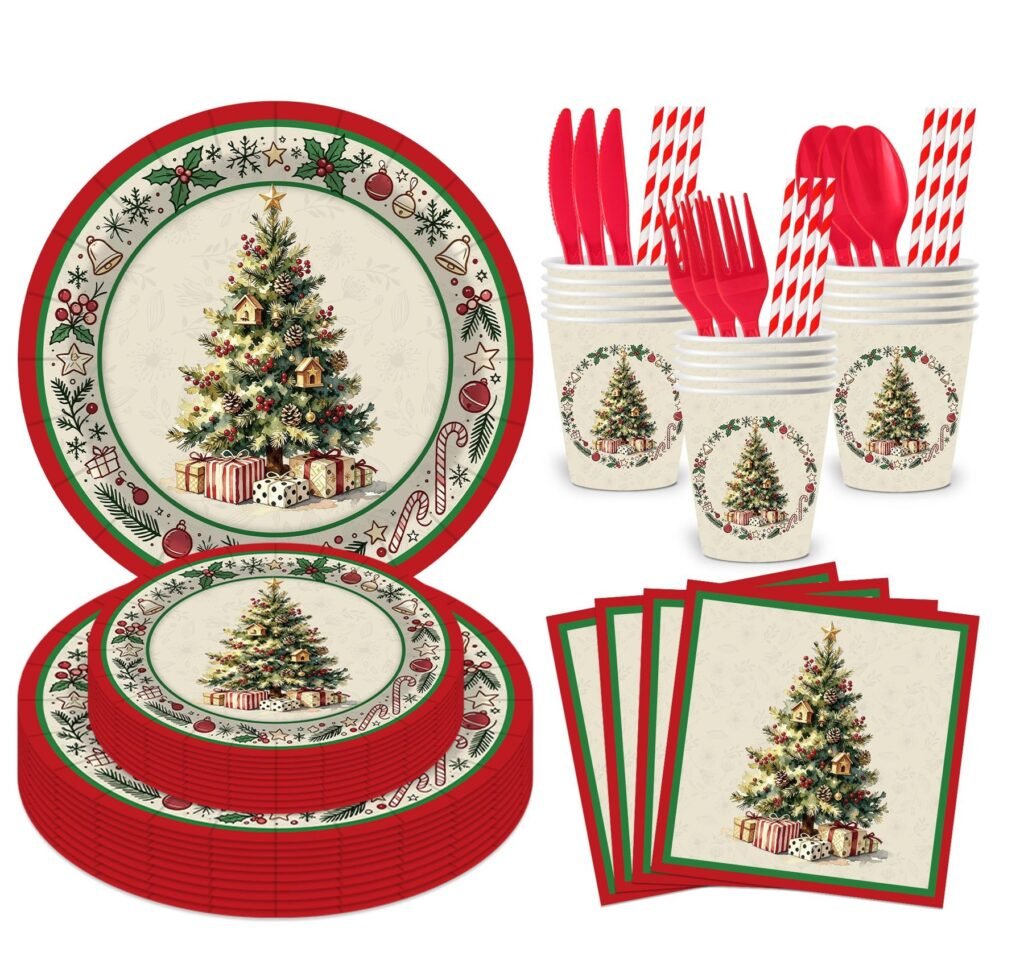
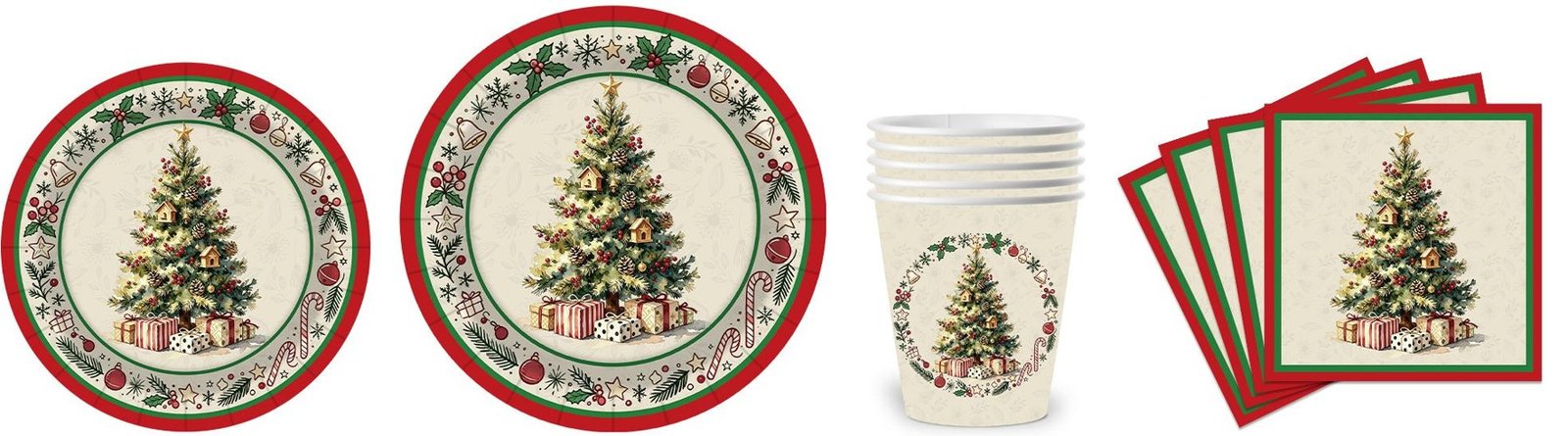
A useful Christmas Party Tableware Wholesale assortment normally includes one recognizable visual direction, several anchor products, complementary table-setting items, and a limited number of supporting SKUs. The collection should feel complete without becoming unnecessarily wide. Each item should support the same customer, occasion, price architecture, and merchandising plan.
Start with a collection idea
A collection idea does not need to be complicated. It may be based on a traditional red-and-green Christmas palette, a neutral winter look, playful characters, a premium metallic effect, or a family-oriented celebration theme. The important point is consistency.
- Visual direction: colors, illustration style, finish, and overall mood.
- Use occasion: family dinner, office party, children’s celebration, buffet, gift basket, or casual home gathering.
- Buyer channel: importer, party store, supermarket, e-commerce brand, or promotional distributor.
- Expected price position: value, mid-market, premium, or customized private label.
- Merchandising method: shelf display, hanging display, counter display, online bundle, or mixed case.
A product can be attractive by itself but unsuitable for the planned collection. For example, a highly decorative plate may not fit a value-focused party assortment if its packaging and cost make the final retail price too high. A simple napkin design may also underperform within a premium collection if its print quality or pack presentation looks noticeably weaker.
Assign clear SKU roles
| SKU role | Main purpose | Typical buyer question |
|---|---|---|
| Theme-setter | Establishes the collection’s visual identity | Will customers recognize the range quickly? |
| Anchor product | Creates the main reason to buy | Which item carries the strongest commercial importance? |
| Complementary item | Helps customers complete a table setting | Can this item be bought with the anchor product? |
| Supporting piece | Adds choice or solves a specific need | Does this SKU add useful variety without excessive depth? |
Anchor products may include coordinated plates, cups, napkins, table covers, serving pieces, or reusable decorations, depending on the category and buyer’s programme. The exact product mix should come from the sales channel rather than from a target SKU count.
Supporting pieces require particular discipline. A buyer may be tempted to add many variations because each item appears inexpensive. However, a low unit price does not automatically justify extra inventory. If several products serve the same function, the buyer should compare their visual distinction, pack size, expected margin, and display value.
Use “complete enough” as the test
- Can a shopper create a basic table setting from the range?
- Does the collection include a recognizable hero design?
- Are the pack sizes sensible for the intended customer?
- Do the supporting items create useful cross-selling opportunities?
- Would the buyer be comfortable displaying the products together?
- Can the supplier maintain consistent colors and artwork across the range?
- Is the number of SKUs realistic for the buyer’s forecast and warehouse capacity?
How Can Buyers Match Christmas Party Tableware Wholesale to Their Sales Channel?
A product range can work in one channel and struggle in another because shoppers have different expectations.[6] A distributor may need stable case packing and straightforward replenishment, while an online private-label brand may prioritize photography, branded packaging, and a clear bundle story. Buyers should set channel requirements before selecting the assortment.
Buyers can match Christmas Party Tableware Wholesale to a sales channel by comparing customer intent, display conditions, pack structure, price expectations, and order flexibility. The assortment should be designed for how products will be discovered and purchased, not only for how they look in a supplier catalogue.[7]
Compare channel requirements
| Sales channel | What usually matters most | Assortment implication |
|---|---|---|
| Importer or distributor | Consistent specifications, carton efficiency, dependable documentation | Use a focused collection with repeatable pack structures |
| Party store | Visual impact, easy display, accessible price points | Prioritize recognizable themes and shelf-ready packaging |
| Home décor retailer | Finish, coordination, presentation, seasonal style | Build a more polished collection with controlled color matching |
| Supermarket or general retail | Pack clarity, barcode process, retail readiness, commercial price | Limit complexity and confirm packaging requirements early |
| E-commerce brand | Images, branded packaging, bundle logic, dimensional shipping cost | Design products that photograph clearly and combine easily online |
| Promotional products company | Custom artwork, project timing, personalization process | Confirm artwork approvals, packaging, and production controls |
This table is a planning guide rather than a substitute for a buyer’s own channel data. A retailer may operate multiple channels, and a wholesaler may serve several customer groups with different needs. In that case, one master collection may need smaller sub-ranges.
Consider the target customer
- Approximate party size.
- Expected frequency of use.
- Preference for disposable, reusable, or mixed products.
- Need for coordinated serving and dining items.
- Sensitivity to packaging volume.
- Interest in personalization or private label.
- Likely purchase occasion and shopping deadline.
For example, a family-oriented collection may benefit from clear coordination across plates, cups, napkins, and table covers. A small premium collection may need fewer items but stronger packaging and finish consistency. An office-party range may require practical quantities and a design that feels festive without being overly childish.
Treat pack size as part of the product
- Units per retail pack.
- Retail packs per export carton.
- Carton dimensions and gross weight.
- Whether mixed cartons are possible.
- Whether the pack size supports the planned party size.
- Whether the packaging communicates quantity clearly.
- Whether the product can be displayed without opening the carton.
Packaging decisions can also influence the perceived value of the assortment.[4] A visually coordinated collection with inconsistent pack presentation may lose its connection at retail. Buyers should ask for packaging mock-ups or production samples where presentation is a major part of the offer.
Plan the range around the buyer’s calendar
Seasonal tableware is purchased well before the holiday.[5] Buyers should allow time for design selection, quotation, sampling, artwork approval, packaging review, production planning, inspection, export documentation, and delivery.[8] The exact schedule depends on customization, order structure, destination, and supplier capacity.
- The target selling season.
- The latest acceptable arrival window.
- The approval date for artwork and samples.
- The expected order release date.
- Any consolidation or split-shipment requirements.
- The documents required by the destination and buyer.
- The point at which changes may affect cost or timing.
How Should Buyers Evaluate Design Coherence and Product Roles?
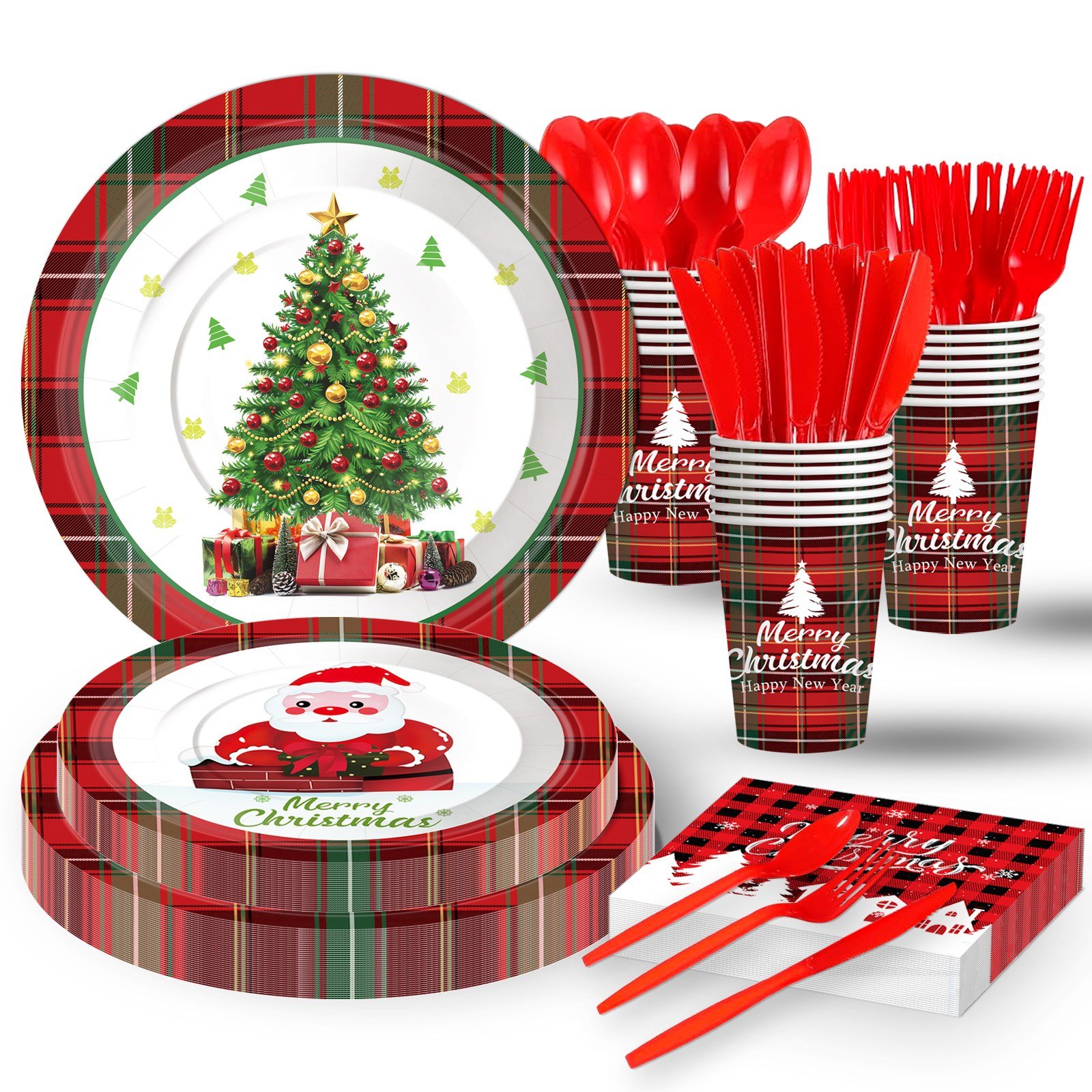
Design coherence is more than using the same Christmas colors. Artwork scale, print clarity, finish, packaging, and product proportions all affect whether a collection appears intentional. Buyers should evaluate the range as it will be seen together, not only as separate catalogue images.
Buyers should evaluate design coherence by checking color relationships, artwork hierarchy, finish consistency, product coordination, and packaging presentation. A strong Christmas Party Tableware Wholesale range gives customers an easy visual path from the hero item to the supporting products without making every SKU look identical.
Build a simple visual hierarchy
- Color: Are the main colors consistent across materials and print processes?
- Artwork: Does the illustration style remain recognizable from one product to another?
- Scale: Are patterns appropriate for the size and shape of each product?
- Finish: Do gloss, matte, metallic, or textured effects belong to the same price story?
- Packaging: Can customers identify the collection when packs are placed side by side?
A collection may use variation successfully. For instance, the napkin may carry a detailed illustration while the plate uses a simpler border. The two designs do not need to be identical. They need to share enough visual signals to be understood as one programme.
Review materials and finishes commercially
| Consideration | Paper-based option | Plastic or reusable option | Premium finish or embellishment |
|---|---|---|---|
| Visual effect | Often supports printed seasonal artwork | Can support repeated use or stronger structure | May create a more elevated presentation |
| Packaging concern | Protection from crushing or moisture | Shape, nesting, and dimensional volume | Protection against surface damage |
| Cost discussion | Printing, layers, and pack structure | Material, molding, and assembly | Additional process and quality consistency |
| Buyer review | Artwork, size, pack count, documentation | Material details, use instructions, documentation | Finish durability and production consistency |
| Best fit | Broad party and seasonal programmes | Reusable or higher-value collections | Controlled premium or gift-oriented ranges |
Inspect samples as a collection
- Whether the colors remain consistent across products.
- Whether artwork alignment is acceptable.
- Whether print edges, cuts, folds, or seals look consistent.
- Whether the product proportions feel balanced.
- Whether the packaging uses the same visual language.
- Whether any item looks noticeably cheaper or more premium than the others.
- Whether the selected products can be photographed or displayed as a set.
What Should Buyers Ask Suppliers Before Confirming an Assortment?
Supplier evaluation should cover more than unit price. A supplier may quote attractive prices for individual items but provide limited support for artwork coordination, sample control, packaging, consolidation, or document preparation. These gaps can create costs later in the programme.
Before confirming a Christmas Party Tableware Wholesale assortment, buyers should ask about product consistency, sampling, customization, packaging, MOQ, production planning, consolidation, inspection, and export documentation. Buyers should request evidence and written specifications rather than relying on broad verbal assurances.
Request a quotation that supports comparison
- Product name and reference.
- Dimensions and material description.
- Retail pack quantity.
- Export carton quantity.
- Carton size and weight, where available.
- Customization scope.
- Packaging method.
- MOQ by product, design, or order.
- Sample charges and sample timing.
- Production timing after approval.
- Price basis and validity period.
- Available consolidation options.
- Required artwork and packaging files.
- Payment and shipping assumptions.
Assess customization as a process
- Who prepares the artwork files?
- Which file formats and color references are required?
- How many revision rounds are included?
- Does the supplier provide a digital proof?
- Will the physical sample use final materials and printing?
- How are packaging changes approved?
- What happens if the approved sample differs from production?
- How does the supplier control multiple products in one collection?
Review quality control points
| Stage | Main purpose | Example review |
|---|---|---|
| Pre-production | Confirm the approved basis | Artwork, material, packaging, sample reference |
| During production | Identify process issues early | Print consistency, assembly, pack quantity |
| Pre-shipment | Confirm finished goods against requirements | Appearance, cartons, labels, documentation |
These steps are planning guidance. They do not constitute laboratory testing, a legal compliance conclusion, or a substitute for an independent inspection provider where one is appropriate. Product requirements can differ by destination and intended use. Buyers should obtain qualified advice for application-specific compliance questions.
Verify documents and destination requirements
- Whether the document applies to the exact product.
- Whether the material and production process match the shipped item.
- Whether the report is current and traceable.
- Whether the destination accepts the document type.
- Whether the product labeling and claims are consistent.
- Whether an independent professional review is needed.
How Can Buyers Control Assortment and Inventory Risk?
Assortment logic reduces some purchasing risks, but it cannot predict demand. A coordinated range may still perform differently across regions, channels, price points, and holiday periods. The buyer’s task is to control avoidable complexity while keeping enough choice to serve the intended customer.
Buyers can control Christmas Party Tableware Wholesale inventory risk by limiting unnecessary SKU duplication, prioritizing anchor products, using staged commitments where practical, and testing the collection against forecast, space, and price assumptions. The goal is not the smallest assortment; it is the most commercially defensible assortment.
Distinguish useful variety from duplicate variety
- Does the item reach a different customer?
- Does it support a different party size?
- Does it fit a different price point?
- Does it complete an existing table setting?
- Does it improve a display or online bundle?
- Does it use a different format with a clear purpose?
- Can the buyer manage the extra carton, storage, and documentation needs?
Use an anchor-and-support model
An anchor-and-support model can make an assortment easier to explain internally and externally. The anchor products receive the strongest attention in forecasting, sampling, merchandising, and purchasing. Supporting products are selected because they improve the anchor products’ usefulness or presentation.
- Primary anchor: the main coordinated table-setting item.
- Secondary anchor: a related serving or presentation item.
- Core complements: products that help customers complete the setting.
- Limited accents: selected items that add seasonal personality.
- Optional custom pieces: products added only when the channel supports them.
Consider staged purchasing carefully
Some buyers may use a staged approach, such as approving the core range first and adding selected supporting products later. This can help control commitment, but it depends on supplier capacity, material availability, production timing, and the buyer’s seasonal calendar.
- Can the supplier reserve the required materials?
- Will later orders use the same colors and packaging?
- Will the MOQ change for a smaller follow-up order?
- Can the supplier consolidate later shipments?
- Will a later order arrive in time for the selling season?
- Are price changes possible between stages?
- Does the plan create extra freight or handling cost?
Build a practical supplier scorecard
| Evaluation area | Questions to score |
|---|---|
| Assortment fit | Do the products form a coherent collection? |
| Product quality | Are samples consistent and suitable for the intended use? |
| Customization | Can the supplier manage artwork and packaging approvals? |
| Commercial terms | Are MOQ, pricing, and pack structures workable? |
| Production planning | Is the proposed timing clear and conditional assumptions stated? |
| Quality control | Are inspection points and acceptance criteria defined? |
| Documentation | Can the buyer obtain and verify relevant documents? |
| Logistics | Can cartons be consolidated and shipped as required? |
| Communication | Are changes, risks, and decisions recorded clearly? |
This scorecard does not produce a guaranteed winner. It creates a more balanced discussion. A supplier with the lowest quotation may still be unsuitable if the buyer must spend excessive time correcting artwork, repacking goods, or managing fragmented shipments.
How Should a Buyer Prepare the Next Christmas Tableware Wholesale Brief?
Many assortment problems begin before the first quotation. A vague brief forces suppliers to make assumptions about price, packaging, quantities, design freedom, and timing. A concise but complete brief gives suppliers a better basis for comparison.
A strong Christmas Party Tableware Wholesale brief should state the target market, selling channel, collection direction, product roles, customization needs, packaging expectations, estimated quantities, documentation requirements, and delivery window. Buyers should separate confirmed requirements from preferences that remain open to discussion.
Include the commercial basics
- Destination market or markets.
- Customer type and sales channel.
- Intended Christmas season.
- Estimated product categories.
- Preferred price position.
- Expected order range, if available.
- Target retail or wholesale pack structure.
- Required private-label elements.
- Artwork status.
- Packaging requirements.
- Delivery and consolidation expectations.
- Required product documents.
- Approval deadline.
Ask for a collection proposal, not only a product list
The supplier should not be expected to know the buyer’s sales data or guarantee sell-through. However, a supplier with seasonal product development capability can provide useful commercial organization around design, sampling, packaging, and sourcing options.
Use internal approval gates
- Gate 1: Approve the collection direction.
- Gate 2: Approve the preliminary SKU structure.
- Gate 3: Approve samples and specifications.
- Gate 4: Approve packaging and artwork.
- Gate 5: Confirm quantity and commercial terms.
- Gate 6: Approve pre-shipment control and documents.

Each gate should record what has been approved and what remains open. This process is especially useful when several people review the project. It reduces the possibility that an old artwork file, outdated specification, or informal message becomes the basis for production.
Work with a partner that can support the full programme
For international buyers, sourcing may involve several product types, packaging formats, and shipment arrangements. A partner such as HKDayo can be evaluated for its ability to support seasonal product development, OEM/ODM communication, low-to-medium MOQ discussions, packaging customization, product consolidation, and export coordination.
Buyers should still conduct their own supplier evaluation. They should confirm the actual product scope, quotation assumptions, documents, production plan, and quality-control arrangements for each project. A supplier’s general category experience does not replace item-specific review.
Frequently Asked Questions
What is the best way to start a Christmas Party Tableware Wholesale project?
Start with the sales channel, target customer, price position, and intended holiday season. Then define a visual direction and assign SKU roles. After that, request a comparable quotation covering specifications, pack sizes, customization, MOQ, timing, packaging, documentation, and logistics assumptions.
Should a buyer choose the lowest unit price?
No. Unit price matters, but it should be evaluated with pack structure, carton volume, customization, quality-control needs, documentation, freight, and inventory risk. A lower price on a disconnected product can create a weaker collection and higher overall purchasing risk.
How many SKUs should a Christmas tableware collection include?
There is no universal number. The assortment should include enough products to create a useful table-setting story, but not so many that similar items compete with one another. Buyers should give every SKU a clear role and remove items that do not add customer value or channel coverage.
Should Christmas tableware use one pattern across every product?
Not necessarily. A strong collection can combine a hero pattern, a simpler coordinating pattern, solids, and seasonal accents. The products should share enough color, illustration, or finish cues to look related while still offering useful visual variation.
What documents should buyers request for seasonal tableware?
The exact documents depend on the product, material, intended use, destination, and buyer claims. Buyers may need specifications, material information, test reports, declarations, labeling details, or other records. They should verify that documents apply to the exact product and obtain qualified professional advice when requirements are uncertain.
Conclusion
Christmas Party Tableware Wholesale should be planned as a coordinated commercial collection rather than a list of low-priced items. Buyers can reduce avoidable risk by defining the theme, assigning clear SKU roles, matching the range to the sales channel, reviewing pack structures, and checking supplier processes before confirming production. Assortment logic cannot guarantee sales, but it can make the purchasing decision more disciplined and defensible. For a tailored seasonal collection, packaging discussion, or supplier quotation, request a quote from HKDayo.
Sources
- Managing Product Variety: Supply Chain Segementation …", Supply-chain research on product variety and demand uncertainty supports the mechanism that a low unit acquisition cost does not by itself eliminate carrying, allocation, or obsolescence risk
- Guide for Labeling Consumer Package by Weight, Volume, …", Research on retail and distribution formats indicates that packaging presentation and pack configuration are commonly adapted to channel-specific display and purchasing conditions
- Analytics for an Online Retailer: Demand Forecasting and …", Retail assortment and operations research supports the view that assortment structure can influence inventory exposure and customer choice, while observed demand remains uncertain and cannot be guaranteed by assortment design alone
- The Impact of Visual Elements of Packaging Design on … – PMC", Consumer research on packaging indicates that visual and informational packaging cues can influence perceived quality and value before product use
- Operational planning for public holidays in grocery retailing", Seasonal retail planning literature documents that holiday merchandise is commonly ordered and positioned in advance of the selling period to accommodate production and distribution lead times
- Consumer Attitudes & Attributes Impacting Cross-Category …", Cross-channel retail research supports the mechanism that differences in information, presentation, convenience, and purchasing context can alter how consumers evaluate the same product range
- The Consumer Contextual Decision-Making Model – PMC – NIH", Consumer-behavior research indicates that product discovery and purchase evaluation depend on the information and presentation available in the shopping environment, not solely on the product’s catalogue image
- Common Export Documents", International trade and supply-chain guidance supports treating sampling, approval, production, inspection, documentation, and transport as distinct activities that can contribute to the total procurement lead time
Hi, I'm Danson. I work closely with our manufacturing partners to develop and deliver seasonal decorations, party supplies, and celebration products for international wholesale buyers. Here, I share practical product knowledge, customization insights, and manufacturing experience to help buyers build successful seasonal collections.
Have a wholesale project in mind? Let's talk!
Discuss Your Wholesale Project Request a Wholesale QuotePlanning a Wholesale Order from China?
Share your product requirements, quantities and destination. Let's discuss your wholesale requirements.