How to Source Wholesale Christmas Party Supplies from China: A B2B Buyer’s Checklist
A B2B buyer's checklist for sourcing wholesale Christmas party supplies from China — assortment, MOQ, samples, QC, export documents and quotation.

Quick Answer
If you are sourcing wholesale Christmas party supplies from China, work in this order: define the assortment and its price architecture, lock the specification of every SKU in writing, approve a physical sample before mass production, and only then agree quantities. Christmas is a deadline category — a container that lands in early November is worth more than a cheaper one that lands in January. Build the range around three dependable lines (party tableware, seasonal decorations and gift packaging), treat MOQ as a per-SKU commercial question rather than a fixed rule, and confirm customisation, documentation and consolidation before you commit. When your specification is ready, send the details through the quotation desk and we will respond with a costed, line-by-line answer.
Build the Christmas Assortment Before You Build the Order
The most expensive mistake in seasonal sourcing is not a high unit price — it is a range that never sells through. Christmas demand is compressed, highly visual and largely decided by the consumer in a two-to-three week window. That means your assortment has to be narrow enough to buy depth on the winners, and broad enough to give a retail buyer or end customer a reason to pick your programme over the shelf next to it.
Start by segmenting the range into the jobs it performs. A practical split for a Christmas programme looks like this:
- Core volume lines — the items that carry the season and justify container depth: tableware sets, banners, garlands and bunting.
- Margin and gifting lines — greeting cards, sticker sheets and small gift-packaging items that raise average order value.
- Differentiators — a distinctive colourway, a licensed-style motif family or a coordinated theme that competitors on the same shelf are not carrying.
Once the roles are clear, price architecture becomes a conversation about landed cost rather than unit cost. A single coordinated theme is almost always easier to sell than a random collection of festive items, because it lets a retailer merchandise a table, a window or a gift wall from one supplier.
Party Tableware and Seasonal Decorations: Where the Volume Sits
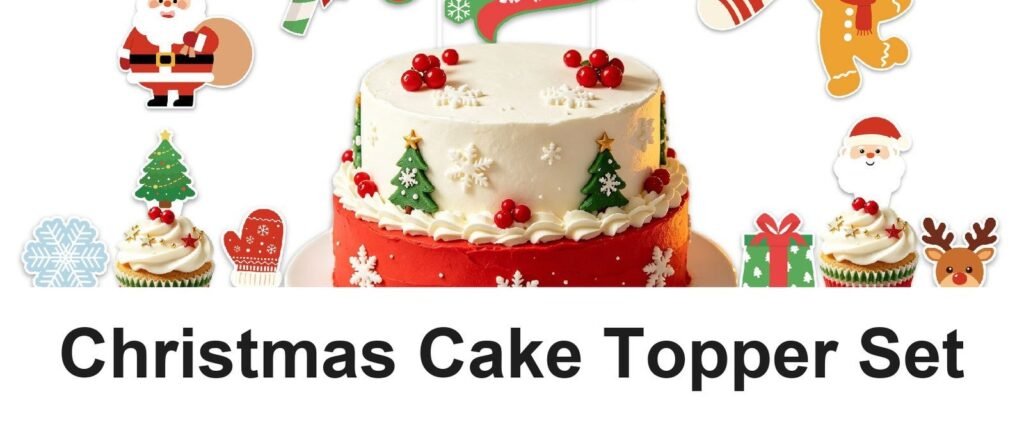
In a Christmas programme, party tableware and seasonal decorations do different jobs and should be planned separately. Tableware is a repeat, functional purchase — plates, cups, napkins, cutlery and table covers that a buyer reorders every season as long as the design family stays consistent. Decorations are a fashion purchase — bunting, banner sets, cake toppers and hanging pieces that rise and fall with colour trends.
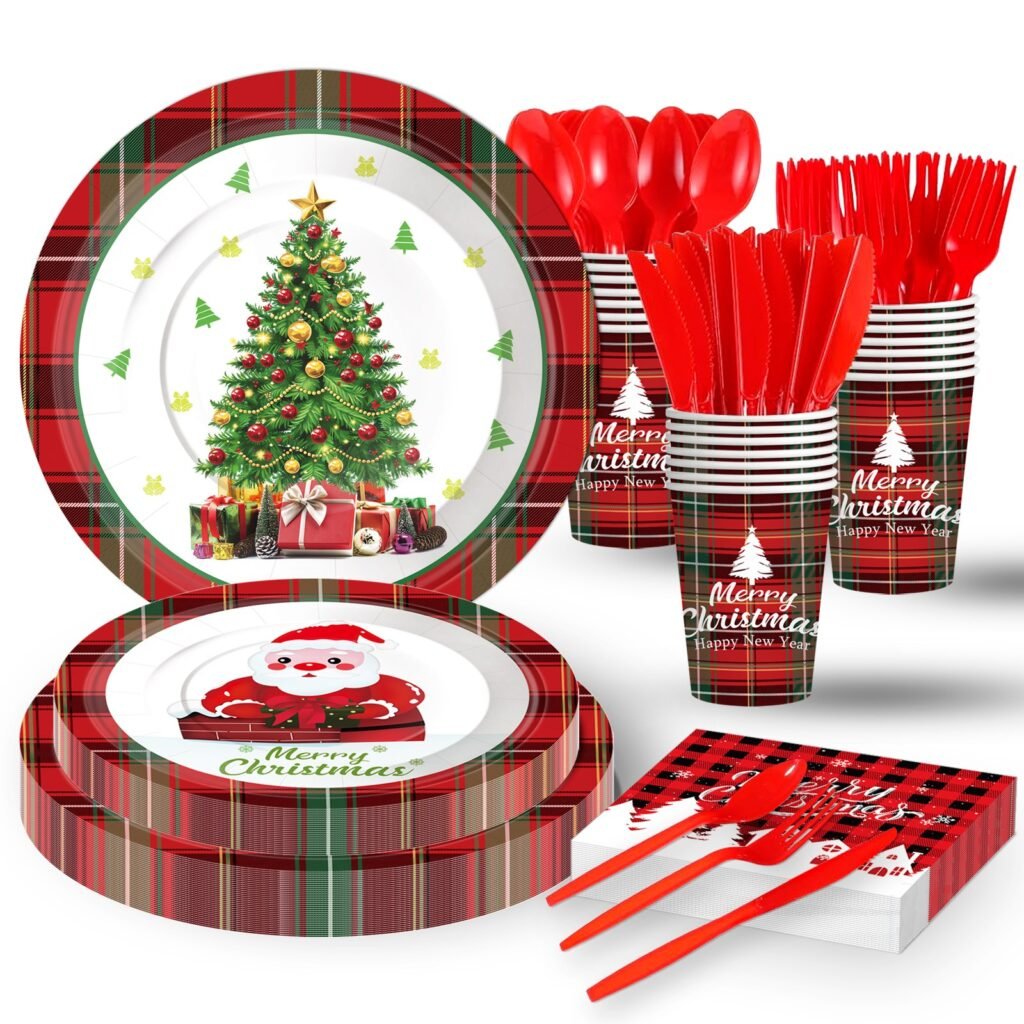
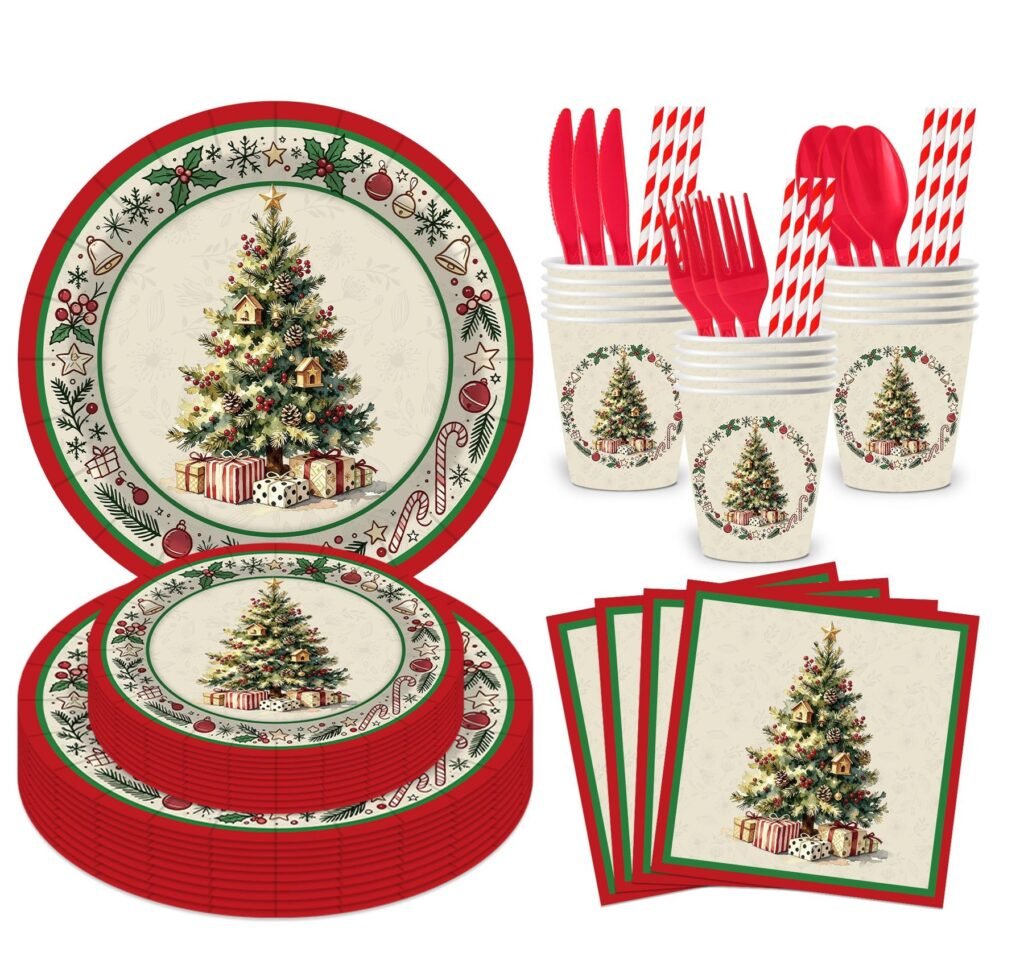
A coordinated tableware set such as the Merry Christmas Party Tableware Set shows why the tableware line is the dependable anchor: it is sold as a themed set for guests, so the buyer commits to a single design language rather than to individual pieces. A second colourway, for example the Christmas Tartan Party Tableware Set with its red, green and cream plaid and tree motif, lets the same buyer extend the programme without redesigning it.
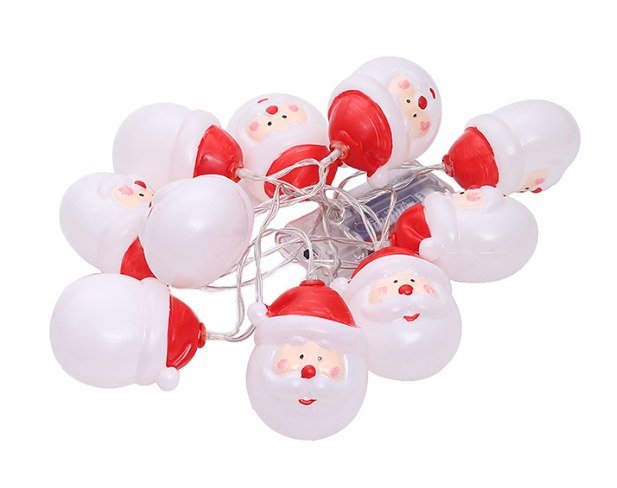
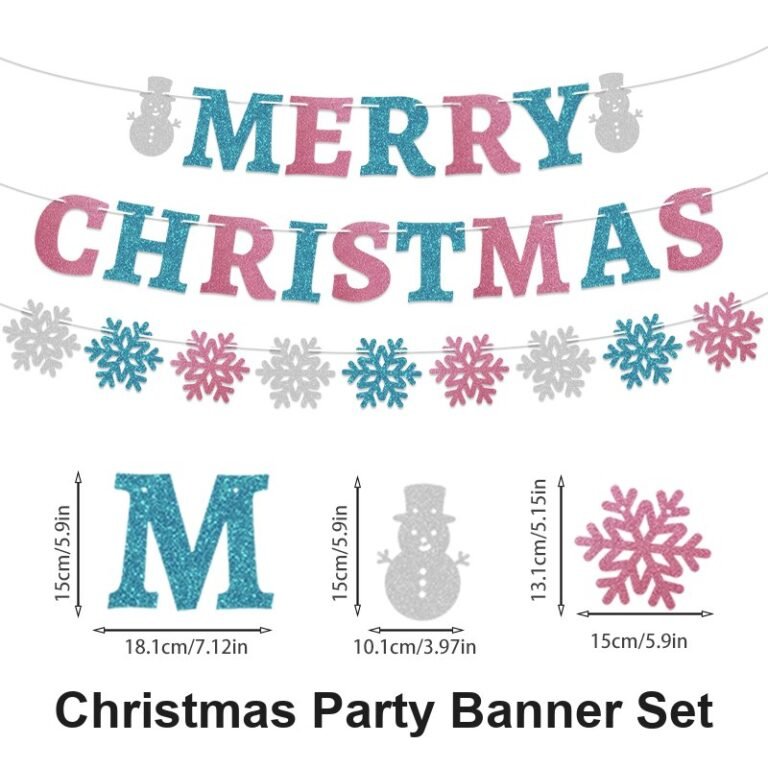
Decorations carry the trend risk but also the margin. Paper banner and bunting sets built on 300 gsm cardstock, such as the Christmas Plaid Banner & Bunting Set or the wider Christmas Plaid Letter Banner Set, are low-weight, low-freight and easy to bundle. A pastel alternative like the glitter snowflake and letter garland set gives you a second colour direction for buyers who do not want traditional red and green. Lighting belongs in this group too: battery-operated string lights such as the Santa Claus LED String Lights add a different price point and a different display use without competing with the paper lines.

Coordinated Design, Packaging and Shelf Presentation
Wholesale buyers rarely purchase a single item; they purchase a shelf story. If your tableware, banners and gift items share a palette and motif language, the retail presentation becomes far easier to plan and far harder for a competitor to copy piece by piece.
Decide early how much coordination you need. Full coordination — one motif family across every SKU — suits private-label programmes and in-store seasonal corners. Partial coordination — a shared palette with different motifs — suits distributors selling into mixed retail. Either way, ask for the specification sheet of each item, because the printed colour, the cardstock weight and the finish are what actually hold a range together visually.
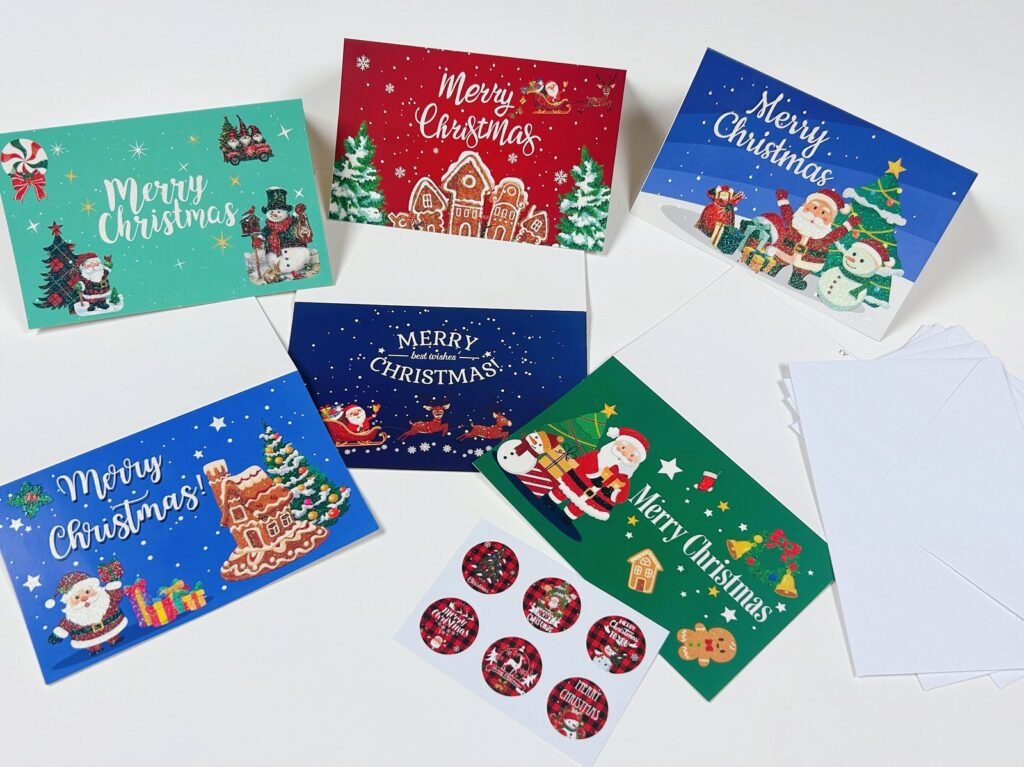
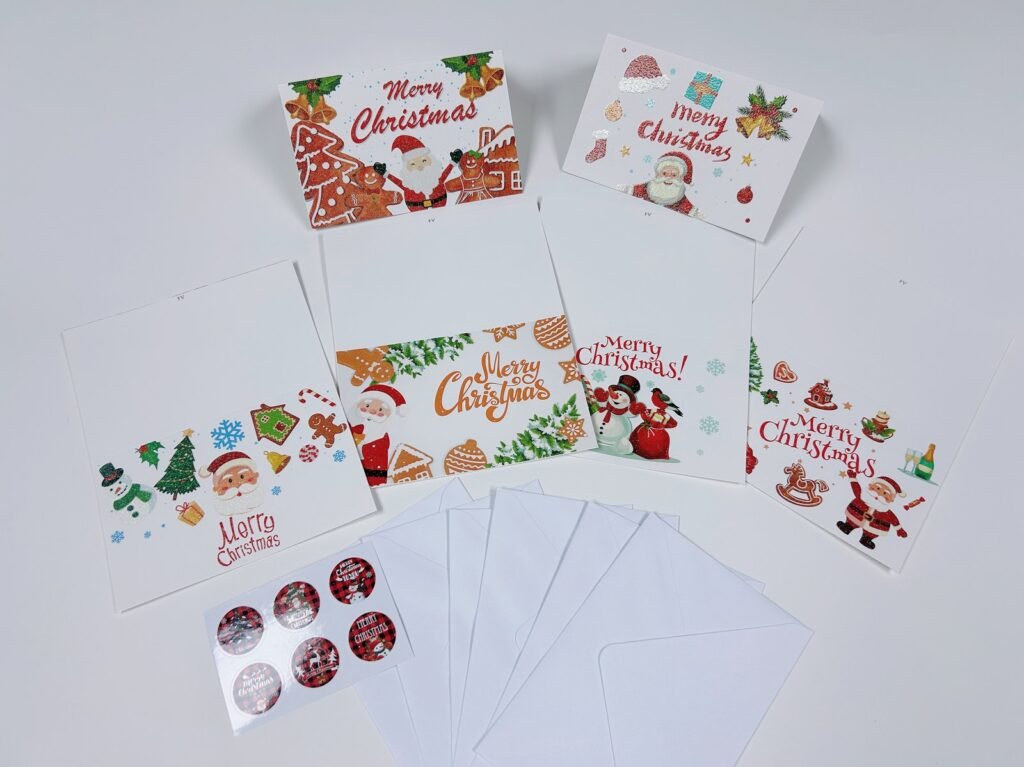
Packaging matters as much as design at this price point. Compare how two greeting-card lines are supplied: the Christmas Greeting Cards Set A4 is a six-card pack with matching envelopes and round seal stickers, sealed in an OPP bag and carton-packed, while the Christmas Party Sticker Sheets arrive as two self-adhesive sheets per pack in a light OPP bag. Both are simple, retail-ready formats — and both tell you quickly whether a supplier thinks in sellable units or only in bulk kilos.

For seasonal retail, ask for pack-level presentation that can sit on a shelf without rework: sealed bags, printed headers or a display-ready carton. A supplier who can describe pack dimensions, pack weight and carton quantity without hesitating is usually a supplier who has shipped retail programmes before.
SKU Planning and Quantity Maths for a Christmas Season
Seasonal quantity planning is a different discipline from year-round replenishment. You are ordering once, against a demand window you cannot extend, and you are paying for the container either way. Three numbers drive the plan.
- Sell-through target per SKU. Decide the percentage of each line you expect to clear at full price, and treat the remainder as markdown budget.
- Mix ratio. Decide how many units of each SKU share one carton or one container position. A programme that is 70% tableware and 30% decoration behaves very differently from a 50/50 split.
- Replenishment reality. Assume you cannot reorder mid-season from China. Air freight may save a fast-selling line, but it destroys the margin that made the line worth buying.
Because the season is unforgiving, plan the assortment in two tiers: a proven core you buy with confidence, and a smaller test tier you buy in limited depth. The test tier is where a new colourway, a new motif or a new price point earns its place next year — and where you should expect some markdown.
MOQ Questions to Ask Before You Commit
Minimum order quantity is the most misread number in wholesale sourcing, because it is rarely a single fixed figure. For Christmas ranges it is usually a per-SKU commercial decision that moves with design, packaging, print method and material. Instead of asking “what is your MOQ?”, ask the questions that actually determine it:
- What is the MOQ for an existing design, and what is the MOQ for a customised version of the same item?
- Is the MOQ counted per SKU, per design family or per order?
- Can mixed-SKU orders share a container position or a carton, and does that change the MOQ?
- Does the MOQ change if the item is supplied plain rather than printed, or packed in bulk rather than retail-ready?
- What happens to the MOQ if the order is consolidated with other Christmas lines?
Treat any MOQ you receive as indicative until the specification is fixed. A number quoted against a vague brief is not a commitment on either side, and a supplier who will not restate the MOQ after the sample is approved has not really confirmed it.
OEM and ODM Customisation: What Changes and What Does Not
Customisation falls into two broad paths. OEM means you supply the design or the requirement and the factory produces to it. ODM means you select from an existing design and apply your own branding or packaging. Both are normal in the Christmas category, and both have consequences for cost, tooling and lead time.
For most first-season buyers, ODM is the lower-risk route: choose a proven design, change the header card, the sticker or the retail bag, and test the market before committing to bespoke artwork. OEM becomes worthwhile once you know the design language your customers respond to, because bespoke artwork usually means new plates, new print set-up and a specification that has to be signed off before production.
Whichever path you choose, define what is variable and what is fixed. Colour, motif, cardstock weight, finish, pack quantity, pack dimensions and language of any printed text should all be written down and agreed. Changes made after tooling or print plates are produced are the single most common cause of late Christmas deliveries.
Specifications and Sample Approval
The specification sheet is your contract in miniature. Before you approve anything, every line should be measurable or verifiable:

- Material and construction — for example 300 gsm white cardstock, single-sided printing, or LED bulbs on flexible battery-operated wire.
- Colour and finish — the exact palette and whether a finish is single-sided or double-sided.
- Dimensions — pack size and, where relevant, assembled size.
- Pack contents — how many cards, envelopes, cords or strings are in one sellable pack.
- Packaging — OPP bag, header card, carton quantity and carton weight.
Then approve a physical sample, not a photograph. The sample is what you will compare against the production run, so it should be the actual specification at the actual pack quantity. Photograph the approved sample, keep it, and record its measurements. When the production goods arrive, the approved sample is the reference that decides whether the shipment is acceptable.
Supplier Verification, Quality Control and Export Documentation
Verification is not a single check; it is a sequence of small confirmations. Confirm that the supplier can describe the item at specification level, that they answer commercial questions in writing, and that the sample they send matches the sheet they sent. A supplier who is vague on specification is usually vague on production too.
Quality control should be planned around your risk, not around a template. For printed paper goods, the critical checks are colour accuracy, print registration, cardstock weight and pack count. For battery-operated lighting, they are function, wiring, battery contact and pack contents. Agree the inspection points, the acceptance criteria and who carries the cost of rework before the run starts.
Export documentation is the least glamorous and most underestimated part of a Christmas order. Confirm with your supplier and your freight forwarder which documents the destination market requires, who issues them, and how long they take to produce. Documentation issues discovered after the container is loaded are expensive to fix and, in a seasonal window, may be impossible to fix in time. Note that certification and compliance requirements vary by product and by destination market — confirm the applicable requirements for your specific SKUs rather than assuming a single standard covers the range.
Consolidation and Requesting a Quotation
Christmas ranges are usually bought as a group, not as single SKUs, so ask about consolidation from the first conversation. A supplier who can hold several lines in one container position lets you reach volume terms without over-ordering any single item. Mixed-SKU consolidation is also the practical way to test a new line without paying for depth you are not ready to commit to.
A quotation request should be specific enough to answer. Include the SKU or reference, the required quantity per line, the destination market and port, the packaging requirement and the documentation you need. With that information, a supplier can return a structured answer covering unit pricing, carton configuration, consolidation options and the points that still need confirming.
To start a programme, browse the full Christmas collection or the category archives for party tableware, seasonal decorations and gift & packaging, then request a quote with your line list. A clear brief is the fastest route from enquiry to a costed, confirmable quotation.
Hi, I'm Danson. I work closely with our manufacturing partners to develop and deliver seasonal decorations, party supplies, and celebration products for international wholesale buyers. Here, I share practical product knowledge, customization insights, and manufacturing experience to help buyers build successful seasonal collections.
Have a wholesale project in mind? Let's talk!
Discuss Your Wholesale Project Request a Wholesale QuotePlanning a Wholesale Order from China?
Share your product requirements, quantities and destination. Let's discuss your wholesale requirements.