How to Vet a Celebration-Product Supplier in China: Certificates, Capacity and References

A celebration-product supplier in China can offer attractive designs and competitive pricing, but a low quotation does not prove reliable delivery. Seasonal orders create pressure around compliance, production slots, and shipping dates.[1] I recommend checking certificates, operational capacity, and customer references together before I approve samples or commit to a holiday programme.
Quick Answer
I should vet a celebration-product supplier in China by matching product-specific documents to the destination market, testing whether the supplier can support my actual order schedule, and verifying references that resemble my product, market, and order conditions. Certificates are evidence rather than a complete guarantee.[2] Factory size and stated output do not automatically prove peak-season delivery. A staged review should cover documents, samples, capacity, commercial terms, quality control, packaging, and final pre-order risks.
- Check whether every certificate applies to the exact product, material, version, and intended use.
- Ask for evidence of deliverability, including sample timing, production planning, quality checks, and peak-season allocation.
- Treat customer references and testimonials as supporting evidence, not independent proof.
- Compare suppliers using the same written specification and packaging requirements.
- Complete a documented pre-order review before placing a seasonal purchase order.
The central question is not whether a supplier can show a certificate or a large factory photograph. The better question is whether the supplier can provide relevant evidence for my product and then repeat the required quality, packaging, and delivery performance under seasonal pressure. The sections below explain how I would structure that assessment.
Celebration-Product Supplier China: Certificates, Capacity References
Supplier claims often look impressive when they are presented separately. A certificate may appear authoritative, capacity figures may sound large, and a reference list may suggest an established export history. The risk appears when those claims do not connect to my actual product and sales market.
What evidence should I request first?
I would begin with a product-specific information pack rather than a general company presentation. The pack should identify the selling entity, manufacturing location, product version, materials, intended use, packaging format, target market, and available compliance documents. This approach makes gaps easier to notice.
- Company identification
- Legal company name and business registration details.
- Trading address and manufacturing address, if different.
- Main contact for quality and production communication.
- Whether the supplier is a factory, trading company, or mixed operation.
| Evidence area | Weak indication | More useful indication |
|---|---|---|
| Compliance | A general certificate with no product link | A current report identifying the relevant product and test scope |
| Capacity | A daily output number in a presentation | A production plan connected to my quantity and ship date |
| Quality | “We inspect everything” | A documented inspection point with acceptance criteria |
| References | Logos or short testimonials | Comparable customers or orders that can be reasonably verified |
| Delivery | A broad lead-time promise | A schedule showing sampling, approval, production, inspection, and dispatch |
In practical procurement communication, vague answers matter. If a supplier cannot explain which entity issues a report, which product it covers, or when the document expires, I would mark the item for follow-up. I would not automatically reject the supplier, because smaller manufacturers may need time to organize files. However, I would not treat an unresolved gap as an approval.
How Should I Check Certificates for a Celebration-Product Supplier in China?
Certificates can reduce risk only when their scope matches the product and market. A document for one material, color, component, or product family may not cover a modified design.[3] Buyers should verify the issuing body, date, test scope, sample identity, intended use, and destination-market requirements before relying on it.
A certificate can look official while still being the wrong evidence for my purchase. This problem is common when a supplier sends a general company certificate, an old test report, or a document for a similar item. Seasonal celebration products also change quickly. A new pattern, coating, adhesive, light component, filling, packaging format, or accessory can affect the relevant review.
Match the document to the exact product
| Question | Why it matters |
|---|---|
| Does the document identify the same product or model? | Similar appearance does not prove identical materials or construction |
| Does it cover the current production version? | Changes after testing may make an old report less relevant |
| Does the material description match the quotation? | Different plastics, textiles, inks, coatings, or fillings can change requirements |
| Is the intended use the same? | Decorative, wearable, child-related, food-contact, and electrical uses may require different review |
| Is the destination market covered? | Requirements differ between the United States, Canada, the United Kingdom, and European markets[4] |
| Is the issuing laboratory or body identifiable? | Buyers need to assess the source and scope of the document |
| Is the document current enough for the project? | A report may not reflect current production or current rules |
I would not use the phrase “fully certified” as a substitute for this analysis. The word can hide important limits. A document may confirm a narrow test result, while the product still requires labeling review, packaging review, importer responsibility checks, or additional market-specific documentation.
Separate common document categories
- Company certificates: These may show an audited management system or business qualification. They do not automatically prove that every product complies with a destination market.
- Product test reports: These normally address defined samples and defined test methods. I would check the sample description and test scope carefully.
- Declarations or supplier statements: These can provide useful information, but they may not replace required independent testing or importer review.
- Material documents: These may identify composition or source information. They do not necessarily cover the finished item.
- Inspection reports: These describe an inspection at a particular time. They do not guarantee future production unless the same controls are repeated.
The correct evidence depends on the product. A decorative sign, a plush-style gift, a lighted ornament, a children’s creative toy, a food-contact tableware item, and a wearable accessory may not share the same documentation path. I would ask a qualified compliance professional or testing laboratory to confirm requirements where the product, age grade, electrical feature, food contact, or destination creates uncertainty.
Questions I would ask the supplier
- Which exact SKU, material, and version does this document cover?
- Was the tested sample made using the same process as the quoted production item?
- Does the report include the relevant components, coatings, inks, adhesives, and packaging?
- Which market and intended use were considered?
- Who issued the document, and can the report number and date be checked?
- Has the product changed since the sample was tested?
- Will the supplier retain a sealed or approved reference sample for production comparison?
- Who will pay for additional testing if the buyer or marketplace requires it?
A document review is not an independent certification service. I can use it to screen a supplier and identify questions, but I would not present the review as legal or laboratory approval. The importer remains responsible for confirming the applicable rules with qualified professionals and the relevant market authorities.[5]
How Can I Test the Real Capacity of a Celebration-Product Supplier in China?
I should evaluate capacity as deliverability, not as factory size or a claimed daily output. A reliable capacity review connects my order quantity, product complexity, approval date, production window, inspection plan, packaging requirements, and shipping deadline. The supplier should explain how it will protect the schedule during peak season.
Seasonal purchasing creates a different risk from ordinary replenishment. A supplier may have enough equipment in theory but lack available labor, components, packaging materials, or production slots[6] when several holiday programmes run at once. A factory photograph cannot show whether my order will receive attention in the required week.
Ask for a capacity plan, not only a capacity number
| Milestone | Buyer-side question |
|---|---|
| Specification confirmation | When will all artwork, materials, colors, and packaging be frozen? |
| Sample approval | How many sample rounds are included in the proposed schedule? |
| Material purchasing | Which components have long procurement or minimum-order risks? |
| Production booking | When can the supplier reserve a production slot? |
| In-process inspection | At which stage will defects be identified? |
| Final inspection | How much time remains for correction or rework? |
| Packing and consolidation | Are cartons, labels, inserts, and pallets ready before completion? |
| Dispatch | What assumptions affect the stated shipping date? |
Evaluate the bottleneck
- A custom mold or tooling approval.
- A special fabric, ribbon, printed paper, or coating.
- Hand assembly or detailed finishing.
- Battery, cable, switch, or other electrical components.
- Customized packaging and printed inserts.
- Quality inspection and rework.
- Consolidation with products from multiple workshops.
Use sampling and communication as capacity indicators
- Response time to technical questions.
- Number of unresolved specification points.
- Whether the sample follows the written brief.
- Ability to provide accurate dimensions and packing information.
- Willingness to explain changes and limitations.
- Speed of correcting an identified issue.
Ask about peak-season allocation
- Which months are busiest for this product category?
- How many active orders normally compete for the same line or workshop?
- When must I approve the sample to retain a feasible production slot?
- Which materials or components require early reservation?
- What happens if my artwork or packaging approval is late?
- How does the supplier handle a quality issue discovered during final inspection?
- Can production be split into batches without creating inconsistent color or finish?
- What information will the supplier provide during production?
I would also compare factory production with outsourced production without treating outsourcing as automatically negative. Many export suppliers coordinate specialized processes.[7] The key questions are whether the supplier controls the specification, tracks the subcontractor, manages quality, and accepts responsibility for the finished order.
If my programme includes several related designs, I would ask whether the supplier can maintain consistency across the collection. A themed range may contain banners, tableware, ornaments, favors, gifts, and packaging. A supplier may produce each item through different processes. I would request a master specification, approved color references, packaging instructions, and a defined inspection approach.
Which References Can I Trust from a Celebration-Product Supplier in China?
References are useful when they are relevant and verifiable.[8] I should compare the customer’s product category, destination market, order complexity, season, packaging requirements, and delivery conditions with my own project. A famous customer name or attractive testimonial is not enough to prove current performance.
References create a common procurement trap. Buyers may see well-known retail or e-commerce logos and assume the supplier handled the same type of order successfully. The relationship may have involved a different entity, a different product, a different year, or a very small trial order. The reference may still be genuine, but its relevance may be limited.
Score reference relevance
| Reference factor | High relevance | Lower relevance |
|---|---|---|
| Product | Same or closely related celebration product | Unrelated industrial or general merchandise |
| Market | Same destination country or region | Different regulatory and retail environment |
| Order type | Private label, seasonal, customized | Standard catalogue item |
| Scale | Similar quantity and packaging complexity | Much smaller or fundamentally different order |
| Timing | Recent and comparable peak season | Old or outside the relevant season |
| Relationship | Contactable and clearly described | Logo only or anonymous claim |
| Performance | Specific information about quality and delivery | General praise without evidence |
I would not expect every supplier to disclose customer names. Confidentiality agreements may prevent that. In that case, I can request anonymized information, such as product category, market, order type, approximate scale, and the type of quality-control process used. The supplier should still be able to explain why the example resembles my project.
Verify without creating unnecessary pressure
- Did the supplier deliver the described product or category?
- Was the order customized?
- Was the communication clear during sampling and production?
- Were quality issues handled in a documented way?
- Did delivery timing meet the agreed schedule?
- Would the buyer consider another order?
- Consistency between the supplier’s catalogue and actual samples.
- Clear company and factory information.
- Quality documents that match the quoted product.
- Reasonable responses to difficult questions.
- Transparent explanation of subcontracting.
- A quotation that identifies assumptions instead of hiding them.
- Willingness to accept a written specification and inspection standard.
Watch for reference gaps
- The reference only covers a different product category.
- The customer name cannot be connected to the supplier’s legal entity.
- The supplier refuses to identify whether it was the manufacturer or intermediary.
- The example is several years old.
- The stated order scale is far beyond the supplier’s current operation.
- The supplier cannot explain how quality and delivery were measured.
- The testimonial uses broad language but no project details.
What Should My Staged Pre-Order Review Include?
A staged review reduces risk by moving from general information to product-specific evidence and then to commercial commitment. I should not make a seasonal purchase decision immediately after receiving a catalogue and quotation. I should first confirm the product, documentation, sample, capacity, quality process, packaging, and order terms.
A staged process also makes supplier comparison fairer. If one supplier answers a detailed brief and another responds with a general price, the quotations are not truly comparable. I would use the same request format, the same reference sample, and the same target delivery assumptions wherever possible.
Stage 1: Define the buying brief
- Product type and intended use.
- Target market and sales channel.
- Materials and prohibited substitutions.
- Dimensions, colors, finish, and artwork.
- Packaging and labeling requirements.
- Estimated order quantity and assortment.
- Required sample date.
- Required delivery window.
- Inspection expectations.
- Documentation needed for review.
Stage 2: Screen the supplier
| Category | Screening question |
|---|---|
| Product fit | Can the supplier make the exact or closely related product? |
| Documentation | Can it provide relevant evidence for my market and use? |
| Communication | Does it clarify missing information promptly? |
| Capacity | Can it explain a realistic production and delivery plan? |
| Customization | Can it manage artwork, packaging, and private-label details? |
| Quality | Can it describe inspection points and acceptance criteria? |
| Commercial terms | Are MOQ, payment, packing, and shipping assumptions clear? |
| Risk response | Does it explain what happens when plans change? |
Stage 3: Approve a controlled sample
- Dimensions and weight.
- Materials and tactile feel.
- Color and print quality.
- Stitching, joining, adhesive, and finishing.
- Function, if the product has a moving, lighted, or interactive element.
- Packaging protection.
- Labels, inserts, barcodes, and artwork.
- Carton information where relevant.
Stage 4: Confirm capacity and commercial details
- Whether the quoted price includes customized packaging.
- Whether tooling, sampling, and artwork charges are separate.
- How the supplier handles quantity tolerance.
- What happens if goods fail an agreed inspection.
- Whether partial shipment is allowed.
- How damage, shortages, or mixed cartons are documented.
- Which party manages export documents and freight arrangements.
Stage 5: Complete final risk checks
- Certificate and test-report relevance.
- Sample-to-production consistency.
- Material and packaging availability.
- Peak-season production allocation.
- Inspection timing.
- Shipping and customs assumptions.
- Trademark, artwork, and intellectual-property permissions.
- Payment beneficiary and legal entity consistency.
I would seek qualified professional guidance for market-specific compliance, especially where products involve children, electrical parts, food contact, cosmetics, batteries, or regulated claims. Supplier documents can support the review, but they do not transfer all importer responsibilities.
What should make me pause?
- The supplier refuses to identify the product covered by a document.
- The sample differs from the quotation without explanation.
- The supplier will not put important specifications in writing.
- Capacity claims conflict with the proposed schedule.
- The payment entity does not match the contracting entity without a clear explanation.
- The supplier pressures me to skip sampling or inspection.
- The final price depends on undocumented material substitutions.
How Do I Compare Suppliers Beyond the Lowest Price?
The lowest price can become expensive when I account for rework, relabeling, delayed seasonal sales, emergency freight, rejected goods, or missed retail windows. I should compare the total procurement risk rather than the unit price alone. A slightly higher quotation may be commercially stronger if it includes clearer controls and more realistic planning.
Price comparison is difficult when quotations use different assumptions. One supplier may include individual packaging, while another quotes bulk packing. One may include a complete product, while another excludes accessories or inserts. I would normalize the quotation before drawing conclusions.
Build a total-cost comparison
| Cost or risk item | Supplier A | Supplier B | Supplier C |
|---|---|---|---|
| Unit price on the same specification | |||
| Sample and tooling cost | |||
| Customized packaging | |||
| Inspection or testing allowance | |||
| Estimated freight and consolidation impact | |||
| Rework or replacement risk | |||
| Flexibility for assortment changes | |||
| Delivery confidence | |||
| Documentation completeness |
I would not assign invented monetary values to uncertain risks. I would label them low, medium, or high and explain the reason. For example, a supplier may have a competitive price but high documentation uncertainty. Another may have a higher unit price but a better-defined sample and production process.
Consider the whole seasonal programme
This capability can simplify purchasing for importers, wholesalers, distributors, and e-commerce brands. However, I would confirm which products are made directly and which are sourced through partner facilities. The supplier should explain how it controls the final collection.
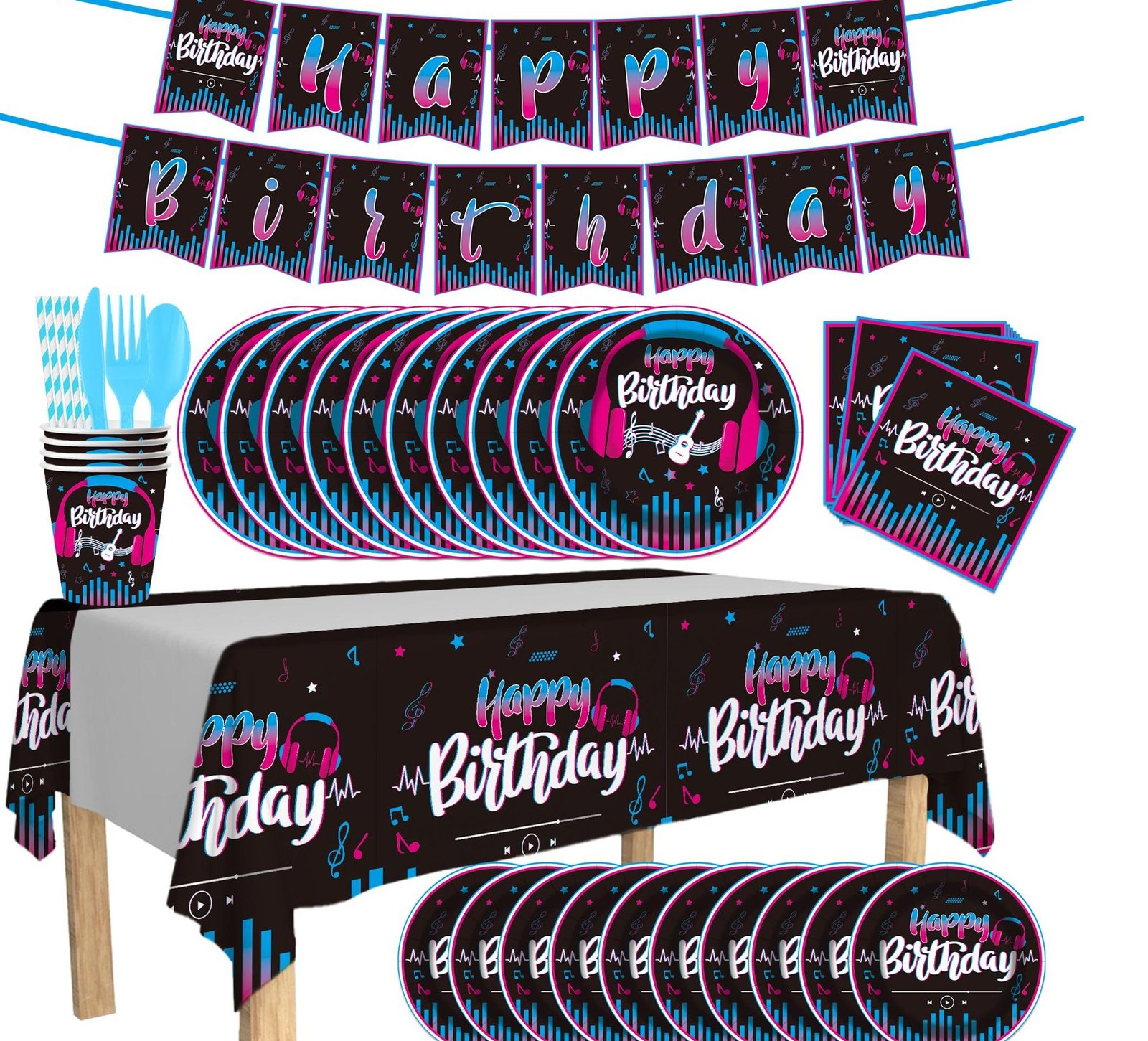
HKDayo’s stated business model combines China supply-chain resources with AI-assisted product and pattern design, low-to-medium MOQ customization, private label, packaging customization, consolidation, and export support. I would still evaluate each proposed programme against the product-specific evidence described above. A broad service capability does not eliminate the need for sample approval or market-specific compliance review. Buyers who want to discuss a seasonal assortment can use the request-a-quote page.
Use a decision record
- The approved product specification.
- The comparison table and quotation assumptions.
- Relevant documents and their scope.
- Sample photographs and approval date.
- Capacity schedule and key dependencies.
- Reference checks or reasons references were unavailable.
- Open risks and assigned actions.
- Final approval from the responsible buyer.
Frequently Asked Questions
Does one certificate prove that a celebration-product supplier in China is compliant?
No. A certificate or test report normally covers a defined product, sample, material, test scope, and date. I should confirm whether it matches the current production version, intended use, and destination market. I should also obtain qualified market-specific advice where the product has regulated features.
Is a large Chinese factory always a safer supplier?
No. A large facility may have useful resources, but size does not prove that my order will receive a production slot during peak season. I should evaluate the actual schedule, materials, labor, subcontracting controls, inspection process, and delivery assumptions for my specific order.
What should I do if a supplier cannot share customer names?
I can request anonymized reference information, such as product category, destination market, order type, and approximate scale. I can then compare that information with my project. I should treat references as supporting evidence and continue with sample, document, capacity, and commercial checks.
How early should I vet a seasonal celebration-product supplier?
I should begin early enough to allow product selection, sampling, artwork approval, documentation review, production, inspection, consolidation, and transport. The exact timing depends on product complexity, destination, customization, and holiday deadline. The supplier should provide a schedule based on those factors rather than a generic lead time.
Should I use a third-party inspection company?
A qualified inspection company can provide useful independent information about quantity, workmanship, packaging, and other agreed criteria. It does not replace product compliance advice or a well-written specification. I should define the inspection scope and acceptance criteria before production is complete.
Conclusion
A reliable celebration-product supplier in China should provide more than an attractive catalogue, a low quotation, or a general certificate. I should match documents to the exact product and market, test capacity through a realistic seasonal schedule, and assess references for relevance and verification. A staged review gives me time to resolve gaps before payment and production. HKDayo can support customized seasonal collections, private-label packaging, consolidation, and export communication. I can start a programme discussion through the request-a-quote page.
Sources
- Capacity Markets for Large Loads under Supply-Chain …", Supply-chain research describes seasonal demand peaks as factors that can affect capacity planning, production scheduling, inventory decisions, and transportation coordination
- Conformity assessment – European Union", Official conformity-assessment guidance distinguishes product-specific evidence of conformity from the broader obligation to ensure that the product placed on the market meets all applicable requirements
- General Use Products: Certification and Testing", Regulatory conformity guidance indicates that test evidence is evaluated in relation to the identified product and its assessed construction, materials, and intended use; changes may therefore affect its relevance
- Canada Initiates Expiry Review of its Antidumping Duty …", Government market-access guidance documents jurisdiction-specific product-safety, labeling, conformity, and importer obligations across the United States, Canada, the United Kingdom, and the European Union
- Retailers: Product Safety and Your Responsibilities", Official product-compliance guidance assigns importers duties to verify relevant conformity information and to ensure that products placed on the market meet applicable legal requirements
- How to Plan and Schedule for Profit: An Integrated Model …", Operations-management literature distinguishes installed capacity from effective capacity, which is constrained by labor, materials, bottlenecks, maintenance, scheduling, and other operating conditions
- Horizontal Subcontracting and the Global Factory", Research on global manufacturing documents the use of contract manufacturing and subcontracting, in which production activities may be distributed across multiple firms and facilities
- Reference Checks", Procurement and due-diligence guidance treats verification of business-partner information and assessment of its relevance to the transaction as components of supplier evaluation
Related celebration products from DAYO:
Hi, I'm Danson. I work closely with our manufacturing partners to develop and deliver seasonal decorations, party supplies, and celebration products for international wholesale buyers. Here, I share practical product knowledge, customization insights, and manufacturing experience to help buyers build successful seasonal collections.
Have a wholesale project in mind? Let's talk!
Discuss Your Wholesale Project Request a Wholesale QuotePlanning a Wholesale Order from China?
Share your product requirements, quantities and destination. Let's discuss your wholesale requirements.