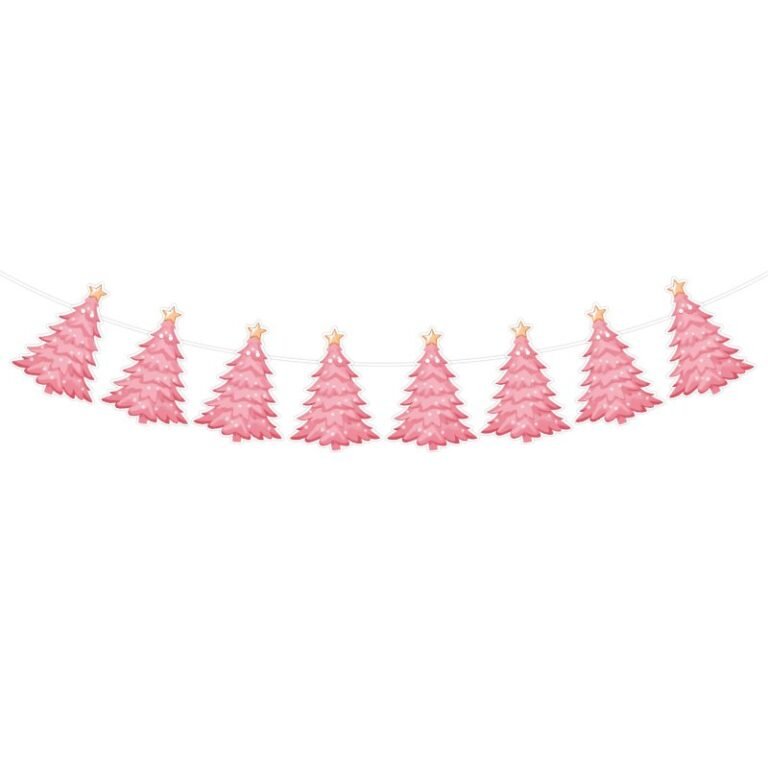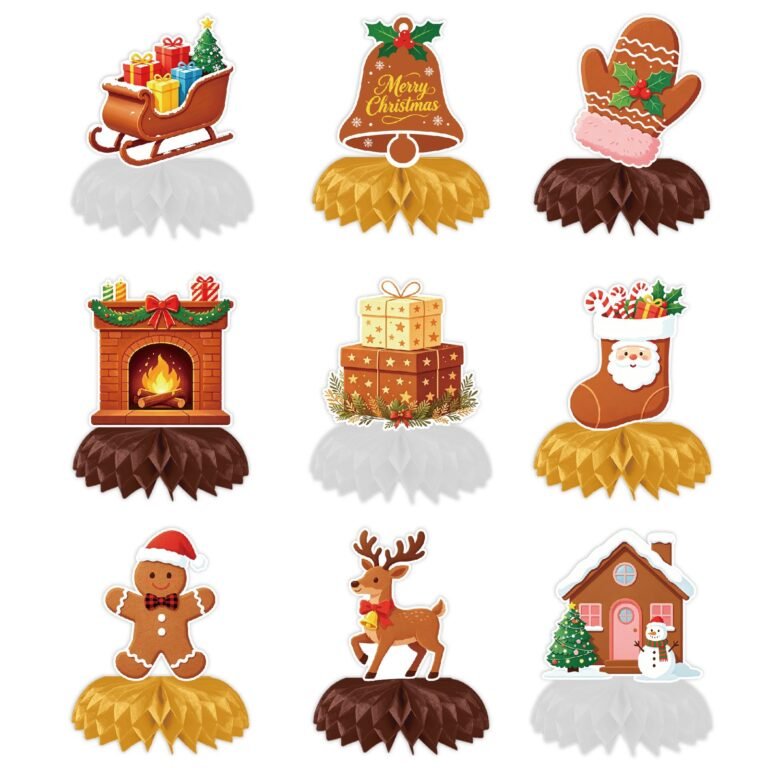
New Year and Winter Holiday Decorations: A Wholesale Buying Guide for Distributors

New Year and Winter Holiday Decorations can become a costly inventory problem when they arrive after retailers have already set their seasonal shelves. I have seen how a delayed proof, missed production slot, or late consolidation decision can turn an attractive range into post-season stock. A disciplined buying calendar helps distributors protect timing, margin, and sell-through.
New Year and Winter Holiday Decorations should be sourced as a time-managed seasonal programme, not as a last-minute product order. Distributors should separate reusable winter designs from dated New Year items, confirm specifications and MOQ by SKU, allow time for proofs and samples, and secure a delivery window that places goods on shelves before mid-December.
For importers and distributors, the main challenge is rarely choosing a snowflake, party hat, or festive colour palette. The harder task is coordinating design approval, sampling, production, packing, freight, and delivery against a fixed seasonal deadline. I recommend treating each range as a calendar-controlled procurement project from the beginning.
Quick Answer: How Should Distributors Buy New Year and Winter Holiday Decorations?
I recommend that distributors buy New Year and Winter Holiday Decorations by building a balanced range of evergreen winter products and carefully controlled dated products. Buyers should lock key specifications early, approve artwork before bulk production, confirm MOQ and delivery terms per SKU, and plan freight so stock reaches retail channels before mid-December.
A practical buying approach starts with the commercial role of each item. Not every SKU needs the same sales expectation, margin target, or replenishment plan.
For example:
- Evergreen winter décor can often remain relevant through December and into New Year.
- Dated New Year products need tighter purchase quantities because their selling window ends quickly.
- Tableware and LED lighting can act as anchor categories because they help create a complete celebration basket.
- Small accessories and impulse items can support add-on sales but should not create unnecessary SKU complexity.
- Private-label items need additional time for logo placement, packaging artwork, and written proof approval.
I find that buyers make stronger decisions when they review the assortment by use occasion rather than by product type alone. A customer may shop for a New Year’s Eve table setting, a winter home refresh, a party photo moment, or a retail gift display. Each occasion has different product needs and different risks if goods arrive late.
The most useful seasonal range is not always the largest range. It is the range that can be approved, produced, delivered, and sold within the available calendar.
Planning a New Year and Winter Decorations Assortment
A winter range can look complete on a presentation sheet but still perform poorly if it contains too many short-window items. I have found that distributors often feel pressure to offer every trend, colour, and party theme. That pressure can create fragmented stock and make replenishment harder. A structured assortment plan gives buyers more control.
I recommend that distributors plan New Year and Winter Holiday Decorations around three layers: evergreen winter products, event-led New Year products, and supporting basket-building items. Evergreen designs provide flexibility across the season, while dated products should be selected in lower-risk quantities and placed only where the expected demand justifies the narrow sales window.
Separate evergreen and dated demand
The first planning decision is whether an item can continue selling after a specific celebration date. This is especially important for distributors supplying retailers that may not have enough shelf space for rapid stock rotation.
Evergreen winter décor may include range examples such as:
- Snowflake-themed hanging decorations
- Neutral winter table accents
- Metallic candle holders or decorative ornaments
- Winter garlands and home décor accessories
- Seasonal gift packaging without a printed year
- LED decorative lights with a non-dated winter theme
These products can fit December displays, winter entertaining, and in some cases early January home décor. Their commercial value comes from flexibility. If a retailer receives them slightly later than planned, the products may still have a selling role.
Dated New Year products may include:
- “Happy New Year” banners
- Year-specific party décor
- Countdown accessories
- New Year photo props
- Printed tableware for New Year celebrations
- Event-specific hats, noise makers, or balloons
These products can generate strong demand close to the event, but they have limited recovery potential if they arrive late. I would normally encourage buyers to limit the depth of dated SKUs unless they have clear historical demand data from their own channels.
Build the range around purchase occasions
I suggest mapping each product to a shopper mission. This helps distributors avoid buying visually similar products that compete for the same shelf space.
Common winter and New Year purchase occasions include:
- Home decorating: Garlands, ornaments, LED décor, tabletop pieces, and winter-themed textiles.
- Party hosting: Disposable tableware, serving accessories, balloons, banners, and centrepieces.
- Gift giving: Personalized gifts, small novelty items, packaging, and seasonal accessories.
- Retail display refreshes: Window décor, hanging signs, themed props, and coordinated display pieces.
- Last-minute celebration purchases: Lower-priced party accessories and ready-to-use table-setting items.
I would also consider colour direction early. A winter range may use traditional red, green, gold, silver, white, navy, or more trend-led palettes such as champagne, blush, iridescent finishes, or muted natural tones. However, colour selection should support a coherent range rather than create isolated SKUs that are difficult to merchandise together.
What Distributors Should Specify Before Ordering
A verbal product description is rarely enough for seasonal imports, especially when products involve printing, packaging, food contact, electrical components, or multiple materials. I have seen small assumptions create large approval delays. A buyer who writes the specification clearly can reduce avoidable revisions before bulk production.
For New Year and Winter Holiday Decorations, distributors should document colour direction, materials, dimensions, pack configuration, artwork, labeling, and any applicable food-contact or electrical requirements. Buyers should also ask for confirmation of MOQ, sample cost, production timing, and delivery terms for each individual SKU rather than relying on a range-level estimate.
Create an SKU-level specification sheet
I recommend using one controlled specification sheet for every SKU. This document should be shared with the supplier before sampling or production approval. It gives both sides a clear reference if questions arise about size, colour, printing, or packing.
| Specification area | What distributors should define | Why it matters |
|---|---|---|
| Product description | Product name, intended use, component list | Reduces confusion between similar designs or variants |
| Material | Paper, plastic, textile, metal, glass, wood, LED components, or mixed materials | Supports quality review and applicable product assessment |
| Dimensions | Finished size, tolerance expectations, carton dimensions where available | Helps with shelf planning, packing, and freight calculations |
| Colour direction | Pantone references, artwork files, finish requirements, metallic or matte effect | Reduces variation between samples and bulk goods |
| Packaging | Inner pack, retail pack, barcode position, warning labels, master carton requirements | Supports retail readiness and warehouse handling |
| Artwork and branding | Logo placement, print layout, language, date references, private-label packaging | Prevents incorrect branding or outdated printed content |
| Commercial terms | MOQ, sample cost, payment terms, production window, delivery window | Makes range-level planning more reliable |
| Compliance review | Food-contact needs, electrical product documentation, labeling requirements | Helps buyers identify requirements for their intended market |
Pay special attention to food-contact and LED products
Tableware can be an important anchor category in a New Year assortment. Plates, cups, napkins, serving items, and related party supplies can increase basket value because retailers often merchandise them as coordinated sets. However, buyers should state in writing whether a product is intended for food contact and which markets it will be sold into.
I recommend that buyers request relevant product documentation from suppliers and verify its suitability with qualified compliance professionals where needed. A document should not be treated as automatically sufficient for every market, sales channel, material, or product variation. Packaging labels, inks, coatings, and intended use can all affect the assessment.
LED lighting also requires careful specification. Buyers should clarify:
- Whether the item is battery-powered, USB-powered, or mains-powered
- Battery inclusion and battery packaging requirements
- Light colour and lighting mode
- Cable length, switch position, and plug requirements where relevant
- Intended indoor or outdoor use
- Required labeling and documentation for the target market
I would avoid approving an LED item based only on a photo or basic product name. A physical sample and supporting documentation review are usually more useful for checking appearance, operation, and market suitability.
Lead Times, MOQ and Private Label for Winter Ranges
Seasonal buying becomes difficult when buyers treat lead time as production time only. I have found that the real calendar also includes artwork preparation, proofing, sample review, revisions, production booking, quality checks, consolidation, freight, customs processes, and delivery to the final warehouse or retail network.
For New Year and Winter Holiday Decorations, buyers should reserve time for every pre-production step and confirm the delivery window in writing. MOQ, sampling cost, production capacity, and private-label approval requirements should be discussed per SKU, because printed products and custom packaging often need more coordination than standard designs.
Work backward from the shelf date
The essential date is not the factory completion date. The essential date is the date when the goods must be available for retailers, e-commerce fulfilment centres, or distributor warehouses.
For many winter programmes, products should be positioned on shelf before mid-December. That means buyers need to work backward from the planned receiving date and allow realistic buffers for each stage.
A typical planning sequence includes:
- Range selection: Choose the commercial direction, key categories, and SKU count.
- Specification issue: Send written material, dimension, colour, pack, and artwork requirements.
- Sample and proof stage: Review product samples, print proofs, packaging layouts, and revised artwork.
- Bulk approval: Issue written approval only after the buyer has reviewed the final agreed details.
- Production scheduling: Confirm the factory production slot and expected completion window.
- Quality control planning: Define inspection points, acceptance criteria, and responsible parties.
- Consolidation and freight: Coordinate mixed-SKU loading, shipping method, documents, and destination delivery.
- Warehouse and retail allocation: Prepare internal receiving, pricing, merchandising, and channel distribution.
I recommend that buyers avoid assuming a single lead time applies across a full range. A simple non-printed ornament may have a different schedule from custom printed napkins, branded gift packaging, or an LED decoration with customized retail packaging.
Treat private label as an approval process
Private label can help distributors build a more distinct range, but it creates additional tasks. Logo placement, pack copy, barcode locations, date references, language versions, and warning labels all need review. A small artwork adjustment can delay production if the buyer has not allocated approval time.
For private-label orders, I would ask for:
- A written artwork proof before bulk production
- Clear confirmation of the approved logo and colour references
- Retail packaging layouts showing all sides where possible
- Confirmation of print method and print placement
- A defined process for artwork revisions
- SKU-level confirmation of MOQ and sampling cost
- A stated final approval point before the production run starts
At HKDayo, I would approach seasonal and private-label development as a coordinated OEM/ODM workflow rather than simply a product selection exercise. Buyers should still review all specifications, samples, and applicable documentation independently for their own market and application.
Avoiding Sell-Through Risk After the Season
Late seasonal inventory can reduce cash flow, consume warehouse space, and weaken the commercial return of an otherwise well-designed programme. I have seen buyers focus heavily on unit cost while underestimating the cost of unsold dated stock. A balanced assortment can reduce this exposure without making the range feel less festive.
I recommend that distributors manage New Year and Winter Holiday Decorations by placing higher inventory confidence behind reusable winter products and limiting dated New Year products to demand-supported quantities. Buyers should also use packaging, colour, and merchandising choices that allow selected items to remain relevant after a single event date has passed.
Use a risk-based assortment model
Not every SKU deserves the same purchasing commitment. I suggest dividing products into three practical groups.
Core products are the dependable parts of the range. They often include versatile winter decorations, neutral metallic party supplies, tableware basics, and display products that can work across several festive occasions. These can justify deeper planning because their selling window is broader.
Trend products create visual freshness. They may include new colour palettes, novelty shapes, personalized gifting concepts, or social-media-inspired party accessories. These products can attract attention, but buyers should be careful about range depth unless their channel has strong evidence of demand.
Dated products should receive the most cautious planning. A printed year, a highly specific New Year message, or a one-night-only party theme can be commercially valuable, but it also has the shortest recovery period. I would avoid letting dated items dominate a winter purchase budget.
Plan exit routes before placing the order
A distributor does not need to expect failure to plan for residual stock. I believe prudent buyers should decide in advance how products could be reallocated if sell-through is slower than expected.
Potential options include:
- Moving evergreen winter décor into post-holiday home décor campaigns
- Combining neutral tableware with birthday or general celebration ranges
- Using non-dated gift packaging for later gifting occasions
- Offering selected products in bundled sets for e-commerce channels
- Redirecting stock toward customer segments with later seasonal resets
- Reserving some flexible designs for future winter ranges, subject to condition and trend relevance
Packaging decisions can also affect recovery value. A neutral winter pattern may travel better into later sales channels than packaging that prominently displays a single event date. This does not mean every product should be generic. Instead, I recommend balancing distinctive celebration products with designs that have more than one potential selling period.
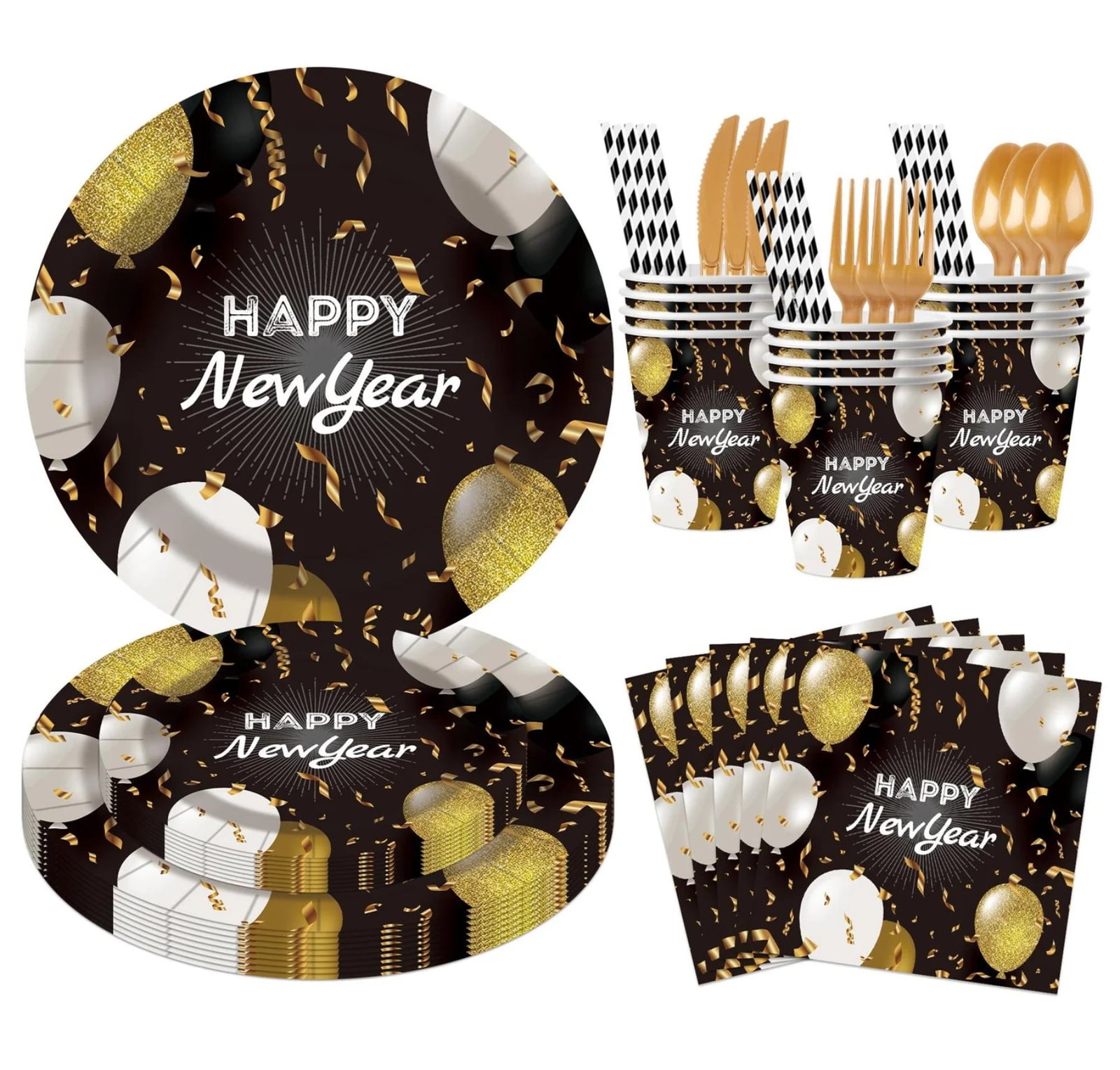
Product Options in This Range
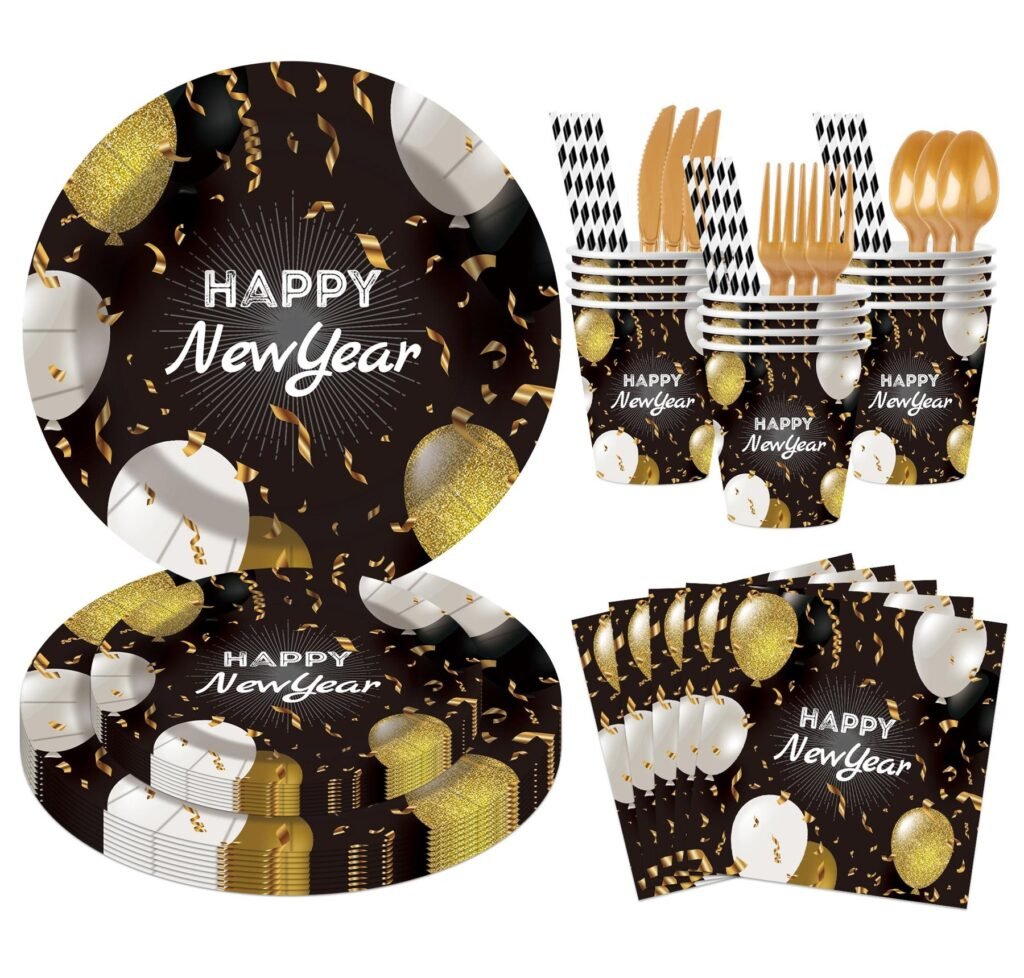
Black & Gold Happy New Year Celebration Party Tableware Set — Festive Dinnerware
SKU PT-014 sits in this range as option 1. Open the PT-014 product page.
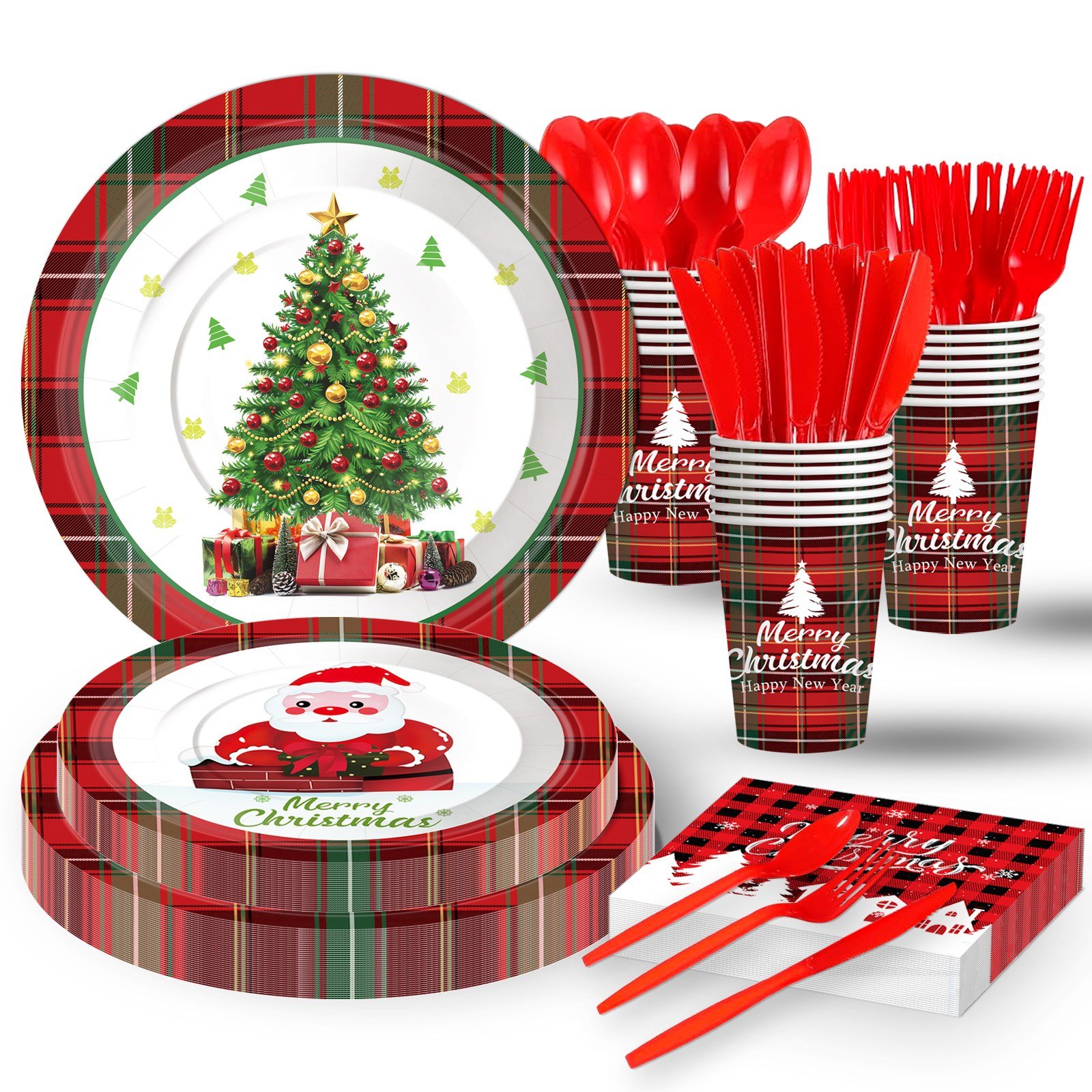
Christmas Tartan Party Tableware Set — Plaid Holiday Dinnerware
The PT-022 page lists the specification sheet and the sample request route. Open the PT-022 product page.
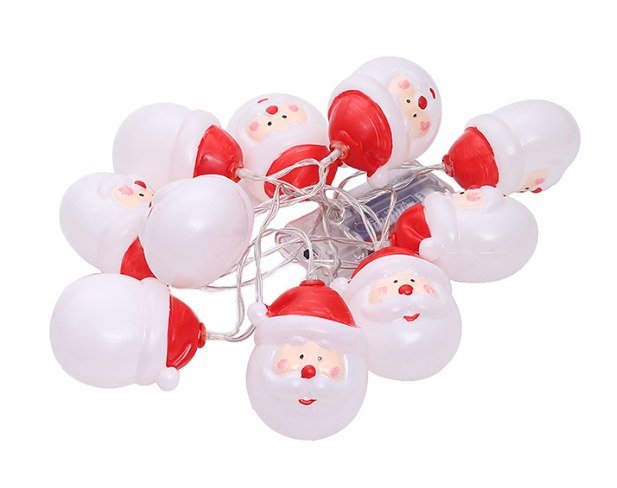
Santa Claus LED String Lights — Battery Fairy Lights for Christmas Decorating
Buyers comparing formats can review LT-001 alongside the other two options. Open the LT-001 product page.
Frequently Asked Questions About New Year and Winter Holiday Decorations
When should distributors start sourcing winter and New Year ranges?
I recommend starting the sourcing process early enough to allow for design selection, sampling, artwork approval, production booking, consolidation, and freight. The right timing depends on the product complexity and shipping method, but buyers should work backward from the date stock must reach their retail or warehouse destination.
Which products have the lowest seasonal sell-through risk?
Evergreen winter home décor, non-dated gift packaging, neutral metallic decorations, and flexible party tableware usually carry less timing risk than year-specific or event-specific items. Buyers should still assess their own customer demand, planned retail placement, and product condition requirements before ordering.
Why should MOQ be confirmed for every SKU?
MOQ can vary by material, print method, packaging format, colour, and customization level. I recommend confirming MOQ per SKU because a range-level estimate may not reflect the actual minimum for a custom printed item, LED product, or private-label package.
What should buyers check before approving private-label artwork?
Buyers should check logo placement, spelling, language versions, barcodes, colour references, date information, warning labels, packaging copy, and print layout. I also recommend requesting a written proof and ensuring that the approved version is clearly identified before bulk production begins.
Do food-contact tableware and LED decorations need extra review?
Yes. Buyers should clearly state intended use and target market requirements in writing. They should request and verify relevant supplier documentation, labeling details, and product information. A qualified compliance professional should assess application-specific requirements before products are placed on the market.
Conclusion: Planning New Year and Winter Holiday Decorations With More Control
A successful seasonal programme depends on timing as much as design. I recommend that distributors separate evergreen winter products from dated New Year items, document specifications by SKU, allocate approval time for private-label artwork, and confirm delivery windows before committing to bulk orders. New Year and Winter Holiday Decorations can support strong seasonal assortments when buyers manage production, freight, and sell-through risk as one connected plan. For sourcing support on seasonal ranges, OEM/ODM development, and wholesale product enquiries, submit an RFQ at https://hkdayo.com/request-a-quote/.
Hi, I'm Danson. I work closely with our manufacturing partners to develop and deliver seasonal decorations, party supplies, and celebration products for international wholesale buyers. Here, I share practical product knowledge, customization insights, and manufacturing experience to help buyers build successful seasonal collections.
Have a wholesale project in mind? Let's talk!
Discuss Your Wholesale Project Request a Wholesale QuotePlanning a Wholesale Order from China?
Share your product requirements, quantities and destination. Let's discuss your wholesale requirements.