Private Label Party Supplies: OEM vs ODM Explained for Celebration Product Buyers

Private label party supplies can help a wholesaler stand out, but choosing between OEM and ODM can create uncertainty before the first quotation arrives. If the customization scope is unclear, buyers may face unexpected tooling costs, unsuitable MOQs, packaging delays, or a missed seasonal selling window. I recommend deciding the required level of control before requesting supplier proposals.
Quick Answer
OEM and ODM are not fixed global categories[2]. In practical sourcing, ODM usually starts with an existing product or design that a buyer adapts, while OEM may involve deeper product, material, color, pattern, packaging, or structural customization[1]. The correct choice depends on design control, order quantity, budget, sampling needs, and delivery timing. Buyers should confirm every detail in writing rather than relying on the label alone.
- Choose a more ODM-oriented route when an existing product can meet most of your market requirements.
- Consider deeper OEM customization when your brand needs a distinctive product or coordinated collection.
- Compare total project cost, including samples, development, tooling, packaging, inspection, freight, and inventory risk.
- Ask suppliers to define the exact customization scope, MOQ, ownership terms, and production schedule.
- Request a written quotation and approved sample before committing to a seasonal purchase.
The important question is not which label sounds more advanced. The practical question is how much design responsibility and commercial risk a buyer wants to manage. The sections below explain how I would structure that decision before sending a private-label party supplies inquiry.
Private Label Party Supplies: Explained Celebration Product Choices
Many buyers use OEM and ODM as if they have one universal meaning. That assumption can cause confusion because suppliers may describe similar services differently. I recommend treating both terms as starting points for discussion, not as complete technical definitions.
ODM commonly refers to adapting an existing product, decoration, format, or design system. OEM commonly suggests a greater level of buyer-directed customization, but it does not automatically mean a product is created entirely from scratch. The supplier’s written scope remains more important than the label.
Define the models by buyer control
| Evaluation point | More ODM-oriented project | More OEM-oriented project |
|---|---|---|
| Starting point | Existing product, pattern, or supplier concept | Buyer brief, reference, or newly developed specification |
| Design control | Controlled changes to selected features | Deeper control over several product features |
| Development complexity | Often limited, depending on changes | Can be higher, depending on tooling and materials |
| Buyer responsibility | Select, adapt, and approve | Define requirements, approve development, and manage more decisions |
| Commercial risk | May involve lower development exposure, but not automatically | May involve higher development exposure and inventory risk |
| Best fit | Faster assortment testing or controlled brand adaptation | Distinctive products, collections, or proprietary specifications |
These categories are practical rather than legal. A supplier may call an existing product with customized packaging “OEM,” while another supplier may call the same service “ODM.” A buyer should therefore ask questions such as:
- Which parts of the product already exist?
- Which parts can the supplier change?
- Does the supplier need new tooling or artwork?
- Can the buyer approve a physical sample?
- Who supplies the design files?
- Which changes affect the MOQ or unit price?
- Does the quotation include packaging development?
- What happens if the approved sample cannot be reproduced in bulk?
Why the distinction matters
The distinction affects more than the product appearance[3]. It can change the development schedule, approval process, cash exposure, and ability to build a coordinated collection.
For example, a retailer may want a birthday range containing plates, napkins, banners, cake toppers, favor bags, and table decorations. An ODM-style approach may allow the buyer to begin with existing shapes and apply a new color palette or pattern. A deeper OEM-style project may be suitable if the buyer wants a new structural format, unusual finishing, or a coordinated item that does not already exist.
Neither approach is automatically better[4]. A buyer with a short launch window may prefer a controlled adaptation. A brand building a long-term celebration range may accept more development work in exchange for stronger differentiation.
What I would place in a pre-inquiry brief
- Product category: for example, tableware, banners, party favors, gift packaging, or seasonal décor.
- Target occasion: birthday, wedding, graduation, Halloween, Christmas, or another event.
- Reference images: These should show the intended look, not necessarily a demand for exact copying.
- Required changes: List color, pattern, size, material, finish, accessory, and packaging changes separately.
- Estimated order quantity: Give a realistic range instead of an unconfirmed maximum.
- Target delivery date: State the date when goods must be ready for shipment or arrival.
- Brand requirements: Include logo placement, label format, barcode needs, and carton markings.
- Market information: Identify the destination market so the supplier can discuss applicable documentation and buyer requirements.
- Sample expectations: Explain whether a digital mock-up, blank sample, pre-production sample, or production sample is needed.
How Much Design Control Do Private Label Party Supplies Need?
A product can look private label without being deeply customized. A logo on a stock package may be enough for one sales channel, while another buyer may need a unique product series that competitors cannot easily match. The right level of control depends on the buyer’s commercial strategy.
Buyers should first separate essential design changes from desirable extras. A basic private-label program may use an existing product with customized colors, artwork, packaging, or assortment. A deeper program may require changes to structure, materials, dimensions, components, and production methods.
Rank customization by impact
Level two: product configuration
- A new size or shape
- Different component combinations
- Alternative attachments
- A revised pack quantity
- A new finish
- A coordinated product family
- A modified closure or display format
Level three: structural or material development
This route requires more technical communication. The buyer should not assume that a supplier can accept every requested change simply because a similar product exists in its catalogue.
Build a collection, not only a single item
Private label party supplies are often sold as collections. A buyer may receive better commercial value from a consistent theme than from one isolated product. A collection can use shared design elements such as:[8]
- A defined color palette
- One pattern family
- Matching typography
- Repeated icons
- Similar packaging architecture
- Consistent pack sizes
- Coordinated product photography
However, a collection also creates coordination risk. Different materials, production lines, and packaging methods may produce visible differences between items. I recommend asking the supplier how the collection will be managed and whether one approved artwork system can be applied across the range.
A control matrix can clarify the decision
| Buyer requirement | Likely customization question |
|---|---|
| Logo only | Can the supplier print or apply the logo to an existing product or package? |
| Exclusive pattern | Who creates the artwork, and how will color matching be approved? |
| New product shape | Is tooling required, and who pays the development cost? |
| Coordinated collection | Can one theme be reproduced across different materials and processes? |
| Retail-ready packaging | Does the supplier provide artwork templates and carton specifications? |
| Small initial order | Can the design be adapted within an existing production setup? |
| Long-term exclusivity | What written terms define the product, artwork, territory, and duration? |
The buyer should keep the matrix practical. It is not necessary to demand maximum control over every feature. Excessive customization can add cost and delay without improving sell-through.
Which Costs and Risks Should Buyers Compare?
A low unit price can look attractive while the overall project remains expensive[5]. Private-label purchasing can include development, artwork, samples, packaging, inspection, freight, and inventory costs. I recommend comparing the full landed project rather than the product price alone.
The correct OEM or ODM decision considers total commercial exposure. Buyers should compare unit price, MOQ, development or tooling charges, sampling, packaging, lead time, payment stages, inspection, freight, and the cost of missing the intended selling season. A lower quoted unit price does not automatically indicate a lower-risk project.
Separate one-time and recurring costs
| Cost category | Possible cost type | Buyer question |
|---|---|---|
| Product price | Recurring | Does the price change with quantity or material choice? |
| Artwork setup | One-time or recurring | Is the artwork fee included, and what does it cover? |
| Tooling | Usually development-related | Is new tooling needed, and who owns or stores it? |
| Sampling | One-time per revision or stage | How many revisions are included? |
| Custom packaging | Recurring plus setup | Does the price include bags, boxes, labels, and inserts? |
| Inspection | Per shipment or buyer-arranged | What inspection standard and timing will apply? |
| Freight and export costs | Shipment-related | Which trade terms and documents are included? |
| Storage or consolidation | Conditional | What happens if products are ready at different times? |
The supplier should state assumptions clearly. For example, a price may depend on one artwork, one color, one pack quantity, or one packaging format. If the buyer changes those assumptions later, the commercial terms may change.
MOQ is a project variable
A buyer should ask which MOQ applies to each element. A supplier may accept a mixed collection at one total quantity but require a separate minimum for every printed design. Another supplier may allow assortment flexibility but charge a setup fee.
The buyer should also consider inventory balance. A low MOQ does not remove the need to forecast demand[7]. If the buyer orders too many variations, each item may sell slowly even when the total order looks manageable. A focused collection with fewer, stronger designs may reduce stock complexity.
Seasonal timing changes the risk calculation
Seasonal products have a limited selling window[6]. A delayed Halloween order may have less commercial value after October, and a delayed Christmas order may become difficult to promote after the main shopping period. I recommend working backward from the sales date.
- Confirm the market concept and target assortment.
- Send the supplier brief.
- Review the quotation and customization scope.
- Approve artwork or digital mock-ups.
- Review physical samples where appropriate.
- Confirm packaging and carton information.
- Place the purchase order.
- Allow time for production, inspection, export documentation, freight, and receiving.
- Build a buffer for changes or transport disruption.
How Should Buyers Evaluate an OEM or ODM Supplier?
A professional supplier evaluation should test communication quality, documentation, production understanding, and commercial transparency. A polished catalogue is not enough. The buyer needs evidence that the supplier understands the actual project.
Buyers should compare suppliers by their ability to interpret the brief, explain customization limits, provide a clear quotation, manage samples, confirm packaging, and communicate schedule dependencies. Buyers should also verify any claimed certifications, test documents, and compliance records for the specific product and destination market.
Start with the inquiry response
- A clear interpretation of the requested changes
- Questions about missing specifications
- Separate pricing for product and packaging
- MOQ details by variation
- Sample and development charges
- Estimated production stages
- A list of information still required
- Clear assumptions and exclusions
Assess sample management
- Sample version and date
- Approved artwork
- Color references where relevant
- Product dimensions
- Material description
- Component count
- Packaging configuration
- Visible defects or changes requested
- Approval status
If the buyer approves a sample with comments, those comments should be attached to the purchase order or another formal project record. A verbal approval can be difficult to interpret later.
Ask about production consistency
- Which production steps are handled by the supplier?
- Are any steps subcontracted?
- How will the supplier control artwork versions?
- How will mixed products be packed and counted?
- When will the supplier conduct internal quality checks?
- Can the buyer arrange a pre-shipment inspection?
- What information will appear on master cartons?
- How will defects or shortages be reported and resolved?
Treat documents as documents to verify
- Applies to the exact product
- Covers the relevant material and color
- Matches the intended destination market
- Is current
- Identifies the correct manufacturer or product
- Comes from a credible issuing body
- Meets the buyer’s own regulatory or retail requirements
I do not recommend treating a logo or certificate image as proof by itself. The importer, brand owner, or qualified professional should determine what documentation is required for the destination market and sales channel.
Supplier comparison scorecard
| Criterion | Questions to score |
|---|---|
| Customization clarity | Did the supplier define what can and cannot change? |
| Commercial transparency | Are MOQ, setup, sample, and packaging costs separated? |
| Sample process | Is there a documented approval route? |
| Schedule control | Does the supplier identify dependencies and milestones? |
| Packaging capability | Can the supplier support the required retail presentation? |
| Communication | Are replies specific, consistent, and easy to follow? |
| Documentation | Can the supplier provide relevant documents for verification? |
| Consolidation support | Can compatible items be coordinated for shipment? |
What Should a Private Label Party Supplies Inquiry Include?
A vague inquiry produces a vague quotation. The buyer does not need a long technical specification for every early discussion, but the initial request should contain enough information for a meaningful response.
A strong inquiry should identify the product type, target occasion, desired customization, estimated quantity, packaging needs, destination, and required delivery window. The buyer should ask the supplier to confirm what is included, what remains subject to approval, and which assumptions affect the price or schedule.
Use a structured request
1. Product and market
State the intended product category and customer. For example, the project may target gift stores, party retailers, e-commerce customers, or promotional buyers. Explain whether the range is for a single holiday or a broader celebration programme.
2. Design direction
Include reference images, sketches, color ideas, pattern examples, and brand guidelines. The buyer should distinguish between inspiration and mandatory requirements. This distinction helps the supplier understand where alternatives may be acceptable.
3. Quantity and assortment
Provide an estimated range and explain how the quantity may be divided. A request for “10,000 pieces” is incomplete if the order contains ten designs, three colors, and two packaging formats. The supplier needs to know the expected breakdown.
5. Timing and logistics
State the required ready-to-ship date or arrival date, if known. The buyer should also identify the destination country and preferred shipping arrangement. If several products will be consolidated, the buyer should explain which items must be ready together.
Questions for the first quotation
- Is this product based on an existing design or does it require development?
- Which requested changes are possible?
- What is the MOQ for each design, color, size, and package?
- What are the product, sample, artwork, tooling, and packaging charges?
- How many sample stages are recommended?
- What information is needed before the supplier can confirm timing?
- What is the estimated production schedule after sample approval?
- What packaging specifications can the supplier support?
- Which documents can the supplier provide for buyer verification?
- What terms define artwork use, product exclusivity, or ownership?
- Can the supplier consolidate compatible products?
- What are the assumptions behind the quotation?
The buyer should avoid asking for a final “best price” before the specifications are stable. An early price may be useful as a budget indication, but it should not be treated as a binding commercial offer unless the supplier states otherwise.
Use a decision gate
- Gate one: Is the concept commercially suitable?
- Gate two: Can the supplier meet the required design scope?
- Gate three: Does the full project cost fit the budget?
- Gate four: Does the sample meet the approved requirements?
- Gate five: Can the order be produced and shipped within the selling window?
How Can Buyers Choose Between OEM and ODM for a Seasonal Programme?
Seasonal sourcing requires a balance between differentiation and execution. A buyer may want a unique range, but the range must still be developed, produced, packed, shipped, and sold within a limited period.
Buyers should favor an ODM-oriented route when an existing design can satisfy the core commercial need and the launch window is tight. Buyers should consider deeper OEM customization when product distinction, brand consistency, or long-term collection development justifies additional work, cost, and approval time. The final decision should follow a written feasibility review.
Match the route to the business objective
| Business objective | More suitable starting route | Reason to investigate |
|---|---|---|
| Test a new occasion trend | Existing design with controlled adaptation | Limits early development complexity |
| Launch a branded gift collection | Deeper customization or coordinated development | Supports stronger visual identity |
| Meet a near seasonal deadline | Existing product and simple packaging changes | Reduces the number of development decisions |
| Create a retailer-exclusive assortment | Product and packaging customization | May provide stronger differentiation |
| Build a long-term product platform | Structured OEM/ODM development plan | Allows the collection to evolve in stages |
| Manage uncertain demand | Smaller, focused assortment | Reduces variation and inventory exposure |
Consider a phased launch
A phased approach can reduce risk. The buyer may first select existing products, add a distinct color or pattern system, and use private-label packaging. After the market response becomes clearer, the buyer can develop a more distinctive shape, component, or material specification.
This approach may suit e-commerce brands and regional wholesalers that want to test a theme before committing to a broad collection. It can also help a buyer gather customer feedback about pack size, color preference, price position, and occasion relevance.
Protect the selling window
The selling window should guide the project depth. A highly customized item may be commercially attractive but unsuitable if approvals begin too late. I recommend creating a simple risk register:
| Risk | Possible effect | Practical control |
|---|---|---|
| Artwork revisions | Sample and production delay | Use a version-controlled approval process |
| New tooling | Added cost and schedule exposure | Confirm tooling responsibility before development |
| Too many variations | Higher MOQ and slow stock movement | Start with a focused assortment |
| Packaging delay | Finished products cannot ship | Approve packaging in parallel where possible |
| Sample differs from bulk | Quality or customer acceptance issue | Use a documented pre-production approval |
| Freight timing changes | Late seasonal arrival | Plan a realistic buffer and shipment option |
| Unclear documents | Import or retail delays | Verify requirements before ordering |
When professional evaluation is appropriate
A qualified professional should review application-specific issues such as destination-market requirements, product safety obligations, labeling, material restrictions, intellectual property questions, and import documentation. Supplier statements can support the review, but they should not replace the buyer’s legal, compliance, customs, or quality responsibilities.
Frequently Asked Questions
Is OEM always fully custom?
No. OEM can involve deeper buyer-directed customization, but the term does not universally mean a product is made entirely from scratch. Some suppliers use OEM for logo, packaging, or product adaptations. Buyers should define the exact changes, development work, and approval process in writing.
Is ODM always faster or cheaper?
No. An existing design may reduce development work, but ODM is not automatically faster or cheaper. Complex artwork, packaging, low quantities, multiple variations, or seasonal production schedules can still create cost and timing pressure.
What information should I provide for a private-label quotation?
Provide the product category, occasion, reference images, required changes, estimated quantity, variation breakdown, packaging needs, destination market, brand information, and target delivery date. Ask the supplier to separate product, sampling, artwork, tooling, packaging, and other project costs.
Should I order a sample before approving production?
A sample is strongly advisable when appearance, size, packaging, color, components, or branding matters. The buyer should document the approved version and attach relevant specifications to the purchase order. A qualified quality professional can advise on inspection needs for the specific project.
Can one supplier develop a complete themed party collection?
A supplier may be able to coordinate several related items, but capability varies by product category and production process. Buyers should ask which items are made directly, which may involve partners, how artwork will be controlled, and whether all products can meet the same packaging and schedule requirements.
Conclusion
Private label party supplies require a practical choice between design control and project exposure. ODM may suit an existing product that needs controlled adaptation, while deeper OEM customization may support a more distinctive branded collection. Neither term guarantees lower cost, faster delivery, or stronger quality. I recommend comparing MOQ, sampling, tooling, packaging, documents, production timing, and seasonal risk together. When the project scope is clear, request a quotation from HKDayo with your product brief, target quantity, customization needs, and delivery window.
Sources
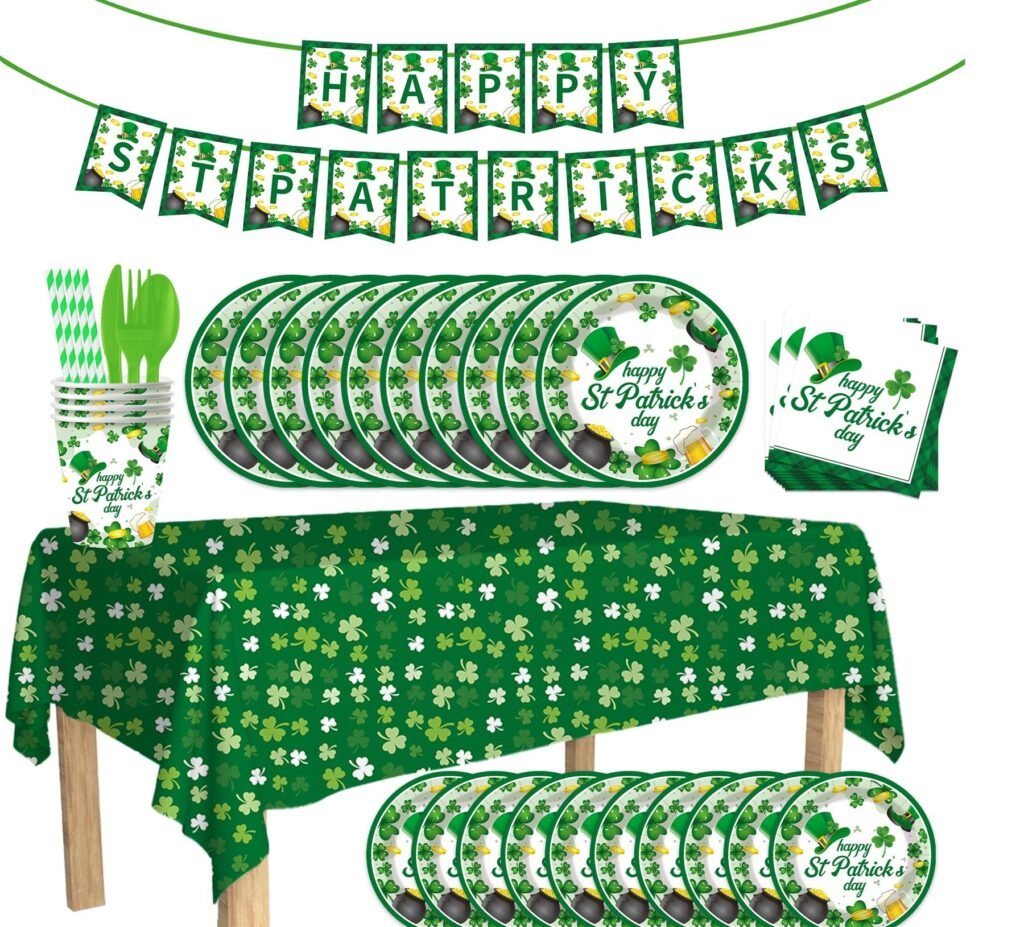
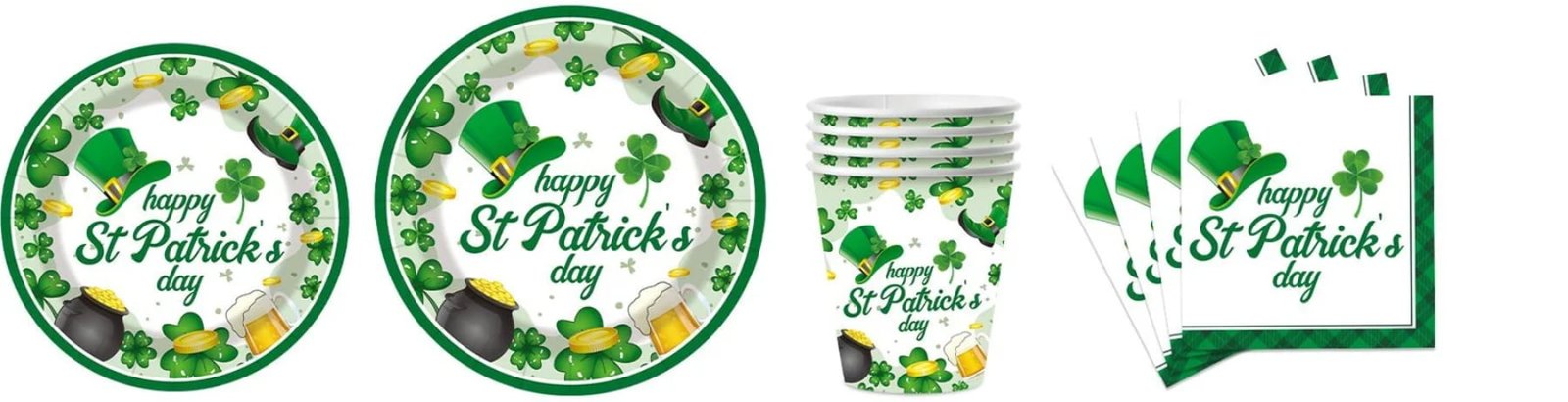
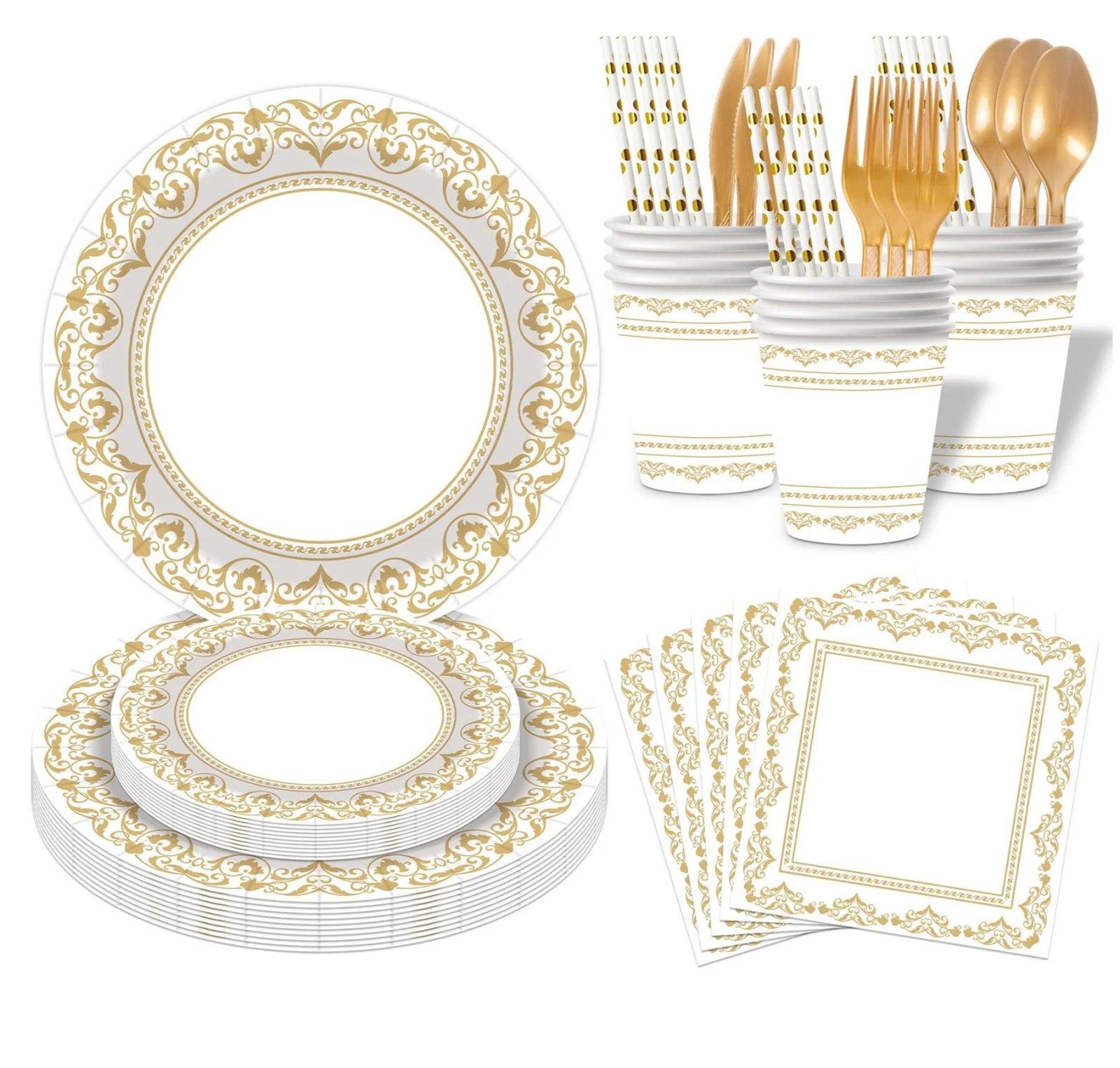
Two celebration sets illustrate how these models apply in practice: the St. Patrick’s Day Green & White Party Tableware Set for seasonal themed programs, and the Gold & White Elegant Wedding & Engagement Party Tableware Set for premium event ranges.
- Original Equipment Manufacture OEM – UW Research", Reference works on manufacturing terminology commonly distinguish ODM from OEM by the origin of the product design and the extent of buyer-directed specification, although the terms are applied inconsistently in commercial practice
- EX-10.15", Research on contract manufacturing terminology indicates that OEM and ODM labels can describe different combinations of design ownership, production responsibility, and customization across industries and markets
- Wire-PATH™: Modular and flexible tooling for rapid product …", Studies of customized manufacturing associate increased product variety and engineering changes with additional coordination, development effort, and schedule exposure, providing a mechanism for the operational effects described here
- EFFECTIVE METHODOLOGIES FOR SUPPLIER SELECTION …", Sourcing and product-development literature treats standardization and customization as context-dependent alternatives whose relative value depends on requirements, volume, timing, and available capabilities
- Total Cost of Ownership: Purchasing | Loyola University Chicago", Procurement frameworks distinguish the quoted purchase price from total acquisition cost, which may include development, quality assurance, logistics, handling, and inventory-related expenses
- A Guide to Demand Forecasting in Supply Chain Management", Research on seasonal inventory management shows that demand concentrated in a limited period makes replenishment timing and late delivery materially important to sales and residual inventory exposure
- Determination of minimum stock on system retail using …", Inventory-management research treats minimum order quantities as procurement constraints and demand forecasts as estimates of expected consumption; relaxing one constraint does not remove uncertainty in the other
- What Is Brand Identity? Tips & Examples for Shaping Yours", Research in branding and visual communication indicates that repeated design cues across related products can strengthen perceived identity and coherence within an assortment
Hi, I'm Danson. I work closely with our manufacturing partners to develop and deliver seasonal decorations, party supplies, and celebration products for international wholesale buyers. Here, I share practical product knowledge, customization insights, and manufacturing experience to help buyers build successful seasonal collections.
Have a wholesale project in mind? Let's talk!
Discuss Your Wholesale Project Request a Wholesale QuotePlanning a Wholesale Order from China?
Share your product requirements, quantities and destination. Let's discuss your wholesale requirements.