Baby Shower and Wedding Tableware: Sourcing Coordinated Event Supplies from China

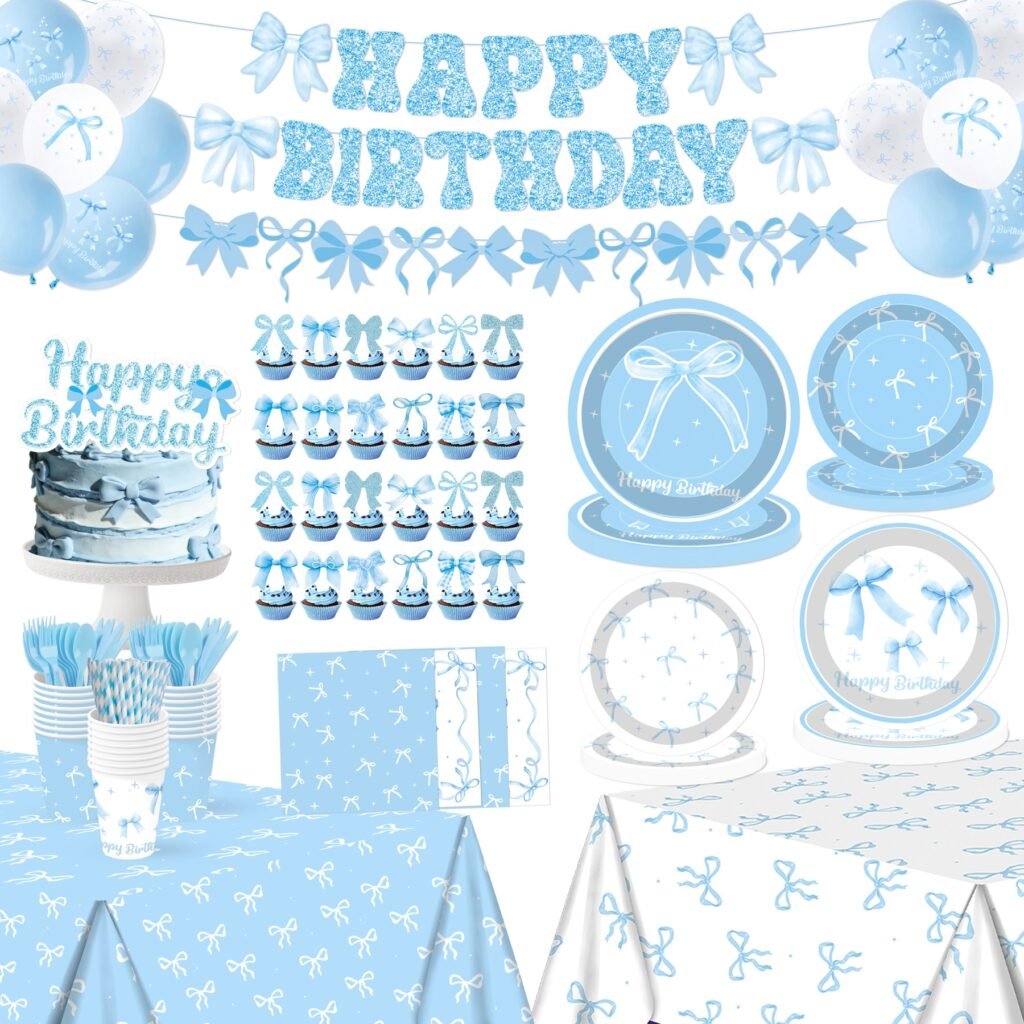
Baby Shower and Wedding Tableware can look attractive in separate product listings, yet still create a disjointed event setting when the pattern, material, scale, and packaging do not work together. That risk can leave planners with difficult inventory.[1] I recommend treating the tableware as one commercial collection, not as a group of same-color products.
To source coordinated Baby Shower and Wedding Tableware from China, I would first define the event theme, palette, pattern style, materials, table-setting needs, and packaging format. Then I would build a complete assortment around plates, cups, napkins, table coverings, and accents. I would request samples or detailed product evidence for the full collection, check visual consistency across materials and sizes, and confirm packaging, labeling, compliance documents, consolidation, and reorder conditions before placing a production order.
A coordinated range should help a buyer present one clear event style across several table settings. It should also make commercial sense after arrival, storage, display, and resale. The following method explains how I would translate an event brief into a supplier-ready assortment while keeping the evaluation practical and evidence-based.
Quick Answer
- Define the theme, color scheme, pattern language, and customer position before selecting individual tableware products.
- Build the assortment around the complete table setting, including plates, cups, napkins, table coverings, cutlery, and tabletop accents.
- Check whether the visual language remains consistent across paper, plastic, textile, ceramic, wood, or other materials.
- Review product dimensions, pack quantities, cartons, labels, and packaging together because commercial coordination extends beyond appearance.
- Ask the supplier for a collection-level quotation, sample plan, documentation list, and production confirmation rather than evaluating isolated SKUs only.
- Use a qualified professional to review destination-market requirements for food-contact products, packaging, labeling, and other application-specific matters.
What Does Coordinated Baby Shower and Wedding Tableware Really Mean?
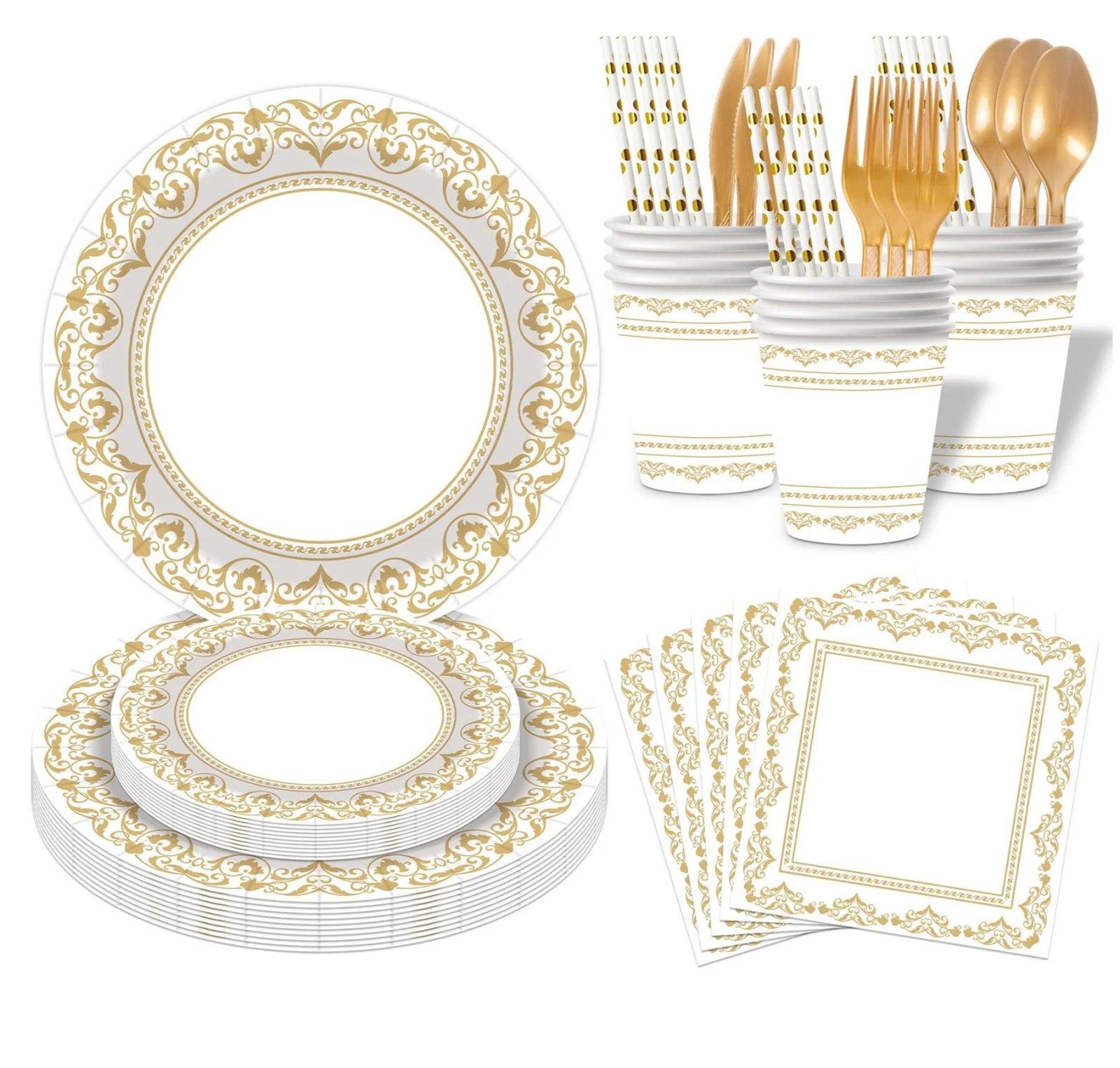
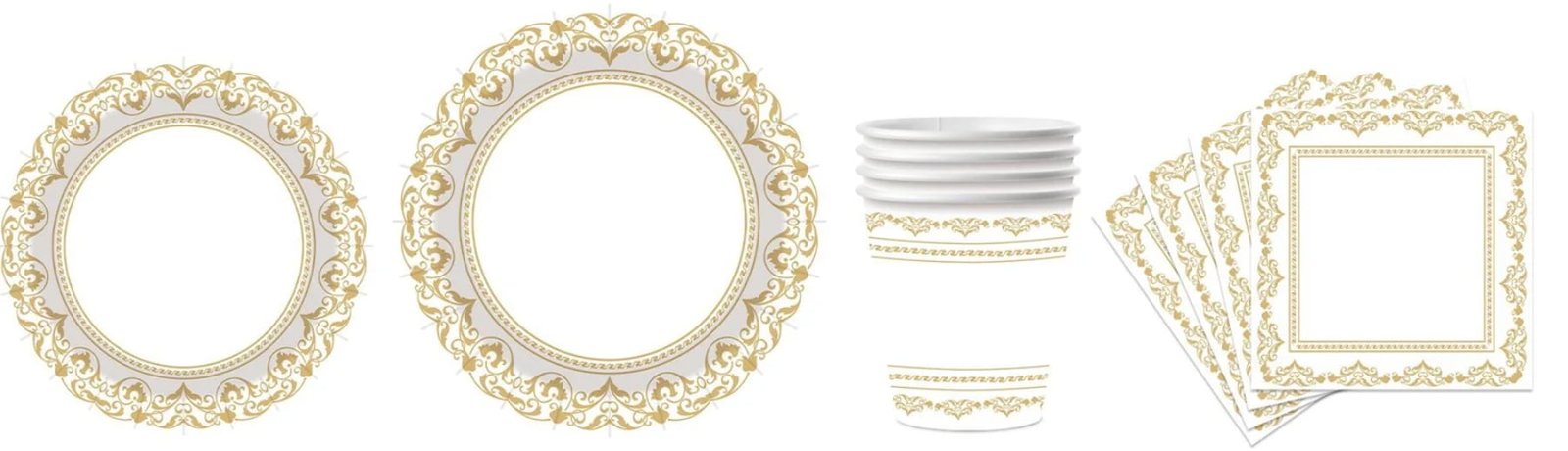
Many buyers begin with a color such as blush pink, sage green, ivory, or gold. That is useful, but color alone does not create coordination[2]. A stronger approach connects the visual theme, product function, material choices, pattern scale, and packaging. I would define coordination as the ability of the full assortment to look intentional when it is displayed and used together.
Section answer
Coordinated Baby Shower and Wedding Tableware uses a shared visual system across the complete event setting. The system normally includes a defined palette, compatible patterns, related finishes, suitable product proportions, and consistent packaging. Products do not need to be identical, but they should support the same event story.
Start with the event brief
- Event type: wedding, bridal shower, baby shower, gender-neutral celebration, anniversary, or another occasion.
- Visual position: minimalist, rustic, modern, romantic, luxury-inspired, playful, botanical, vintage, or seasonal.
- Main colors: one dominant color, one supporting color, and one accent color are often easier to manage than a long palette.
- Customer and price position: premium event planner, mainstream retail, party store, e-commerce, or promotional programme.
- Table format: buffet, seated dinner, dessert table, cocktail service, children’s table, or mixed use.
- Expected collection size: a focused set of core items or a broader themed programme.
- Packaging direction: retail-ready, bulk commercial packing, private label, giftable packaging, or mixed packaging.
Coordination is a system, not a color shortcut
A rose-gold foil detail on a paper napkin may not match a rose-gold plastic plate if the two finishes reflect light differently. A large floral print may compete with a small geometric print even when both use the same colors. A heavy-looking ceramic-style product may feel unsuitable beside very thin disposable items.
| Factor | Questions for the buyer |
|---|---|
| Color | Are the shades close under the intended event lighting? |
| Pattern | Do motifs share a theme, scale, and level of detail? |
| Material | Do the materials create a deliberate mix or an accidental mismatch? |
| Finish | Are metallic, matte, glossy, textured, or printed surfaces compatible? |
| Scale | Do product sizes and graphic proportions look balanced on the table? |
A coordinated assortment can use contrast. For example, a plain plate may support a patterned napkin, while a restrained table runner may give a more decorative centerpiece room to stand out. The important point is that each contrast should have a reason.
Use the table as the decision environment[3]
Catalog images encourage item-by-item decisions. I recommend reviewing a proposed assortment as a table setting instead. Place the main plate, side plate, cup, napkin, table covering, cutlery, and centerpiece accent into one visual board or sample layout. This reveals problems that individual product photos may hide.
For example, a delicate botanical print may work well on a napkin but become too dense when repeated on plates, cups, and tablecloths. A metallic border may look refined on one product but become excessive when every item carries it. A table setting view creates a more realistic procurement decision.
Which Baby Shower and Wedding Tableware Items Should Form the Core Collection?
A collection can become difficult to sell when it contains many decorative products but lacks the basic items needed for a usable setting.[4] I recommend building the range in layers. Core tableware should come first, followed by support items and then optional accents.
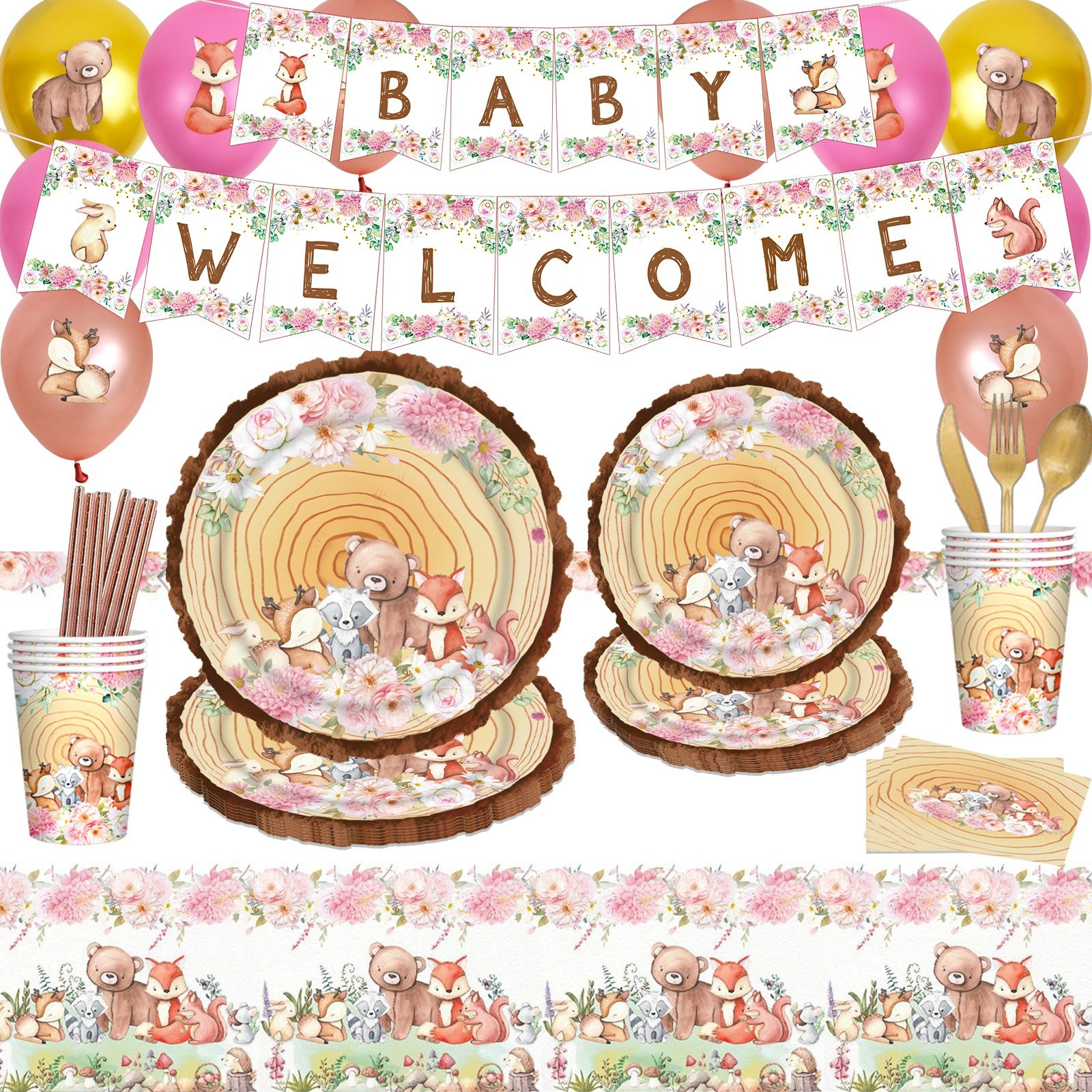
The core collection should normally connect plates, cups, napkins, table coverings, and serving or tabletop accents. Buyers can then add cutlery, place cards, favor packaging, dessert accessories, and decorative pieces according to the event format. Every SKU should have a role in the complete table presentation.
Build around how guests use the table
The right assortment depends on the service style. A seated wedding meal may need dinner plates, side plates, drinkware, napkins, cutlery, place settings, and table linens. A baby shower dessert table may need smaller plates, cups, dessert napkins, cake or treat accessories, and decorative accents.
Plan quantities as a programme
| Product group | Planning basis | Commercial question |
|---|---|---|
| Plates and cups | Guests plus planned reserve | Does the pack quantity fit the event size? |
| Napkins | Guests, service points, and replacement allowance | Are extra units needed for spills or multiple courses? |
| Table coverings | Tables and table dimensions | Can one format serve several table sizes? |
| Centerpiece accents | Tables or display zones | Will unused pieces have resale value? |
| Favor packaging | Guests or participating households | Can the item support personalization? |
Avoid disconnected SKUs
A supplier may show hundreds of attractive products, but a large catalog does not guarantee a coherent range. I recommend asking the supplier to group proposed items by theme and intended table position. The buyer can then see whether the collection has a practical flow.
This description gives each product a defined job. It also makes it easier to identify gaps. If the range contains a plate, napkin, and centerpiece but no suitable cup or table covering, the collection may not be ready for a complete event setting.
How Can Buyers Check Material, Size, Finish, and Pattern Consistency?
Visual inconsistency often appears when products move from a digital catalog to a physical table. Images may use different lighting, editing, backgrounds, or display props. I would therefore treat visual evidence as a procurement input, not as a final quality decision.
Buyers should compare samples or supplier evidence across the full collection, not only within one product category. They should check color under realistic lighting, pattern scale, material appearance, surface finish, dimensions, edge details, and print placement. They should also confirm which features are standard and which require customization.
Compare materials deliberately
Different materials can work together when their roles are clear.[5] A paper napkin, a reusable textile runner, and a printed plate may create a balanced setting. They can also look unrelated if their textures and finishes point in different directions.
| Material or finish | Possible visual strength | Point to review |
|---|---|---|
| Printed paper | Flexible graphics and event themes | Print color, edge quality, and surface appearance |
| Plastic or synthetic tableware | Lightweight and easy to coordinate in some ranges | Gloss, translucency, rim detail, and intended use |
| Textile | Adds softness and visual depth | Weave, weight, hem, sizing, and care expectations |
| Ceramic or ceramic-look products | Can support a more substantial presentation | Weight, breakage risk, packing, and intended application |
| Wood or wood-look accents | Can support rustic or natural themes | Grain variation, finish, and relationship with printed items |
| Metallic-look details | Can create an accent point | Color consistency, reflectivity, and print or coating method |
Review scale and proportion
Pattern scale is easy to overlook. A small repeating motif may disappear on a large tablecloth but look suitable on a napkin. A large illustration may dominate a small dessert plate. I recommend comparing artwork at the approximate viewing distance of the final event.
- Does the main motif remain recognizable at the product’s actual size?
- Does the border leave enough practical space for the food or table setting?
- Does the pattern align across products, or is a related but different placement more appropriate?
- Does the accent color appear too often?
- Does one product become visually dominant without the buyer intending it?
Check finish under realistic conditions
- Matte versus glossy appearance
- Printed color beside unprinted material
- Foil or metallic-look details beside the main palette
- Surface texture at close and normal viewing distances
- Visibility of fingerprints, creases, or packaging marks where relevant
- Appearance when products are stacked or placed together
I cannot treat a supplier’s statement that products “match” as sufficient evidence. I would ask what exactly matches: color reference, artwork, material, finish, or only the general theme. The scope of the match should appear in the quotation, artwork approval, or product specification.
How Does Packaging Affect the Commercial Fit of Event Tableware?
Packaging is part of the collection.[6] It affects storage, shelf presentation, transport planning, labeling, and the buyer’s ability to sell products as a clear themed programme. A beautiful assortment can become difficult to manage when each item uses a different pack format or lacks useful identification.
Buyers should evaluate inner packaging, master cartons, pack quantities, labels, barcode needs, artwork, protection, and private-label options alongside the tableware itself. Packaging should make the collection easier to identify, consolidate, store, and sell without assuming that a supplier’s standard format automatically suits the destination market.
Select a packaging architecture
| Packaging approach | Suitable use | Main evaluation point |
|---|---|---|
| Individual retail packs | Retail shelves and online listings | Consistent design, labeling, and dimensions |
| Bulk inner packs | Event companies and wholesalers | Easy counting, protection, and warehouse handling |
| Coordinated gift or event sets | Premium or convenience-focused programmes | Clear contents and balanced perceived value |
| Private-label packaging | Brand-led retail and e-commerce | Artwork approval, label data, and repeatability |
| Mixed packaging | Buyers serving several channels | Strong SKU identification and carton control |
Packaging should support collection recognition
- Collection name or theme identifier
- SKU and product description
- Pack quantity
- Dimensions where appropriate
- Color or pattern reference
- Brand information
- Country-of-origin or other required details
- Barcode or marketplace data where needed
- Carton markings for consolidation and receiving
The exact information depends on the product, sales channel, and destination. I would ask the buyer’s compliance, legal, or importing adviser to confirm required labeling rather than treating a general packaging template as universally acceptable.
Consider cartons and consolidation
China sourcing often involves combining multiple product types into one shipment. Consolidation can be commercially useful, but it requires clear carton planning. Plates, cups, textiles, paper goods, and decorative accents may have different packing risks and carton dimensions.
- Inner pack quantity
- Master carton quantity
- Carton dimensions and estimated gross weight
- Product-to-carton packing plan
- Carton marks
- Whether cartons can be mixed by SKU
- Whether the supplier can prepare a packing list that separates each product
- How damaged or short-packed cartons would be identified
What Should I Ask a China Supplier Before Ordering a Coordinated Collection?
A supplier’s ability to provide several related products is useful, but it does not prove that the products will be visually or commercially consistent. I would ask collection-level questions and require the answers in a form that can be checked later.
Before ordering Baby Shower and Wedding Tableware, buyers should confirm the product list, materials, dimensions, artwork, finish, pack quantities, customization scope, sample process, production approval, documentation, carton details, and reorder conditions. The buyer should also identify which items come from the same production source and which may require separate coordination.
Use a supplier questionnaire
1. Product definition
- What is the exact material and construction of each item?
- What are the finished dimensions and tolerances?
- Is the product disposable, reusable, decorative, or intended for another use?
- Which parts are standard and which parts are customized?
- Are colors based on a supplied artwork file, a physical reference, or a supplier library?
2. Collection coordination
- Can the supplier show the full collection together?
- Are the items produced by the same factory or coordinated across sources?
- Which features are intended to match?
- How does the supplier manage color and artwork approval across materials?
- Can the supplier provide a collection board, sample set, or consolidated quotation?
4. Documentation and market review
- Which product specifications and declarations are available?
- Are destination-market documents available for the specific product and material?
- Does the supplier provide test reports or certificates, and do they apply to the exact SKU?
- Which claims can legally appear on the packaging?
Certificates and reports should be treated as documents for buyer verification. I would not assume that a document for one material, factory, size, or production batch covers every item in a themed collection.[8] Application-specific and destination-specific questions should go to a qualified compliance professional.
5. Commercial continuity
- Can the supplier reproduce the artwork and finish in a later season?
- Will the same materials and packaging remain available?
- What happens if a component is discontinued?
- Can the collection be expanded with related products?
- Which changes would require a new sample or approval?
Request a collection-level quotation
The purpose is not only price comparison. It is also scope control. A low unit price may exclude customized packaging, artwork work, special packing, or other requirements that another supplier has included. Buyers should compare equivalent specifications.
How Should I Manage Samples, Approval, and Production Risk?
A practical approval process should compare representative products together, record accepted specifications, and separate visual approval from compliance and commercial approval. Buyers should document changes between quotation, sample, artwork, and production. They should also use qualified inspection or professional review when the order value, market requirements, or application risk justifies it.
Record decisions clearly
| Approval field | Example of what to record |
|---|---|
| Product code | Supplier and buyer SKU |
| Artwork version | File name or revision date |
| Material | Confirmed product material |
| Dimensions | Finished size and relevant tolerance |
| Color reference | Approved reference or visual instruction |
| Finish | Matte, gloss, metallic-look, textured, or other |
| Packaging | Approved pack format and artwork |
| Status | Approved, revise, or rejected |
| Notes | Specific changes and responsible party |
Separate appearance from suitability
A product can look correct and still require additional review for its intended use. Food-contact use, children’s use, decorative use, packaging claims, and destination-market requirements may involve different considerations.[7] I would never use a visual sample as proof of compliance.
I recommend qualified professional evaluation for application-specific decisions. The supplier can provide documents and specifications, but the importer or brand owner remains responsible for confirming what is needed for the target market and sales channel.
Check the complete production presentation
- Will the same artwork files be used for all products?
- Will the production team use an approved sample or color reference?
- Are different materials printed or finished by separate production lines?
- How will the supplier identify mixed cartons?
- Will any substitutions be made if a material or packaging component changes?
How Can I Make the Collection Commercially Workable for Wholesale Buyers?
A visually attractive collection can still create slow-moving stock if the range is too narrow, too broad, too specialized, or difficult to explain to retailers. I would evaluate how the collection can be sold, replenished, and adapted before confirming the final assortment.
A commercially workable event tableware collection has a clear theme, practical core items, manageable pack sizes, understandable product roles, and enough flexibility for different event formats. Buyers should balance uniqueness with repeatable demand and should avoid adding decorative SKUs that cannot support the main table setting or another sales channel.
Review resale flexibility
Wedding and baby shower products can be highly occasion-specific. A phrase such as “bride to be” may have clear demand but limited use outside bridal events. A neutral botanical pattern may work across weddings, baby showers, birthdays, and spring celebrations.
- Can the product support more than one event type?
- Can the packaging explain the occasion clearly?
- Can the item be sold separately from the set?
- Does the design depend on a short-term trend?
- Can the same base product accept a new color or printed message?
- Will leftover stock remain useful after the main season?
Compare collection positions
| Collection position | Design direction | Buyer consideration |
|---|---|---|
| Accessible mainstream | Simple palette and familiar motifs | Broad appeal but more competition |
| Distinctive boutique | Strong pattern or unusual theme | Better differentiation but narrower audience |
| Premium-inspired | Restrained palette and refined finish | Requires careful packaging and presentation |
| Flexible neutral | Botanical, geometric, or soft natural style | More cross-occasion potential |
| Personalized | Names, dates, or event messages | Strong event relevance but more production planning |
A supplier with AI-assisted design capability may help generate pattern concepts or variations, but I would still require human review of readability, print suitability, cultural appropriateness, and collection balance. A design that looks impressive on a screen may not work at the final product scale.
Plan for seasonal sourcing windows
International buyers often plan seasonal products months before the event date. The exact planning window depends on product complexity, sampling, customization, production, shipping, and the buyer’s internal approval process. I would work backward from the required arrival date rather than relying on a general promise of speed.
- Event and sales brief
- Supplier shortlist
- Collection proposal
- Sample review
- Artwork and packaging approval
- Compliance and documentation review
- Production planning
- Inspection or professional review if required
- Shipment consolidation
- Receiving and resale preparation
Frequently Asked Questions
Is it better to source all Baby Shower and Wedding Tableware from one supplier?
One supplier may simplify communication and consolidation, but it does not automatically guarantee consistency. I recommend comparing the complete collection, confirming which items are produced or coordinated together, and checking samples across materials. A multi-supplier programme can also work when the buyer controls the visual specifications carefully.
Should every product use the same color?
No. A coordinated collection can use a dominant color, supporting neutrals, and one accent. The buyer should also review pattern, finish, material, and scale. Same-color products may still look mismatched when their shades, surfaces, or graphic styles differ.
How many products should a wedding or baby shower tableware collection include?
There is no universal number. I would begin with the products required for the intended table format and add extensions only when they support a clear sales or presentation purpose. A smaller, coherent collection is usually easier to sample, package, explain, and replenish than a large group of unrelated SKUs.
What should buyers request before approving customized tableware?
Buyers should request product specifications, artwork proofs, dimensions, material information, packaging details, pack quantities, and applicable documentation for the exact items. The buyer should also record the approved version and ask how production will follow that approval. Destination-market requirements should be reviewed with a qualified professional.
Can coordinated tableware be private labeled?
Yes, private-label packaging, sleeves, stickers, inserts, and themed bundles may be possible depending on the product and supplier arrangement. I would confirm artwork ownership, minimum order conditions, pack formats, labeling requirements, and repeat-order procedures before treating private labeling as part of the programme.
Conclusion
Sourcing Baby Shower and Wedding Tableware from China works best when the buyer treats the range as a complete event system. I recommend defining the theme first, then connecting the core table setting, materials, patterns, finishes, sizes, packaging, documentation, and commercial plan. A supplier’s catalog can provide useful starting points, but the buyer should review the full collection rather than assume that related products will match automatically. HKDayo can support buyers exploring coordinated seasonal collections, private label, packaging customization, consolidation, and OEM/ODM development. Request a quotation with your event brief, target market, preferred products, and collection direction.
Sources
- THE IMPACT OF PRODUCT VARIETY ON RETAILER …", Research on retail assortment complexity indicates that the breadth and coherence of a product range can affect inventory efficiency and sell-through, providing contextual support for evaluating coordinated event tableware as a collection rather than as unrelated items
- Harmonizing culture and consumer psychology – PMC – NIH", Studies of visual harmony and product aesthetics indicate that perceived coordination depends on relationships among color, pattern, texture, proportion, and finish rather than on shared hue alone
- Analytic-holistic cognitive styles affect consumer responses to …", Research on contextual visual perception shows that judgments of an object can change when it is viewed within a surrounding arrangement, supporting the use of a complete table setting for collection-level evaluation
- Product Returns and Assortment Decisions: A Strategic …", Research on retail assortment structure indicates that consumers evaluate product variety partly through the availability of functionally complementary items, which supports prioritizing core table-setting products before decorative extensions
- Simultaneous Contrast and Metamerism in Interior Design", Research on visual hierarchy and material perception indicates that contrasting materials can be perceived as unified when repeated cues and differentiated roles organize the overall composition
- Package design as a branding tool in the cosmetic industry", Packaging research describes packaging as serving protective, logistical, informational, and marketing functions, supporting its inclusion in collection-level product evaluation
- Food Packaging & Other Substances that Come in Contact …", Government guidance on food-contact materials and product labeling distinguishes obligations according to material composition, intended use, claims, and the applicable jurisdiction
- Chemistry Recommendations for Submissions of Food …", Official compliance guidance generally ties declarations, test evidence, or conformity documentation to specified products, materials, uses, and conditions rather than treating one document as automatically transferable to every related item
Related party tableware sets from DAYO:
- Baby Blue Bow Boy Baby Shower & 1st Birthday Party Tableware Set
- Baby Welcome Baby Shower Tableware Set — Neutral Boho Dinnerware
- Gold & White Elegant Wedding & Engagement Party Tableware Set — Luxury Dinnerware
- Sweet One Strawberry 1st Birthday Party Tableware Set
- Dreamy Mermaid Tail Birthday Tableware Set — 96 Pieces
Hi, I'm Danson. I work closely with our manufacturing partners to develop and deliver seasonal decorations, party supplies, and celebration products for international wholesale buyers. Here, I share practical product knowledge, customization insights, and manufacturing experience to help buyers build successful seasonal collections.
Have a wholesale project in mind? Let's talk!
Discuss Your Wholesale Project Request a Wholesale QuotePlanning a Wholesale Order from China?
Share your product requirements, quantities and destination. Let's discuss your wholesale requirements.