Pack Quantity Planning for Tableware: Carton Math for Retailers


Pack quantity planning for tableware becomes difficult when a buyer counts pieces instead of complete serving solutions. A carton may look efficient while creating awkward retail prices, incomplete sets, or excess stock. I recommend starting with the shopper’s occasion, then checking pack composition, carton capacity, handling, and replenishment before confirming a production plan.
Quick Answer
- Define whether the retail pack contains one item, a complete place setting, or a mixed party set.
- Calculate how many people or occasions one retail pack is intended to serve.
- Keep retail pack quantity, master-carton quantity, and total order quantity separate.
- Use carton efficiency as a practical limit, not as the main commercial objective.
- Validate weight, protection, shelf presentation, and replenishment with a qualified packaging and logistics review.
The best pack quantity for tableware is the quantity that serves a clear shopper need while fitting the target price, retail display, carton protection, and replenishment plan. Retailers should calculate complete usable sets rather than total pieces alone, then compare retail pack quantity, master-carton quantity, and total order quantity before approving packaging or production.
A simple carton calculation can therefore hide several commercial decisions. I first separate the consumer-facing pack from the shipping carton, then I test whether the proposed quantity works for the intended celebration. The sections below show how I structure that review for seasonal tableware and party-supply programmes.
Pack Quantity Planning Tableware: Carton Math Retailers
A buyer can approve a quantity too quickly when a supplier presents only a carton count. The carton may hold an impressive number of pieces, but the retail pack may not create a useful meal or party solution. I begin with the product composition and the expected user scenario before discussing carton density.
Pack quantity planning for tableware should begin with the intended serving scenario. A buyer should identify the number of users, the pieces required per user, the retail price position, and the packaging format. Only after those points are clear should the buyer calculate how many retail packs fit into a master carton.

Why total piece count can mislead
“Twenty-four pieces” sounds clear until the composition is examined. One 24-piece pack might contain 24 identical paper plates. Another might contain six plates, six cups, six napkins, and six sets of cutlery. Both packs contain 24 pieces, but they solve different consumer problems.
- Item type: plates, bowls, cups, napkins, forks, spoons, knives, straws, or accessories.
- Quantity by item: the number of each component in one consumer pack.
- Intended users: the number of people who can use the pack comfortably.
- Occasion: birthday party, picnic, holiday meal, buffet, wedding event, or everyday entertaining.
- Replacement assumption: whether the shopper needs spare plates, cups, or cutlery.
- Packaging unit: inner box, polybag, sleeve, tray, or another retail presentation.
I use a “usable set” calculation rather than a total-piece calculation. For example, if a pack contains 12 plates and 12 cups, it may serve 12 people for those two items. If it contains 12 plates, 6 cups, and 12 napkins, the effective serving quantity may be six complete settings, with extra plates and napkins. That distinction affects the product description, shelf price, and customer expectation.[2]
The three quantity layers
| Quantity layer | What it means | Main buyer question |
|---|---|---|
| Retail pack quantity | Contents of one consumer-facing pack | What does one shopper take home? |
| Master-carton quantity | Number of retail packs in one shipping carton | How many retail units arrive together? |
| Total order quantity | Total retail packs or pieces purchased | How much inventory will the retailer receive? |
Start with the shelf, not the container
A retail buyer may have a target price such as an entry-level party pack, a mid-range themed set, or a larger value pack. Those positions often require different quantities. A compact pack may work well near the checkout area, while a larger pack may suit a seasonal aisle or bulk-oriented retailer.
- Shelf width and depth.
- Number of facings available.
- Expected selling price.
- Display quantity during the peak season.
- Whether the product hangs, stacks, or stands.
- How easily shoppers can understand the contents.
A carton that is efficient for export may still create a retail pack that is difficult to display.[4] Conversely, a highly attractive retail box may use more shipping space. The buyer should compare both layers instead of optimizing only one.
How Should Retailers Define a Complete Tableware Set?
Incomplete or unbalanced sets create avoidable customer confusion. A shopper may expect one pack to serve a stated number of guests, but the components may not match that promise. I recommend writing the serving scenario in plain language before selecting the final assortment.
A complete tableware set is defined by the use case, not by a universal piece count.[1] For a basic party, a set may require one plate, one cup, one napkin, and one cutlery set per guest. For a dessert event or buffet, the required components may differ. The pack description should make those assumptions visible.[3]
Build the set from the occasion
Different occasions create different consumption patterns. A birthday party may need plates, cups, napkins, and forks. A cocktail event may use fewer plates but more cups and napkins. A Thanksgiving dinner may require larger plates, bowls, cutlery, and additional serving pieces. A children’s celebration may need a lower quantity per pack but stronger visual appeal.
| Use case | Possible core components | Quantity question |
|---|---|---|
| Children’s birthday | Plates, cups, napkins, forks | How many children does one pack serve? |
| Dessert table | Dessert plates, napkins, forks | Are cups and dinner plates needed? |
| Picnic or outdoor event | Plates, cups, napkins, cutlery | Does the shopper need a complete place setting? |
| Holiday dinner | Dinner plates, bowls, cutlery, napkins | Are larger portions or multiple courses expected? |
| Wedding or formal celebration | Coordinated plates, cups, napkins, cutlery | Does the buyer need consistent presentation across tables? |
Avoid the “largest possible set” assumption
A larger retail pack can reduce the number of packs required for a large event, but it may also raise the ticket price and reduce the number of likely shoppers.[5] It can occupy more shelf space and increase the risk of slow-moving leftovers after the holiday.
A smaller pack can improve accessibility and encourage add-on purchases. However, too few pieces may make the product feel poor value or force shoppers to buy several packs. The correct quantity depends on the retailer’s customer profile.[6]
- Trial or convenience pack: suitable for a small gathering, impulse purchase, or lower entry price.
- Standard party pack: intended for a commonly understood group size.
- Value or event pack: designed for larger households, parties, or buyers who want fewer individual packs.
The pack name, front-of-pack count, and product images should support the same interpretation. If the front says “serves 12” but only six cups are included, the product can create dissatisfaction even when the total piece count is technically high.
Show composition clearly
| Component | Quantity per retail pack | Intended relationship |
|---|---|---|
| Dinner plate | 12 | One per guest |
| Cup | 12 | One per guest |
| Napkin | 12 | One per guest |
| Fork | 12 | One per guest |
| Retail pack total | 48 | Four components × 12 users |
The table makes the pack understandable. It also helps the buyer compare quotations from different factories. I would not compare a 48-piece complete set directly with a 48-piece plate-only pack without adjusting for usage and selling position.
How Do Retail Pack Quantity and Master Carton Quantity Differ?
Many purchasing errors occur because retail quantity and shipping quantity are discussed as if they were the same. A buyer may request 1,000 sets, while a supplier interprets the request as 1,000 individual pieces or 1,000 inner packs. I recommend putting every quantity on the purchase specification with its unit of measure.
Retail pack quantity describes what the consumer buys. Master-carton quantity describes how many retail packs are packed together for shipment. Total order quantity describes the complete purchase. These quantities should be shown separately in the quotation, packing list, order confirmation, and carton marking plan.
A simple carton example
- 12 users per retail pack
- 10 retail packs per master carton
- 120 users represented by one master carton
- 80 master cartons × 10 retail packs = 800 retail packs
- 800 retail packs × 12 users = 9,600 intended user settings
This calculation becomes more complicated if the retailer orders by individual pieces, if master cartons contain mixed pack sizes, or if the supplier uses different inner and outer carton configurations. I would ask the supplier to confirm whether all numbers refer to retail packs, sets, pieces, cartons, or cases.
Quantity wording to include in a purchase order
- Product name and style reference.
- Contents per retail pack.
- Number of intended users per retail pack.
- Retail packs per inner carton, if applicable.
- Retail packs per master carton.
- Total retail packs ordered.
- Total master cartons expected.
- Total pieces by component.
- Carton gross weight and net weight, once confirmed.
- Outer carton dimensions, once confirmed.
- Any mixed-carton or assortment rules.
Mixed assortments require extra control
| Packing method | Advantage | Risk to review |
|---|---|---|
| One design per carton | Easier counting and replenishment | May require larger inventory by design |
| Mixed designs in fixed ratios | Creates a balanced assortment | Retailer may receive unwanted proportions |
| Mixed cartons by buyer instruction | Supports targeted stores | More complex packing and checking |
| Assorted retail pack | Attractive consumer choice | Contents must be clearly documented |
I would request carton-level assortment details before confirming the order. If the retailer needs equal quantities across four patterns, “assorted” is not precise enough. The supplier should state the ratio or the number of retail packs of each design per carton.
What Carton Math Should Retailers Check Before Ordering?
Carton math is useful because it connects retail packaging with storage, shipping, and inventory planning. It becomes risky when a buyer treats calculated capacity as a guaranteed shipping result. Dimensions, nesting, packaging materials, and protection requirements must still be confirmed through supplier documentation and, where appropriate, professional testing.
Retailers should check pack count, carton count, component balance, carton dimensions, gross weight, stackability, and order rounding. They should also identify whether a fuller carton creates handling or damage concerns. Carton efficiency is a constraint that supports a good pack design; it is not the sole measure of profitability.
Use the basic formulas
This is a physical calculation that requires confirmed internal dimensions. A simple division of external carton volume by retail pack volume is only an estimate because void space, dividers, compression limits, and orientation matter.
Check weight as well as volume
Lightweight party products can appear easy to ship, but large carton dimensions may increase handling or storage pressure. Heavier materials, ceramic components, thicker packaging, or added accessories can make weight the controlling factor.
- Estimated net weight per retail pack.
- Estimated gross weight per master carton.
- Carton dimensions.
- Number of cartons per pallet, if palletization is used.
- Whether the carton can be safely lifted by the intended handler.
- Whether the final values will be rechecked after packaging approval.
These figures should be treated as supplier-confirmed information when available, not as assumptions from a spreadsheet. Freight quotations and destination requirements may depend on final packed dimensions and weight.
Carton fullness can create new risks
- Compression on lower packs.
- Difficulty opening or resealing cartons.
- Damage to decorated surfaces.
- Manual handling weight.
- Warehouse picking time.
- The impact of one carton failure.
- Difficulty separating mixed designs.
- Overstock if the retailer must order in full-carton multiples.
For paper plates, napkins, and similar lightweight products, protection may focus on moisture, crushing, bending, and print quality. For cups or shaped items, nesting pressure and deformation may matter. For rigid or fragile tableware, dividers and inner protection may become more important. The correct solution depends on the material and construction.
I would ask the supplier to confirm the proposed packing method and to provide a sample where the product is sensitive to compression or surface damage. A sample cannot replace formal transport testing[7], but it can reveal obvious problems with count, presentation, and assembly.
How Should Retailers Balance Price, Shelf Space, and Replenishment?
A retail pack is not only a container. It is also a price point, a merchandising unit, and a forecast assumption. A quantity that looks efficient in production may sell slowly if shoppers do not need that many pieces. I recommend comparing pack options against the full retail programme rather than judging unit cost alone.
Retailers should balance unit economics with shopper accessibility, display efficiency, inventory turnover, and replenishment flexibility. A smaller pack may support a lower selling price and broader trial, while a larger pack may suit value retail or large events. The final choice should match the retailer’s channel and seasonal demand pattern.
Compare pack options commercially
| Decision factor | Smaller pack | Larger pack |
|---|---|---|
| Entry price | Usually easier to access | Usually higher |
| Small gatherings | Often suitable | May create leftovers |
| Large events | May require several packs | More convenient |
| Shelf facings | More units may be displayed | Fewer units may be displayed |
| Replenishment | More flexible | May require larger reorder |
| Packaging cost per piece | May be higher | May be lower, subject to validation |
| Overstock risk | Lower per unit, but more packs | Higher value per slow-moving unit |
| Consumer understanding | Easy if serving count is clear | Needs strong value communication |
Consider the retailer’s sales channel
A gift store may prefer attractive, compact packs that are easy to hang or stack. A supermarket may value clear case quantities and rapid shelf replenishment. An e-commerce seller may need packaging that protects the product during parcel delivery and keeps dimensional weight under control. A promotional-products buyer may require a specific quantity and private-label presentation rather than a standard shelf pack.
For seasonal goods, timing also matters. Buyers often plan holiday inventory months before the event. A pack that sells well in one channel may not be suitable for another because the shelf price, display method, and shopper mission differ.
- What number of guests does the shopper most commonly want to serve?
- Is the product sold as a complete set or as one component?
- Does the retailer need several price points?
- Can stores replenish by retail pack, inner carton, or master carton?
- Will online buyers understand the quantity from the listing images?
- How much leftover inventory is acceptable after the season?
- Does the pack support a larger themed collection?
Series planning can reduce assortment confusion
A supplier with OEM or ODM capability may offer matching plates, cups, napkins, table covers, banners, and other party accessories. A complete collection can improve visual merchandising, but it also creates more quantity decisions.
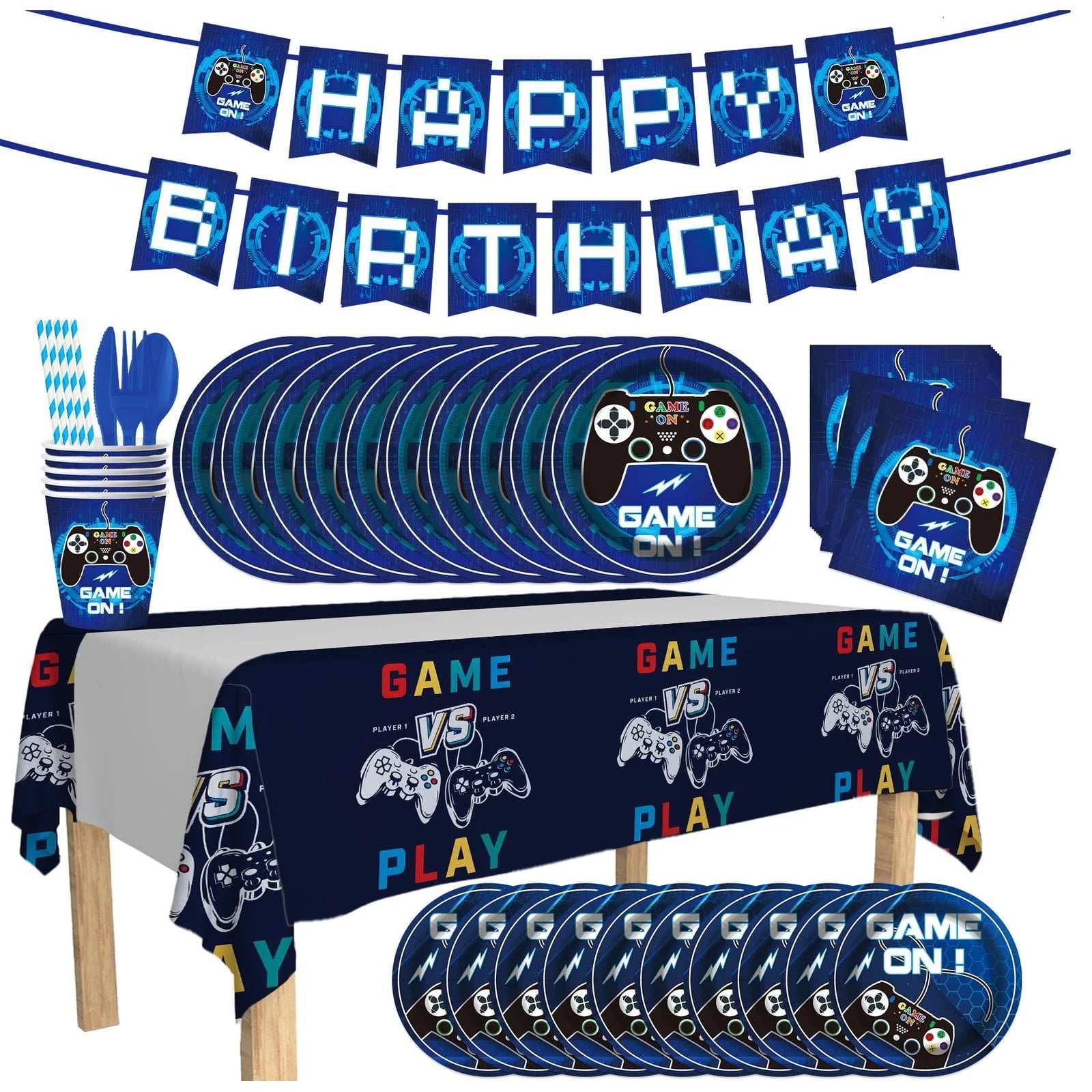
This structure can help shoppers buy only what they need. It can also reduce the pressure to force every component into one oversized pack. The buyer should ensure that the collection uses consistent colour, artwork, naming, and serving language.
How Can Buyers Validate a Tableware Packaging Plan With a Supplier?
A packaging plan should move from concept to documented confirmation. Verbal agreement about “one carton” or “a full set” is not enough for an international order. I recommend a short approval sequence that gives merchandising, purchasing, quality, and logistics teams the same information.
Buyers can validate a tableware packaging plan by approving the component list, retail pack artwork, carton configuration, weight and dimension estimates, assortment ratio, sample packing, and final order quantities. Any destination-specific compliance or transport decision should be reviewed by qualified professionals and supported by the required documents.
Use a packaging approval checklist
Product composition
- Exact component names.
- Quantity of every component.
- Material and finish description supplied by the manufacturer.
- Intended serving count.
- Any excluded accessories.
- Whether the artwork or colour is approved.
Quality and logistics
- Visual inspection requirements.
- Count verification method.
- Packaging inspection points.
- Moisture or compression concerns, where relevant.
- Sampling plan agreed by the buyer and supplier.
- Documentation needed for the destination market.
I do not treat a supplier’s certification statement as a substitute for buyer verification. If a product or packaging claim matters to market access, food contact use, labelling, or destination regulation, the buyer should request applicable documents and obtain qualified regulatory advice.
Request a sample with the final composition
- The approved quantity does not fit the intended box.
- Components shift inside the package.
- The pack is difficult to open.
- The printed count is unclear.
- The carton cannot contain the planned number of retail packs.
- The mixed assortment is difficult to identify.
Confirm changes before production
Small changes can affect carton math. A thicker plate, extra insert, larger cup, stronger divider, or revised gift box may reduce the number of retail packs per carton. A change in napkin fold can also alter pack height. The supplier should not silently substitute a new packing method after approval.
- Retail pack count.
- Component quantity.
- Packaging material.
- Inner or outer carton size.
- Retail pack orientation.
- Number of packs per master carton.
- Assortment ratio.
- Gross weight or shipping configuration.
What Common Pack Quantity Mistakes Should Retailers Avoid?
The most common mistakes are counting total pieces without checking composition, confusing retail packs with cartons, rounding quantities without agreement, accepting mixed assortments without ratios, and choosing a full carton before confirming shopper demand. Clear unit labels and written pack diagrams prevent many of these errors.
Mistake 2: Assuming “set” has one meaning
One supplier may use “set” for one place setting. Another may use it for one retail package. A third may use it for a design assortment. I recommend defining the word in the quotation and replacing it with “retail pack,” “complete setting,” or “master carton” where possible.
Mistake 3: Ignoring the last carton
If a buyer needs 950 retail packs and the master carton holds 12 packs, the order does not divide evenly. The buyer must decide whether to order 948 packs, 960 packs, or another approved quantity. The decision affects inventory, carton count, and invoice accuracy.
Mistake 4: Treating illustrative figures as confirmed data
A spreadsheet may use estimated carton dimensions or weight during early planning. Those figures should be marked as estimates. The buyer should replace them with supplier-confirmed values before booking transport or approving final landed-cost calculations.
Mistake 5: Filling cartons beyond practical handling limits
The maximum physical capacity is not always the right commercial capacity.[8] The carton must remain suitable for packing, lifting, stacking, storage, and receiving. I recommend asking the supplier to explain how the proposed configuration protects the product and supports warehouse handling.
Mistake 6: Forgetting replenishment by component
Some shoppers may use cups or napkins faster than plates. A complete set can be convenient at first purchase, but separate component packs may support replenishment later. Retailers should decide whether the programme needs replacement or add-on packs.
Mistake 7: Failing to align online and physical descriptions
An e-commerce listing should show the exact contents and quantity. Product images should not imply accessories that are not included. The same wording should appear in the catalogue, order sheet, packaging artwork, and shipping documents.
Frequently Asked Questions
What is the best tableware pack quantity for a retailer?
The best quantity depends on the intended occasion, shopper group, retail price, and product composition. I recommend starting with a clear serving count, such as a small gathering or a larger event, then checking whether every required component is included in balanced quantities.
Should retailers buy tableware by piece count or complete set?
Retailers should use the measure that matches the product. Plate-only products can be sold by piece count, while mixed party packs should be evaluated by complete settings or intended users. The quotation should show both the component breakdown and the total retail pack count.
How do I calculate master cartons for a tableware order?
Divide the total number of retail packs by the confirmed number of retail packs per master carton. If the result is not a whole number, agree whether the supplier will ship a partial carton or round the order up. Confirm the final carton count in writing.
Is a fuller master carton always more cost-effective?
No. A fuller carton may reduce unused space, but it can increase weight, compression, handling difficulty, damage risk, or overstock. The buyer should compare the complete commercial result, including retail usability, packaging protection, storage, and replenishment.
What should a supplier quotation include?
A quotation should include the contents per retail pack, intended serving quantity, retail packs per master carton, total order quantity, carton dimensions, estimated or confirmed weights, assortment ratios, packaging details, and any assumptions. Buyers should request updates when the final package changes.
Conclusion
Pack quantity planning for tableware works best when I treat the retail pack, shipping carton, and total order as three connected but separate decisions. I first define the complete serving scenario, then compare pack sizes against price, shelf space, handling, protection, and replenishment. Carton math helps validate the plan, but it should not replace commercial judgment or professional packaging review. For seasonal tableware, party supplies, and coordinated private-label collections, contact HKDayo for a tailored sourcing and packaging discussion.
Sources
- Table Setting Etiquette 101: A Brief Guide", Foodservice education references generally define a place setting according to the utensils, vessels, and service requirements of a particular meal, supporting the distinction between use-case-based settings and simple total-piece counts
- Enforcement Policy Statement on U.S. Origin Claims", Consumer-protection guidance treats clear disclosure of package contents and quantity as relevant to preventing misleading purchasing impressions, which supports the article’s connection between composition, product description, and consumer expectations
- Consumer Understanding, Perception and Interpretation of …", Labeling guidance emphasizes that quantity-related claims should be presented clearly and in a manner that allows consumers to understand the product offered, supporting disclosure of the assumptions behind an intended serving count
- EOQ Model with Shelf-Refill Trips in a Retail Store …", Packaging-engineering literature describes transport efficiency and retail presentation as distinct design objectives that can constrain one another, supporting the article’s warning that export-efficient cartons may not produce convenient retail packs
- Determinants of Price Elasticities for Store Brands and …", Research on package-size and pricing effects indicates that larger formats can provide quantity or unit-price advantages while increasing the total outlay required at purchase, supporting the stated tradeoff between event efficiency and shopper accessibility
- Development of an Assortment-Planning Model for", Retail assortment research commonly treats pack format and quantity as decisions that should reflect differences in shopper needs, purchase occasions, and willingness to pay, supporting the article’s customer-profile criterion
- Getting Started with Design & Testing", Distribution-testing standards distinguish informal package inspection from structured tests designed to reproduce transport hazards, supporting the claim that a sample review can reveal visible defects but cannot substitute for formal transport evaluation
- OSHA procedures for safe weight limits when manually lifting", Manual-material-handling guidance treats package weight, dimensions, stability, and lifting conditions as operational constraints, supporting the distinction between maximum carton capacity and a practical case-pack quantity
Related celebration products from DAYO:
Hi, I'm Danson. I work closely with our manufacturing partners to develop and deliver seasonal decorations, party supplies, and celebration products for international wholesale buyers. Here, I share practical product knowledge, customization insights, and manufacturing experience to help buyers build successful seasonal collections.
Have a wholesale project in mind? Let's talk!
Discuss Your Wholesale Project Request a Wholesale QuotePlanning a Wholesale Order from China?
Share your product requirements, quantities and destination. Let's discuss your wholesale requirements.