Building a Private Label Holiday Collection: Naming, Packaging and Shelf Identity


A private label holiday collection can lose impact when buyers treat it as a group of separate products instead of one retail programme. Inconsistent naming, weak packaging, and late artwork changes can create avoidable delays and shelf confusion. I recommend planning the collection identity before tooling, print production, or final purchase orders begin.
A private label holiday collection should use one clear naming hierarchy, a packaging system designed for freight and retail handling, approved artwork with written tolerances, and transparent cost breakdowns by SKU. I recommend that importers confirm MOQ, sampling cost, print approval, material specifications, and delivery timing before production starts.
I see the strongest seasonal ranges as coordinated systems rather than isolated decorations, party items, gifts, or home accessories. Buyers need to connect brand language, packaging formats, artwork files, and cost controls early. That work makes supplier comparisons clearer and helps retail teams present a more consistent holiday story.
Quick Answer: How Do I Build a Private Label Holiday Collection?
A private label holiday collection starts with a written range brief that defines the collection name, sub-ranges, SKU names, packaging format, artwork approval process, and target delivery window. I recommend buyers treat each item as part of a shared shelf identity, even when products use different materials, factories, or packaging sizes.
Before requesting final quotations, I would define:

- The collection theme, such as nostalgic Christmas, pastel Easter, or modern Halloween.
- The customer segment, including gift stores, mass retail, e-commerce, party shops, or home décor retailers.
- The product hierarchy, from the master collection to individual SKUs.
- The packaging rules, including barcodes, warning labels, carton marks, inserts, and display requirements.
- The approval path, including samples, artwork proofs, colour expectations, and sign-off authority.
- The commercial assumptions, including MOQ, packaging method, sampling charges, production lead time, and shipment window.
This approach helps me separate creative decisions from production decisions. It also reduces the risk of approving a visually attractive concept that cannot be packed, printed, or shipped efficiently.
Naming Architecture for a Private Label Holiday Collection?
A buyer may have attractive products but still struggle to explain the range to retail customers and internal teams. That problem becomes more expensive as SKU counts increase. I use naming architecture to make the collection easier to sell, source, replenish, and manage across seasonal buying cycles.
A clear naming structure gives a private label holiday collection a recognisable identity at every level. I recommend using three levels: a master collection name, sub-range names for distinct design stories, and practical SKU names that describe the product accurately. Each name should support retail presentation while remaining easy for procurement and warehouse teams to identify.
Start With the Master Collection Name
The master collection name sits at the top of the programme. It should communicate the mood, season, or visual direction without becoming too narrow. For example, a buyer may build a Christmas range around warm traditional colours, woodland motifs, metallic finishes, or playful novelty designs.
I would avoid a name that depends on a short-lived trend unless the buyer intends to refresh it every year. A broader master name can support repeat seasonal launches while allowing new SKUs to enter the programme.
A useful master collection name should be:
- Easy to pronounce in target markets.
- Distinct from nearby collections in the same catalogue.
- Suitable for product packaging, online listings, and retail signage.
- Flexible enough to cover several product types.
- Checked by the buyer for relevant trademark and market-use considerations.
I do not treat naming as a substitute for legal clearance. Buyers should conduct their own trademark, language, and market checks before printing packaging or launching a branded programme.
Create Sub-Ranges That Help Buyers Shop the Story
Sub-ranges divide a larger holiday programme into meaningful groups. They may be based on colour, material, price positioning, age group, or occasion. For example, one Christmas master collection could include a premium ornament sub-range, a tabletop décor sub-range, and a party tableware sub-range.
I find that sub-ranges help customers understand why products belong together. They also help buyers plan shelf placement and e-commerce categories.
A sub-range can be organised around:
- Design direction: classic, minimalist, playful, rustic, or glitter-led.
- Product function: decorating, gifting, table setting, party activity, or home styling.
- Customer segment: children, family entertaining, premium gifting, or value décor.
- Colour story: red and gold, black and orange, pastel spring, or neutral winter.
- Material language: paper-based, textile-led, ceramic-look, wood-look, or mixed media.
Keep SKU Names Operational
Individual SKU names should be specific enough for purchasing and inventory control. I prefer names that include the key product type, design reference, and size or pack information where relevant.
For instance, “Woodland Fox Hanging Decoration, 10 cm” gives more usable information than a vague name such as “Forest Magic.” The latter may work as a sub-range name, but it does not help warehouse teams distinguish similar items.
I recommend keeping the marketing name and the operational SKU description connected, but not identical. The first sells the story; the second supports buying accuracy.
A written naming guide prevents inconsistent names across packaging, quotations, order sheets, carton labels, product photography, and online listings.
Packaging That Survives Freight and Shelf?
Seasonal products can look excellent at sampling stage but arrive with crushed corners, scuffed finishes, or mixed packaging after transit. Those issues can affect retail acceptance and rework costs. I recommend buyers evaluate packaging as both a transport system and a shelf-facing communication tool.
Packaging for a private label holiday collection should protect the product through handling while presenting the brand consistently at retail. I recommend confirming the retail pack, inner pack, export carton, and pallet or container loading assumptions together. A shelf-ready box that is too weak for ocean freight can create losses before the products reach store level.
Evaluate Packaging in Layers
A buyer should not approve only the retail packaging artwork. I recommend reviewing every physical layer that touches the product.
The main layers may include:
- Product protection: tissue, polybag, foam, inserts, dividers, or moulded supports.
- Retail pack: colour box, header card, hang tag, belly band, blister pack, or paper wrap.
- Inner pack: grouped units used to support handling, replenishment, or display.
- Export carton: corrugated outer carton for shipping and warehouse movement.
- Pallet or loading method: palletised shipment, floor-loaded cartons, or other agreed loading arrangements.
Each layer affects cost, cube efficiency, damage risk, and unpacking time. A delicate hanging decoration may need a divider system that a lightweight paper party item does not. Similarly, a large décor item may need corner protection even if its retail box is visually simple.
Balance Retail Appeal With Freight Reality
I often see buyers favour premium packaging finishes early in development. Foil, embossing, magnetic closures, heavy rigid boxes, and custom inserts may be appropriate for some gift-led items. However, each feature can add material cost, assembly time, weight, and shipping volume.
I recommend asking practical questions before approving an upgraded pack:
- Will the package protect fragile or painted surfaces during long-distance transport?
- Can the package be stacked safely in export cartons?
- Does the retail box need a hanging hole, shelf tray, or open display window?
- Will the box dimensions create inefficient carton fill?
- Can store teams remove protective materials quickly?
- Does the design require separate components that increase packing labour?
- Is the product intended for e-commerce shipment, retail shelf display, or both?
Confirm Carton Marks and Handling Information
Carton marks are operational details, but they matter during import and distribution. Buyers should specify the information they need on outer cartons, such as SKU code, colour reference, carton quantity, gross and net weight, carton dimensions, country-of-origin marking where applicable, and handling symbols.
I would also ask the supplier to confirm whether the proposed export carton is based on the final retail pack dimensions. A quotation based on early dimensions may change after packaging development. Buyers should update carton specifications after final packaging approval, not assume the first estimate remains accurate.
Artwork, Proofing and Print Tolerance for a Private Label Holiday Collection?
Artwork problems often appear late because a digital file can look correct on screen while printing differently on paper, fabric, plastic, or coated board. A small colour shift or misplaced logo can weaken a coordinated range. I recommend locking artwork through a documented approval process before mass production.
For a private label holiday collection, artwork approval should include final files, approved proofs, packaging copy, barcode placement, and agreed print tolerances. I recommend that buyers state which elements are critical, such as logo size, brand colours, metallic effects, pattern alignment, and safety or legal text. The written proof should identify the version approved for production.
Use One Controlled Artwork Version
A private-label programme can involve multiple files: product labels, packaging panels, hang tags, insert cards, carton marks, instruction sheets, and online images. I recommend maintaining one controlled artwork register with a file name, revision number, date, SKU reference, and approval status.
Without version control, a supplier may receive an earlier logo file or outdated packaging copy. That risk increases when buyers use several internal stakeholders, agencies, or regional teams.
A practical artwork register can include:
- Product name and internal SKU code.
- Packaging component and size.
- Artwork revision number.
- File format supplied.
- Required print method or finish.
- Date submitted for proofing.
- Proof status: pending, amended, approved, or rejected.
- Final approval date and approver.
Define What “Colour Match” Means
Exact colour matching is not always realistic across different substrates and printing methods. A colour printed on uncoated paper may appear different from the same colour on glossy board, fabric, ceramic-look surfaces, or plastic components.
I recommend that buyers define acceptable expectations instead of assuming all components will match perfectly. The written proof should state the approved reference, whether that is a physical sample, a digital proof, a colour standard, or another agreed method.
Buyers should discuss tolerance expectations for:
- Logo colour variation across substrates.
- Registration of layered print or foil elements.
- Pattern placement and seam alignment.
- Positioning of barcodes and required product information.
- Variation in handmade, painted, textured, or distressed finishes.
- Visibility of small text after printing and assembly.
I recommend that buyers approve a physical pre-production sample whenever the final appearance depends on a specific material, finish, or print technique.
Keep Claims and Compliance Language Documented
Packaging often contains claims about materials, safety, recyclability, product performance, or compliance. I would not approve these statements based on assumptions or verbal assurances. Buyers should request documentation in writing and verify that it applies to the specific product, material, market, and production configuration.
This is particularly important when a collection includes products for children, food-contact tableware, electrical decorations, or products subject to market-specific labelling requirements. Qualified compliance and legal professionals should evaluate application-specific requirements. A supplier’s general statement should not replace buyer verification.
Cost Drivers in Private Label Programmes?
A low unit price can hide one-time costs, packaging upgrades, or higher MOQ requirements. That makes supplier quotations difficult to compare and can distort programme budgets. I recommend buyers ask suppliers to separate recurring product costs from development, tooling, and print-related charges.
Private label programme costs are usually driven by tooling, print setup, material choices, packaging complexity, labour, and MOQ tiers. I recommend reviewing costs per SKU rather than relying only on a collection-level estimate. Buyers should also confirm whether sampling charges, artwork amendments, and packaging development are quoted separately.
| Cost driver | What it can affect | Buyer question to ask |
|---|---|---|
| Tooling or mould development | Upfront development cost, design flexibility, lead time | Is tooling required, and is it quoted separately by SKU? |
| Print setup and plates | Artwork setup, colour printing, repeat orders | Which print setup costs are one-time and which recur? |
| Material upgrades | Unit cost, weight, appearance, durability | What changes if we select a heavier board, upgraded fabric, or protective insert? |
| Packaging complexity | Packing labour, carton volume, damage protection | Can the proposed pack be simplified without reducing shelf impact? |
| MOQ tier | Unit price, inventory exposure, production feasibility | What MOQ applies to each SKU, colourway, and packaging version? |
| Sampling and revisions | Development budget and launch timing | What sample costs apply, and how many approval rounds are included? |
Separate One-Time Costs From Repeat Costs
A buyer needs to know which expenses belong to initial development and which will continue with future orders. Tooling, design adaptation, print plates, and pre-production sampling may be one-time or periodically recurring, depending on the process and supplier arrangement.
I recommend requesting a quotation that identifies:
- Product unit price.
- Retail packaging cost.
- Export carton cost.
- Tooling or mould charges, if applicable.
- Print setup or plate charges.
- Sampling charges.
- Artwork amendment charges, if any.
- Cost implications of different MOQ tiers.
- Estimated production timing after approval.
This format helps importers compare suppliers on a like-for-like basis. It also shows whether a low quoted unit price depends on a higher MOQ, simpler packaging, or reduced material specification.
Evaluate MOQ at SKU Level
A collection may have a workable overall budget but still fail because one slow-moving SKU has an impractical minimum order quantity. I recommend confirming MOQ by SKU, colourway, packaging variant, and material option.
For example, a supplier may be able to produce a broad Christmas range, but the MOQ for a custom-printed gift box may differ from the MOQ for the product inside it. Buyers should ask whether packaging components can be shared across several SKUs, provided the retail concept allows it.
I also recommend confirming the delivery window for each SKU. Seasonal programmes need arrival dates that support distribution, retail setup, and promotional planning. Buyers should calculate backward from the required market date and allow time for sample approval, production, freight, customs processes, and warehouse receiving.
Product Options in This Range
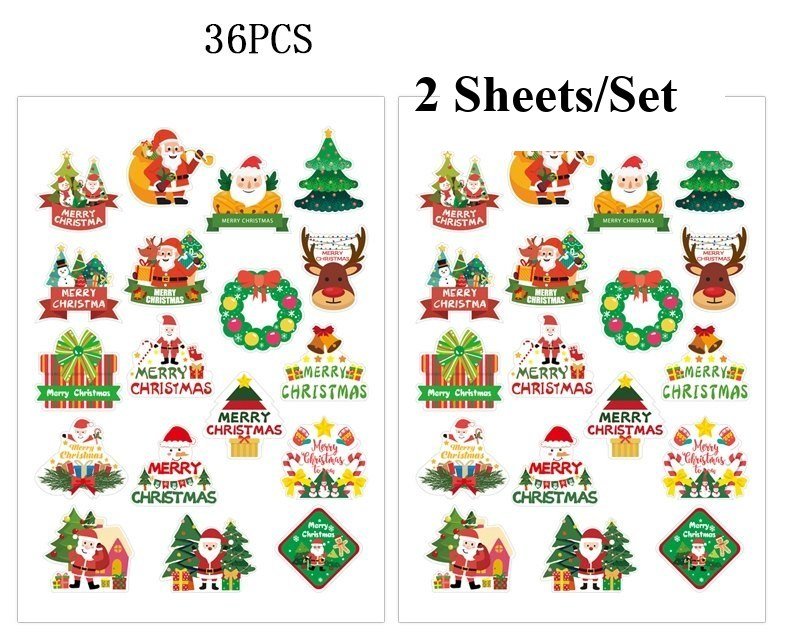
Christmas Party Sticker Sheets
SKU FS-185 sits in this range as option 1. Open the FS-185 product page.
Christmas Plaid Letter Banner Set — MERRY CHRISTMAS Garland
The FS-207 page lists the specification sheet and the sample request route. Open the FS-207 product page.
Christmas Plaid Banner & Bunting Set — MERRY CHRISTMAS with Ornaments
Buyers comparing formats can review FS-211 alongside the other two options. Open the FS-211 product page.
Frequently Asked Questions
What is the first step in creating a private label holiday collection?
I recommend starting with a written range brief. It should define the target customer, holiday theme, product categories, brand direction, expected sales channels, packaging format, target delivery window, and decision-making process. This brief gives suppliers a clearer basis for sampling and quotation.
Should every SKU use the same packaging format?
I do not recommend forcing every SKU into one format. A collection should look coordinated, but fragile decorations, party supplies, gifts, and tabletop products may need different protection. I would use shared visual rules, such as logo placement, colour palette, typography, and label structure.
How should buyers approve holiday product artwork?
I recommend buyers approve artwork through a written proof process with controlled file versions. The approval should cover copy, barcode placement, logo use, print placement, colour references, and acceptable tolerances. Physical pre-production samples are useful when substrate or finish affects the final appearance.
What should be included in a private-label supplier quotation?
I recommend asking for SKU-level pricing that separates unit cost, packaging cost, tooling, print setup, sampling, MOQ tiers, and estimated production timing. Buyers should also confirm whether prices depend on specific materials, pack sizes, artwork versions, or order quantities.
Can a supplier’s compliance statement be used directly on packaging?
I would not rely on an undocumented statement. Buyers should request supporting documents in writing and verify that they apply to the specific product and destination market. Qualified legal, testing, and compliance professionals should review claims that affect labelling or market access.
Conclusion
A successful private label holiday collection needs more than appealing seasonal products. I recommend building a clear naming hierarchy, packaging for both freight and shelf use, a disciplined artwork approval process, and transparent SKU-level cost analysis. Buyers should confirm MOQ, sample charges, artwork status, documented claims, and delivery timing before production begins. If you are planning a seasonal wholesale range, submit your requirements through HKDayo’s RFQ page to start a structured sourcing discussion.
Hi, I'm Danson. I work closely with our manufacturing partners to develop and deliver seasonal decorations, party supplies, and celebration products for international wholesale buyers. Here, I share practical product knowledge, customization insights, and manufacturing experience to help buyers build successful seasonal collections.
Have a wholesale project in mind? Let's talk!
Discuss Your Wholesale Project Request a Wholesale QuotePlanning a Wholesale Order from China?
Share your product requirements, quantities and destination. Let's discuss your wholesale requirements.