Spring Garden Party Tableware Wholesale: Sourcing Guide

Spring garden party tableware wholesale requires more planning than simply selecting attractive plates and napkins. Buyers need a coordinated look that works outdoors, stays commercially practical, and gives retailers a clear reason to build a larger basket. The right sourcing plan connects colour, motif, material, pack format, and display strategy.
Spring garden party tableware wholesale should be sourced as a coordinated retail collection rather than as separate disposable items. Buyers should choose one hero palette, maintain a consistent motif across tableware and décor, evaluate outdoor performance, and build pack formats for both impulse and planned purchases. Samples and written specifications should confirm the final production standard before bulk ordering.
Quick Answer
- Build spring garden party tableware wholesale around one hero colour palette, one supporting contrast, and one neutral option.
- Keep floral, botanical, geometric, or plain designs as separate visual stories unless they are intentionally merchandised apart.
- Select outdoor party tableware wholesale with suitable board stiffness, rim strength, coating performance, and print durability for food, condensation, sunlight, and uneven garden tables.
- Use several pack formats where appropriate: smaller add-on packs, coordinated sets, and larger catering-oriented packs.
- Confirm artwork, board, coating, dimensions, pack count, carton markings, and inspection points in a version-controlled specification.
- Send SKU interest, quantities, destination, delivery window, and customisation requirements together when requesting a quotation.
The purchasing decision becomes easier once the buyer treats the range as a complete garden entertaining programme. A plate can be commercially sound on its own yet still fail to support the rest of the collection if its print, colour, finish, or pack format does not match the intended retail story.

What Spring Garden Party Tableware Covers
Spring garden party tableware wholesale can become unfocused when buyers add every available floral or pastel design to one programme. That approach may create more SKUs, but it can also create an inconsistent shelf presentation. A better solution is to define the range around the occasions, visual story, and retail channels it must serve.
A spring tableware collection usually includes disposable plates, cups, napkins, serving items, table covers, and coordinated decorative accessories for outdoor lunches, garden parties, bridal showers, al-fresco birthdays, and Mother’s-Day-adjacent entertaining. The most useful assortment gives shoppers enough choice to create a complete table without forcing retailers to carry duplicate-looking designs.
Start with the visual system
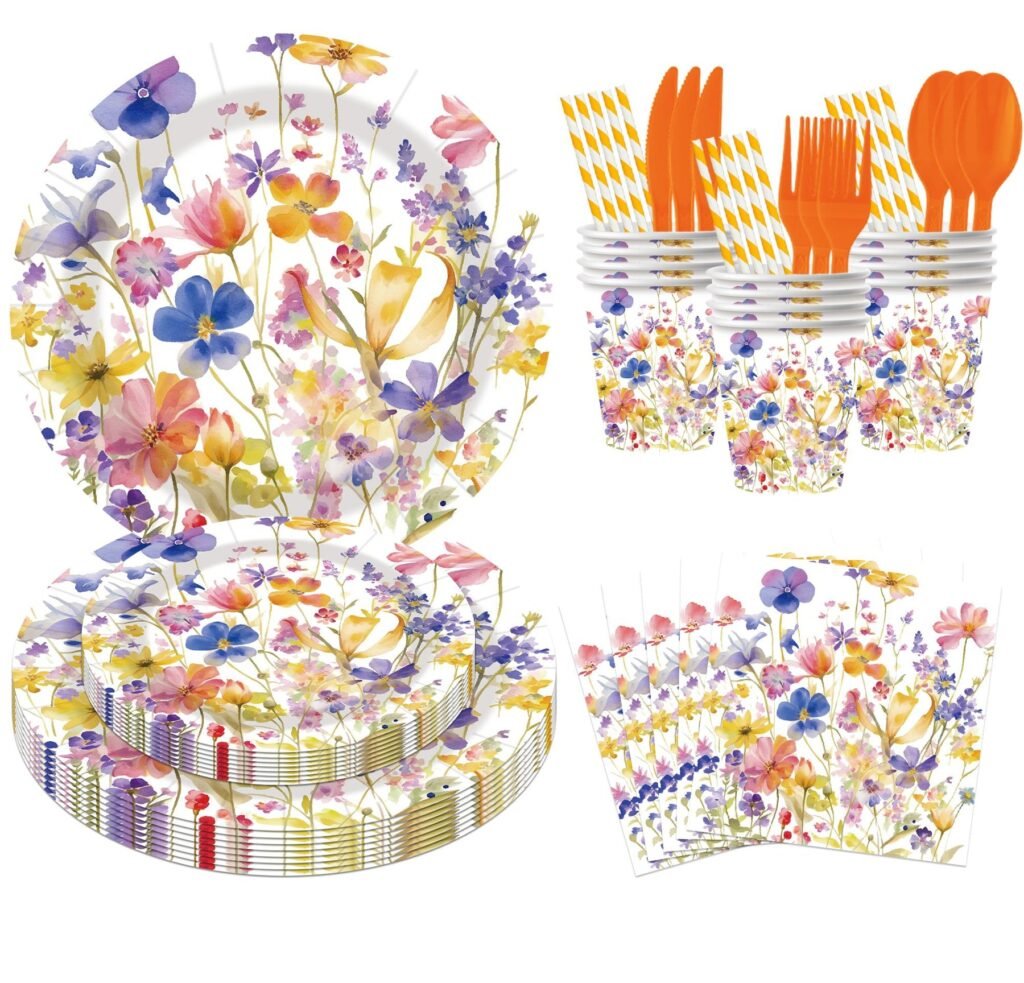
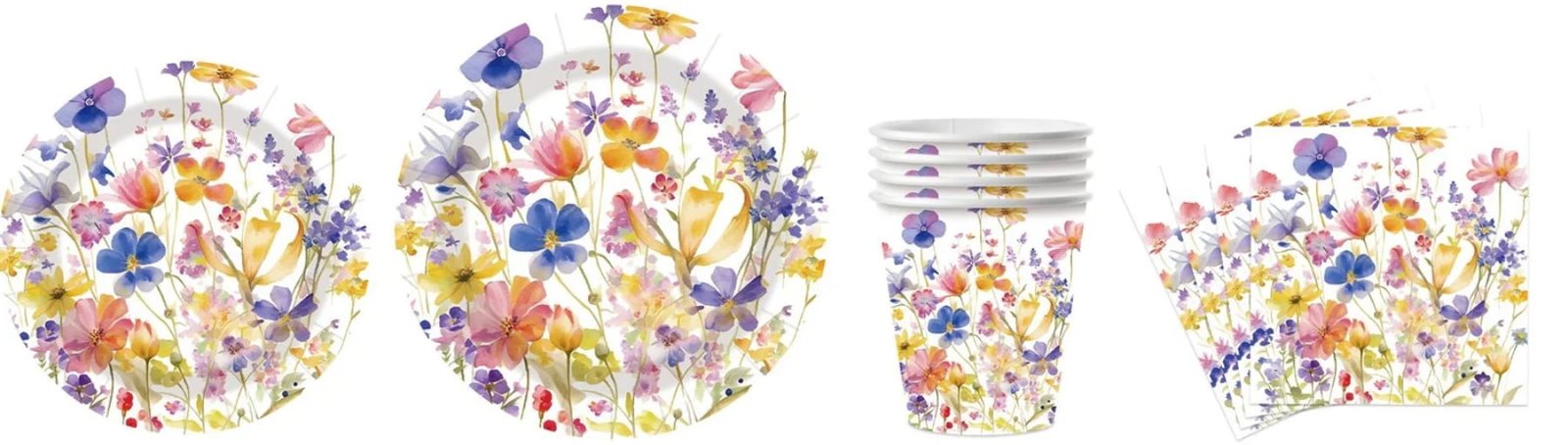
The watercolor wildflower spring garden party tableware set is an example of a floral-led direction that can serve as a hero visual reference. Buyers should confirm published specifications, available components, pack formats, and any custom requirements at quotation stage rather than assuming that every item in a displayed set is supplied in every programme.
Separate design stories when necessary
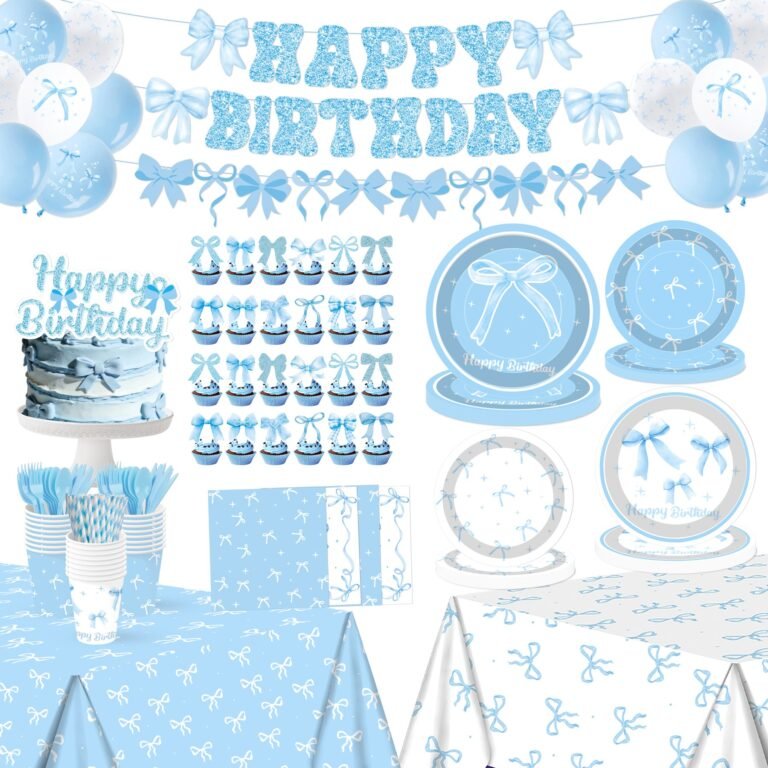
A floral range and a modern geometric range can both be relevant to spring entertaining. However, they should not automatically occupy the same facing or be treated as interchangeable. The blue geometric modern party tableware set may suit a cleaner, contemporary retail story, while wildflower artwork suits a softer garden-led presentation.
Building the Colour Story: Palettes That Sell in Spring
Spring colour planning can become difficult when buyers try to include every pastel shade in one launch. Too many close colours can weaken shelf impact and make replenishment harder to manage. A stronger solution is to choose one hero palette, one contrast palette, and one neutral that can support the full spring garden party tableware wholesale range.
A light spring palette generally works best when it feels fresh without looking washed out. Soft greens, butter yellows, blush tones, powder blue, and warm white can remain relevant across a longer garden-entertaining window than short promotional colour stories. Buyers should build depth through coordinated shades and printed details rather than adding many unrelated colours.
Hero, contrast, and neutral
The hero palette should be the most visible part of the assortment. It may appear on plates, napkins, cups, table covers, and the main product photography. The contrast palette should add energy without replacing the hero. The neutral option can act as a lower-price entry point or as a practical base for mixed tables.
| Palette direction | Best retail use | Design advantage | Buyer consideration |
|---|---|---|---|
| Soft green, warm white, botanical accents | Garden centres, home décor retailers, outdoor entertaining | Natural and flexible for a long selling period | Avoid mixing too many green undertones |
| Blush, butter yellow, floral detail | Gift, party, and celebration retail | Warm, celebratory, and photograph-friendly | Keep print shades consistent across SKUs |
| Powder blue with white or cream | Modern entertaining and bridal-shower displays | Clean, calm, and easy to layer | Confirm that blue tone matches across production batches |
| Bright accent with neutral base | Discount-chain promotional displays | Strong shelf visibility and clear price ladder | Use accent selectively to avoid visual clutter |
Light colours can reveal variation more readily than darker, more saturated designs. For that reason, the approved artwork should identify key colour references and acceptable variation expectations. A buyer does not need to over-specify every visual detail, but the buyer should make clear which colours are central to the range identity.
Do not let colour replace motif discipline
Colour coordination alone does not make a collection coherent. A pale yellow floral plate and a pale yellow geometric napkin may share a shade, yet still look mismatched if the artwork language conflicts. The printed motif must remain the main unifying element.
For a floral party tableware wholesale programme, buyers can use a background flower texture across secondary items while reserving a hero floral illustration for key plates and larger retail packs. This approach makes the collection feel layered rather than repetitive. It also gives merchandising teams a clear hierarchy: hero print first, supporting print second, plain coordinating items third.
Theme Matching: Coordinating Tableware, Florals and Outdoor Décor
A garden-party display can lose its impact when décor introduces a second visual theme. Shoppers often buy tableware first because it is central to the meal and visible in product photos. If bunting, honeycomb decorations, and centrepieces do not echo the tableware, the display may look assembled rather than designed. The solution is to let the tableware anchor the theme.
For spring garden party tableware wholesale, décor should repeat or enlarge the tableware motif. Floral tableware can be paired with floral paper decorations, while a geometric collection should be supported by cleaner shapes and colour-blocked accessories. The goal is not to match every item exactly. The goal is to make the full table look intentional.
Background floral versus hero floral
| Floral approach | Suitable use | Coordination rule | Range risk |
|---|---|---|---|
| Background floral texture | Napkins, cups, table covers, secondary packs | Can vary slightly across related SKUs | Too many versions may look busy |
| Hero floral illustration | Plates, premium sets, front-facing packaging | Repeat the same artwork across core tableware | Partial repetition can look accidental |
| Botanical leaf pattern | General garden entertaining | Match leaf shape and colour family in décor | Avoid adding unrelated flower styles |
| Plain coordinating colour | Entry-price and supporting items | Pull colour directly from the hero artwork | May feel generic without motif-led items |
A hero floral should normally repeat consistently across the plate, cup, and napkin. This supports shopper recognition and makes the collection easier to photograph online. A background floral can tolerate greater variation because it functions as texture rather than the main design signature.
The pink floral honeycomb table decorations illustrate how décor can support a floral table story at a larger scale. Buyers should evaluate whether the motif, colour balance, size, pack presentation, and intended placement match the tableware programme before grouping items together.
Outdoor Conditions: What Garden Party Tableware Has to Survive
Outdoor hosting introduces issues that are less obvious in indoor celebrations. Wind can lift napkins, cold drinks can create condensation, sunlight can expose surface marks, and uneven tables can increase the chance of spills. Buyers who select products only by artwork may face avoidable complaints. The solution is to assess the construction and finish against actual garden-party use.
Garden party tableware should be evaluated for board feel, rim stiffness, coating behaviour, print placement, and practical handling. Heavier or stiffer board may support loaded food better than very light board, while a suitable coating can help manage contact with oily or wet food. The final selection should be assessed through samples of the proposed production specification.
Questions to ask during evaluation
- Does the plate maintain its shape when loaded with typical buffet food?
- Does the rim remain reasonably stable after contact with moisture?
- Is the print applied to the food-facing side, reverse side, or both?
- How does the coating behave with oily, wet, or acidic foods?
- Does the finish show handling marks easily?
- Are cups, plates, and napkins suited to the same level of use?
- Does the pack protect products from crushing during normal retail handling?
| Outdoor condition | Product feature to evaluate | Why it matters | Buyer action |
|---|---|---|---|
| Wind | Napkin weight, fold, packaging, table accessories | Light paper can move easily outdoors | Test display and use samples in open-air conditions |
| Condensation | Coating coverage and cup performance | Cold drinks can transfer moisture to table surfaces | Review sample behaviour with chilled beverages |
| Loaded food | Board stiffness and rim construction | Light board may curl or flex at the edge | Test with likely buffet foods |
| Sunlight and handling | Matte or gloss finish, print durability | Surface marks may show more clearly outdoors | Compare finish options under natural light |
| Uneven tables | Plate stability and practical size | Garden furniture can be less stable than indoor dining | Consider plate diameter and food portions together |
Matte finishes may be commercially useful where handling marks are a concern because they can be less visually reflective than high-gloss surfaces. However, finish selection should remain part of the full design and performance review. Buyers should not assume that one finish is automatically better for every artwork, food type, or price position.
Sizing and Pack Architecture for Garden Party Entertaining
Garden entertaining often involves buffet service, long tables, shared dishes, and mixed-age groups. A range built only around small snack formats may not meet that use case. Buyers need a size mix that reflects hosting behaviour, while pack architecture should support different shopper missions. The solution is to plan formats before artwork is finalised.
Spring garden party tableware wholesale often benefits from stronger emphasis on larger meal plates and coordinated hosting packs than a child-focused party programme. Smaller plates still have a role for desserts, snacks, and add-on purchases, but they should not dominate the assortment unless the retail concept specifically calls for them.
One product, several retail missions
| Pack architecture | Shopper mission | Typical retail role | Commercial consideration |
|---|---|---|---|
| Smaller single-item pack | Impulse add-on or top-up purchase | Entry price, convenience, basket builder | Packaging must communicate design clearly |
| Coordinated boxed or bundled set | Planned garden gathering | Main purchase and gifting option | Requires consistent components and presentation |
| Larger multi-pack | Event organiser or group hosting | Value-led and volume-oriented option | Carton planning and pack count accuracy are important |
| Mixed table-setting bundle | Complete look purchase | Online merchandising and promotional display | Ensure motif consistency across all items |
A buyer should define the role of each pack before approving packaging. A small pack can invite trial or top-up purchasing. A coordinated set can support a more deliberate hosting purchase. A larger pack can suit event organisers or customers who want fewer repeat purchases.
Pack design also affects the retailer’s operational experience. Clear pack counts, barcode placement, carton markings, and product visibility can reduce receiving and replenishment errors. For e-commerce-oriented buyers, the retail pack should also be reviewed for how the product photographs, stores, and ships within the buyer’s own fulfilment system.
Retail Merchandising: Planogram, Cross-Sell and Price Ladder
A well-designed spring range can still underperform if the shelf arrangement makes coordination difficult to understand. Shoppers need to see the hero design first, then discover easy add-ons that complete the table. A planogram should therefore guide the eye from the main tableware purchase to complementary décor and practical extras.
For spring garden party tableware wholesale, a useful single-bay approach is one hero palette, one contrast palette, and one neutral option. The hero palette usually belongs at eye level. The contrast palette can add energy beside it, while the neutral can provide a lower-price entry point or an easy mixing option at a lower shelf position.
Cross-sell should complete the look
- plates and cups as the main visual purchase,
- napkins in the same motif beside the plates,
- serving or table-cover options below or beside core tableware,
- matching décor adjacent to the tableware it echoes,
- smaller add-on packs and packaging-related accessories at the edge.
The party tableware programs category can help buyers review tableware directions, while the seasonal decoration range can support broader display planning. Buyers should still confirm current availability, specifications, and commercial terms during the quotation process.
Build a deliberate price ladder
A price ladder should offer shoppers a visible reason to trade up. It should not simply add more products at random price points. For example, a plain coordinating item can provide entry access, a floral plate-and-napkin combination can serve as the mid-level purchase, and a complete themed set can form the premium option.
Retailers should also consider shelf-space economics. A hero motif may deserve more facings than a secondary design because it carries the collection identity. A neutral product may need fewer facings but can remain important because it gives shoppers a practical mixing option and supports price-sensitive purchasing.
Custom Print and Private Label for Seasonal Floral Designs
Custom print can make a spring range more differentiated, but it also adds approval steps before production begins. Buyers sometimes focus only on the finished artwork and overlook colour tolerance, proofing, die setup, packaging copy, and internal sign-off time. A better approach is to map the approval path early and identify which elements are standard and which are genuinely custom.
Private label for spring garden party tableware wholesale often affects artwork, packaging, labels, and assortment selection more than it affects the base construction. Buyers should ask what remains standard, such as board type, coating approach, pack count, or existing die shape, and what changes with the private-label programme.
Separate standard construction from custom presentation
| Area | Often standard | Often custom | Why the distinction matters |
|---|---|---|---|
| Product construction | Base board, general shape, coating approach | Special dimensions or new format requests | Construction changes may require additional evaluation |
| Artwork | Existing design layout | Brand colours, exclusive pattern, logo placement | Artwork approvals affect timing and colour control |
| Packaging | Existing pack method | Private-label card, label, language, branding | Packaging changes can affect proofing and carton markings |
| Range structure | Existing product family | SKU mix and bundled collection | Assortment decisions affect forecast and merchandising |
Estimated research and sample windows should include sufficient time for internal review. Projected bulk-order and shipping windows should only be discussed after the product specification, artwork status, destination, and order scope are clear. The buyer’s own approval speed is part of the critical path.
Samples, Specification Approval and Quality Control
A generic stock sample can be useful for judging a general style, but it is not enough to approve a custom programme. Buyers risk approving one construction and receiving another if the production specification is not documented. The solution is to approve a sample that represents the intended production standard and record the decision in a written, versioned specification.
For spring garden party tableware wholesale, the most important checks often include print registration, colour consistency, die-cut accuracy, coating coverage, pack count, and carton condition. Light pastel palettes deserve particular attention because even moderate variation can be more visible than it is in stronger colours.

Create a usable approval record
- SKU or design reference.
- Artwork revision number or dated file reference.
- Product dimensions.
- Board weight or agreed construction description.
- Coating and finish requirement.
- Print placement and colour guidance.
- Pack configuration.
- Inner and outer carton markings.
- Inspection points.
- Approved sample images and comments.
Focus inspection on visible and operational defects
Quality control for paper tableware should reflect the product’s retail role. A plate may be technically usable but still unsuitable for a premium floral collection if the print registration is visibly off or if the pastel shade differs noticeably across packs.
- alignment of artwork with die-cut edges,
- consistent print appearance across sampled units,
- coverage and evenness of coating,
- clean cuts and stable rim shape,
- correct piece count per pack,
- correct retail-pack artwork,
- carton condition and markings,
- and protection of lighter paper décor from heavier packed goods.
Where a buyer uses third-party inspection or destination-specific testing, that process should be arranged according to the buyer’s requirements and qualified professional advice. Product suitability should be evaluated against the intended market, retailer rules, and application.
Consolidating the Spring Order and Requesting a Quotation
Mixed spring orders can become difficult at the shipping stage when tableware, lightweight décor, and packaging materials are packed without a clear plan. Heavy cartons can damage lighter items, while unclear carton-level information can create receiving errors at the retailer’s distribution centre. The solution is to plan consolidation by destination, carton family, protection needs, and receiving requirements.
A garden party tableware supplier should be able to discuss how mixed items may be grouped, but the final plan depends on the confirmed product mix, carton dimensions, destination, and shipping method. Buyers should request a carton-level packing list where possible, especially when multiple designs, pack formats, or decoration types are included in one programme.
Prepare a quotation request that answers key questions early
- product link, SKU, or artwork reference,
- quantity required for each SKU,
- destination country or port,
- requested delivery window,
- preferred pack format,
- private-label or custom-print requirements,
- packaging and carton-marking needs,
- sample requirements,
- and any specific inspection or documentation expectations.
MOQ, unit pricing, production timing, and shipping arrangements should be confirmed at quotation stage. Buyers should also distinguish between estimated research and sample windows and projected bulk-order and shipping windows. This keeps internal planning realistic without presenting an early estimate as a confirmed delivery commitment.
For mixed orders, buyers can ask how cartons will be separated by product family and how lighter décor will be protected from heavier tableware. A detailed packing list can support warehouse receiving, retailer replenishment, and later claim review if discrepancies arise.
Frequently Asked Questions
What should be included in a spring garden party tableware wholesale range?
A balanced range can include plates, cups, napkins, serving items, table covers, and coordinated decorations. Buyers should begin with a hero design and then add supporting plain or patterned products. The final SKU mix should reflect the target channel, retail price ladder, and expected hosting occasions.
How can buyers keep floral party tableware wholesale visually consistent?
Buyers should choose one hero floral artwork and repeat it across key products such as plates, cups, and napkins. Supporting items can use background textures or colours pulled from the main print. Décor should echo the floral story rather than introduce a separate pattern family.
What should buyers test for outdoor party tableware wholesale?
Buyers should evaluate sample products for plate stiffness, rim stability, coating behaviour, print appearance, handling marks, and performance with typical food and drinks. Outdoor use can involve wind, condensation, sunlight, and uneven tables, so samples should be assessed against realistic hosting conditions.
Can private label use an existing tableware construction?
In many cases, private label can focus on custom artwork, packaging, labels, and assortment selection while retaining an existing base construction. Buyers should confirm exactly what is standard and what is custom. That distinction affects approval work, risk, pricing, and projected timing.
What information is needed to request a quotation?
Send the SKU or design reference, quantity per SKU, destination, requested delivery window, pack requirements, and customisation needs. This gives the supplier a practical basis to confirm MOQ, pricing, sample options, and projected lead time in one response.
Conclusion
Spring garden party tableware wholesale works best when buyers source it as a coordinated outdoor entertaining collection. A focused palette, consistent motif, suitable outdoor construction, clear pack architecture, and disciplined retail display can make the range easier to buy and easier to sell. Samples and written specifications should confirm the intended production standard before a bulk commitment. To discuss a seasonal programme, send your SKU interest, quantities, destination, and customisation needs through this request a quote.
Hi, I'm Danson. I work closely with our manufacturing partners to develop and deliver seasonal decorations, party supplies, and celebration products for international wholesale buyers. Here, I share practical product knowledge, customization insights, and manufacturing experience to help buyers build successful seasonal collections.
Have a wholesale project in mind? Let's talk!
Discuss Your Wholesale Project Request a Wholesale QuotePlanning a Wholesale Order from China?
Share your product requirements, quantities and destination. Let's discuss your wholesale requirements.