Wholesale Party Tableware Sets: Comparing Paper, Plastic and Reusable Options


Wholesale party tableware sets can look simple to buy, but an unsuitable material can create higher costs through breakage, poor performance, excess packaging, or difficult cleanup. Buyers often start with unit price, then discover that guest volume, event conditions, order quantity, and disposal requirements matter just as much. I use those factors to build a more reliable sourcing decision.
For most wholesale buyers, paper works well for lightweight, themed, single-use events; plastic can suit occasions requiring more moisture or handling resistance; and reusable tableware fits organized events, rental systems, and repeated use[1]. The best wholesale party tableware sets depend on expected guest volume, target price, indoor or outdoor conditions, cleanup resources, packaging, and market-specific food-contact or disposal requirements.
The material comparison is only the starting point. A commercially suitable set also needs coordinated colors, practical pack quantities, secure shipping, clear specifications, and a configuration that matches how the customer will actually use it. The sections below provide a purchasing framework for seasonal and event-driven inventory.
Quick Answer
- Choose paper when low weight, printed designs, convenient disposal, and seasonal presentation are the main priorities.
- Consider plastic when the event involves moisture, longer serving periods, outdoor handling, or a stronger preference for rigid tableware.
- Choose reusable options when the products will be washed and used repeatedly or managed through a rental or venue system.
- Compare the complete wholesale set, not only the plate or cup price.
- Verify food-contact documentation, labeling, recycling claims, and destination-market requirements before placing a commercial order.
- Ask suppliers to quote several configurations so packaging, shipping volume, and accessories can be compared fairly.
Wholesale Party Tableware Sets: Comparing Paper, Plastic and Reusable Options
A buyer can overpay for a material that the event does not require, or save on the unit price while creating problems during use. A paper set may suit a birthday collection but perform differently from a heavier option at a long outdoor event. I recommend comparing materials against the actual event model rather than treating one material as universally superior.

Paper party tableware is generally attractive for lightweight, printed, seasonal collections; plastic may offer a more rigid format for selected event conditions; and reusable products can support repeated use. The right choice depends on serving conditions, purchase economics, cleanup capacity, customer expectations, and applicable market requirements.
A practical material comparison
| Decision factor | Paper | Plastic | Reusable |
|---|---|---|---|
| Typical commercial appeal | Lightweight, printable, seasonal | Rigid appearance and handling convenience | Repeat-use value and organized events |
| Storage and freight | Usually favorable because of low weight[2] | Depends on thickness and pack design | Can be heavier and more space-intensive |
| Design flexibility | Strong for themed printing and color collections | Strong for shapes, finishes, and color | Often focused on durable, coordinated designs |
| Cleanup model | Usually disposed of after use | Usually disposed of or collected according to local systems | Requires washing, storage, and return control |
| Main buyer risk | Moisture or performance mismatch | Disposal restrictions or claim confusion | Cleaning, loss, breakage, and logistics |
| Best evaluation point | Event duration and food type | Use conditions and local requirements | Reuse frequency and operating system |
Why the complete set matters
A wholesale customer rarely buys only one isolated item. A retailer may need plates, cups, napkins, cutlery, serving pieces, table covers, or matching decorations. The commercial value comes from the collection:
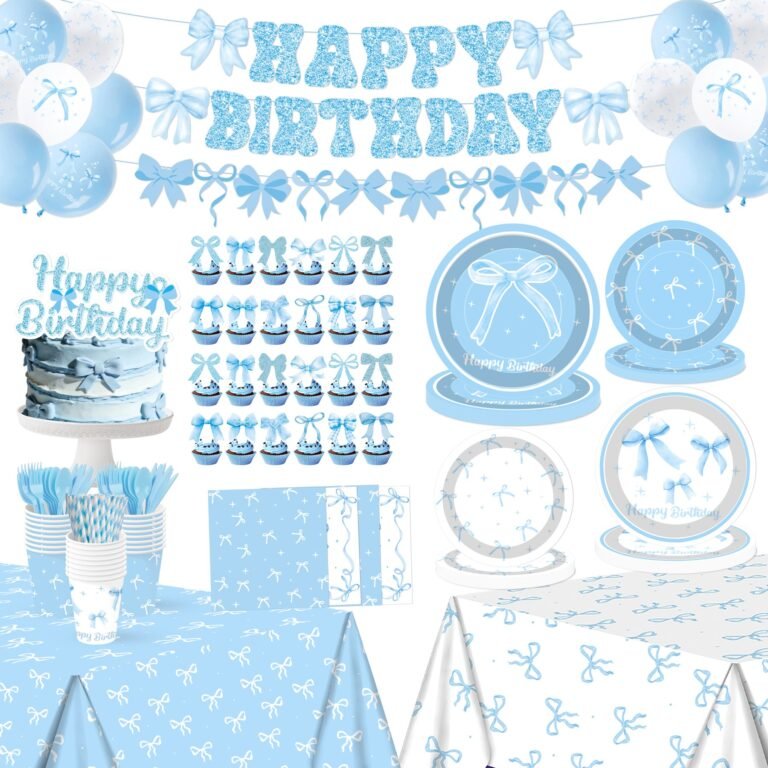
A concrete example is the Blue Geometric Modern Celebration Party Tableware Set, a coordinated adult celebration tableware set published as a single wholesale product line.
- A coordinated theme can increase shelf and online presentation.
- Matching pack sizes can simplify retail merchandising.
- Consolidated purchasing can reduce the number of supplier conversations.
- Similar colors and patterns can support birthday, wedding, graduation, Halloween, Christmas, or summer-party programmes.
- A complete set can make the product easier for the end customer to understand.
However, a complete set can also increase cost and shipping volume. I recommend asking for both a core set and optional add-ons. This structure lets a retailer serve price-sensitive customers without abandoning the higher-value collection.
How Should Buyers Match Wholesale Party Tableware Sets to Event Conditions?
The wrong event assumptions can make an apparently competitive quotation unsuitable. A short indoor birthday gathering has different requirements from a multi-hour outdoor festival, catering programme, or children’s party. I recommend recording the use conditions before comparing supplier prices.
Buyers should match wholesale party tableware sets to guest volume, serving time, food and drink conditions, location, weather exposure, handling intensity, and available cleanup resources. A simple event brief helps suppliers quote a more suitable configuration and reduces the risk of comparing products that are not functionally equivalent.
Build an event brief
- How many guests might use the set?
- Will the set serve snacks, dry food, desserts, hot food, or mixed meals?
- Will drinks include water, juice, ice, or other liquids?
- Will guests sit at tables, stand, or move between areas?
- Will the event take place indoors, outdoors, or in changing weather?
- How long will food remain on the table?
- Who will collect, wash, sort, or dispose of the products?
- Does the buyer need a budget, mid-range, or premium presentation?
- Does the retailer need a private-label package or a ready-to-sell assortment?
- What documentation must the supplier provide for the destination market?
Use conditions change the material decision
| Event profile | Potentially suitable direction | Main questions |
|---|---|---|
| Short indoor birthday party | Printed paper or coordinated mixed set | Are the design and pack size attractive? |
| Outdoor picnic | Paper or selected rigid options | How will moisture, wind, and handling affect use? |
| Children’s celebration | Lightweight themed set | Is the format practical for the age group and food served? |
| Wedding or formal reception | Premium paper, selected plastic, or reusable | Does the finish support the expected presentation? |
| Venue with washing facilities | Reusable | Can the venue control collection, washing, and storage? |
| Seasonal retail programme | Paper, plastic, or mixed assortment | Which designs and pack sizes fit the sales calendar? |
I avoid making a material decision from the word “party” alone. A party is a sales category, not a technical use condition. A retailer serving disposable tableware for picnics may need a different assortment from a gift store selling small birthday kits.
Consider event duration and handling
Longer events can create more opportunities for spills, movement, stacking, and repeated handling[3]. Outdoor conditions may introduce wind, uneven surfaces, and temperature changes. These factors may make a more rigid or better-supported format commercially attractive, but the supplier should provide the relevant construction details and samples.
I also recommend checking whether the set is intended for self-service or controlled service. A self-service buffet may require different serving pieces from a small dessert table. A caterer may value stacking efficiency, while a home-party customer may value printed presentation.
The selection should remain conditional. Buyers should not infer heat resistance, leak resistance, strength, or food-contact suitability from material names alone. They should request product specifications, review samples, and obtain market-specific documentation before approval.
Which Wholesale Party Tableware Sets Offer the Best Total Procurement Cost?
The lowest unit price does not always create the lowest landed or operating cost[4]. Packaging, carton size, shipping volume, damaged goods, accessories, sorting, and customer complaints can change the commercial result[5]. I recommend using a total-cost worksheet before selecting a supplier.
The best-value wholesale party tableware sets are the ones that meet the event requirement at an acceptable total cost. Buyers should compare product price, packaging, freight volume, minimum order conditions, inspection needs, likely handling risk, and operational convenience instead of ranking quotations by unit price alone.
A simple cost model
Estimated total procurement cost = product cost + packaging cost + freight allocation + inspection or testing cost + expected loss or replacement cost + handling cost
This is not an accounting formula for every business. It is a comparison tool. The final calculation should follow the buyer’s own freight terms, warehouse process, and market requirements.

| Cost item | Paper | Plastic | Reusable |
|---|---|---|---|
| Unit quotation | Must be compared by equivalent pack | Must account for construction and finish | Must account for durability and format |
| Carton and freight impact | Often influenced by volume and nesting | Can vary significantly by thickness | May be affected by weight and stackability |
| Retail packaging | Printed sleeves, bags, boxes, or labels | Similar options, with material claims checked | Often needs stronger protection |
| Handling after use | Usually disposal or sorting | Disposal or collection requirements | Washing, storage, return, and loss control |
| Replacement exposure | Design or moisture mismatch | Breakage, deformation, or claim issues | Breakage, loss, or incomplete returns |
| Commercial review | Best for lightweight seasonal programmes | Best when rigidity has clear value | Best when repeated use is realistic |
Compare equivalent configurations
A supplier may quote plates only, while another supplier includes cups, napkins, and cutlery. One may pack ten retail sets per carton, while another packs twenty. One may use a printed retail box, while another uses a plain inner bag. These quotations are not directly comparable.
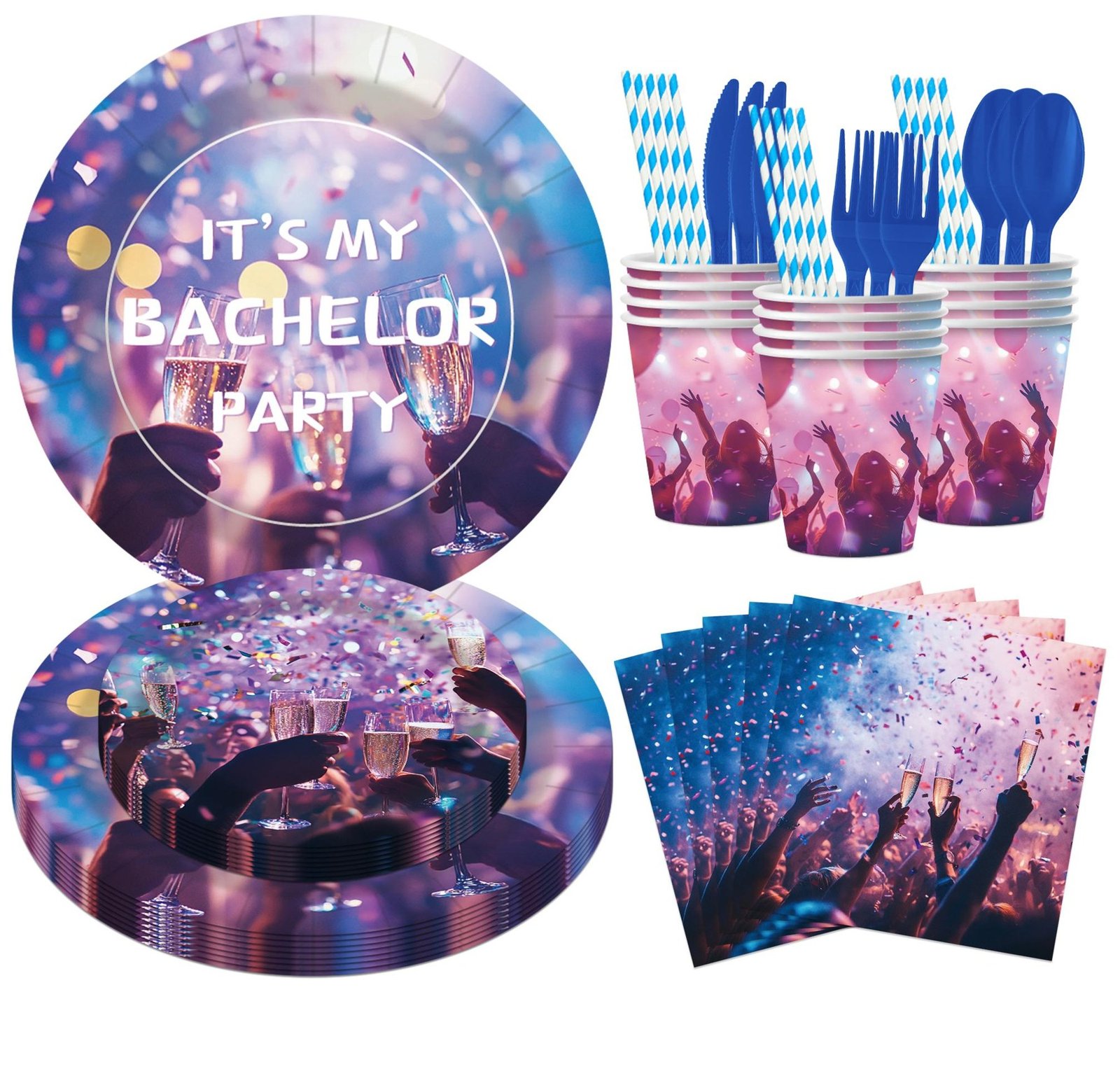
Seeing a complete configuration helps: the Bachelor Party Confetti Celebration Tableware Set is one example of a full celebration set presented to buyers as a single purchasable product.
- Item name and material description
- Dimensions and quantity per retail pack
- Number of retail packs per carton
- Carton dimensions and gross weight
- Packaging material and artwork requirements
- Available colors, patterns, and accessories
- Sample cost and approval process
- Production and shipping assumptions
- Required documents and test reports
- Defect handling and inspection expectations
- Price basis and validity period
Include commercial convenience
A slightly higher product price may be reasonable if the supplier can coordinate a complete themed collection, consolidate several items, or provide packaging customization. This is especially relevant to seasonal buyers who need products to arrive within a defined selling window.
At the same time, convenience should not hide weak specifications. A buyer should still confirm every item and pack quantity. Consolidation is useful only when the products, documents, and packaging are controlled clearly.
Review order quantity and inventory risk
Party products are often seasonal[6]. Excess stock after Halloween, Christmas, graduation, or a wedding season can reduce the value of an apparently low purchase price. Buyers should consider:
- Forecast confidence
- Reorder possibility
- Shelf life of the design
- Storage capacity
- Number of color or pattern variations
- Retail pack flexibility
- Ability to sell components separately
A smaller initial assortment with strong visual coordination may be safer than a large order containing too many untested designs. The right decision depends on the buyer’s sales history and distribution model.
What Quality and Compliance Checks Should Buyers Apply to Wholesale Party Tableware Sets?
A polished product image does not prove that a tableware set is suitable for food contact, retail sale, or a particular destination market[7]. Buyers need controlled documents, clear specifications, and samples. I recommend treating supplier claims as information to verify, not as final approval.
Quality and compliance checks should cover product specifications, intended use, food-contact documentation, labeling, packaging, claims, sample approval, and destination-market requirements. Buyers should request current documents for the exact product and material, then use qualified professionals or approved laboratories where application-specific evaluation is required.
Separate product quality from compliance
Product quality concerns whether the item matches the approved specification. Compliance concerns whether the product meets applicable legal, regulatory, and market requirements. They overlap, but they are not the same.
A sample may match the shape and color while the documentation is incomplete. A product may be attractive and functional but carry an environmental claim that is not permitted or cannot be substantiated in the destination market.
Request an evidence package
- Product specification sheet
- Material description
- Intended-use statement
- Food-contact documentation where applicable
- Packaging and labeling details
- Country-of-origin information
- Test reports or declarations relevant to the destination
- Recycling or disposal claim support
- Product photographs and approved artwork
- Carton and packing information
Verify the exact product identity
- Product code
- Material and coating
- Dimensions
- Color and printing
- Manufacturing location
- Intended food or beverage contact
- Date and validity of the document
- Issuing body and test scope
If a supplier changes the material, coating, colorant, adhesive, or factory, the buyer should ask whether the existing documentation remains applicable. A professional compliance adviser can help determine what additional review is needed.
Inspect samples and production
A sample review should cover more than appearance. Buyers can check whether the delivered sample matches the quotation, artwork, dimensions, pack count, and packaging. They can also assess fit within the intended set and whether accessories look coordinated.
- Pre-production artwork and specification approval.
- A confirmed sample or reference standard.
- In-process communication for major deviations.
- Pre-shipment inspection by a qualified party where appropriate.
- Carton marking and packing-list review.
- Photo records of finished packing.
- A documented process for defects or shortages.
Be careful with sustainability language
- What does the claim mean for this exact product?
- Does the claim depend on an industrial facility?
- Is that disposal route available in the target market?
- Does the packaging make the claim clear?
- Is the claim supported by current documentation?
- Does local law restrict environmental marketing language?
A material slogan is not a complete environmental assessment[8]. Disposal infrastructure, transport, reuse frequency, washing energy, and product lifespan can all affect the practical result. I recommend using precise, supportable wording rather than broad promotional claims.
How Can Buyers Compare Set Configuration, Packaging and Design?
A party tableware collection competes visually as well as technically. Retail buyers need a set that is easy to merchandise, easy to understand, and appropriate for a seasonal purchase window. A product may have a suitable material but still underperform because the pack looks incomplete or the components do not coordinate.
Buyers should compare wholesale party tableware sets by theme coherence, component mix, retail pack size, packaging protection, shelf presentation, and customization potential. A modular collection with a clear core set and optional accessories often supports more price points than one fixed bundle.
Start with the customer’s buying mission
A customer buying a birthday kit may want a convenient all-in-one pack. A party store may prefer separate plates, cups, napkins, and decorations to build its own bundles. A promotional products buyer may require branding and a different pack format. These are different commercial missions.
| Buyer type | Likely priority | Useful set structure |
|---|---|---|
| Party store | Variety and easy merchandising | Core items plus separate accessories |
| Gift retailer | Presentation and theme coherence | Ready-to-sell premium bundle |
| E-commerce brand | Images, pack clarity, and shipping efficiency | Compact set with strong packaging |
| Distributor | Repeatability and carton economics | Standardized assortment |
| Promotional buyer | Branding and customization | Approved artwork and controlled pack |
| Home décor retailer | Color story and seasonal display | Tableware paired with décor accents |
Design a modular collection
- Core plate and cup set
- Napkin and cutlery add-on
- Dessert or cake-serving option
- Table cover or centerpiece
- Matching balloons or small décor
- Gift-ready or private-label packaging
Review printed design carefully
- Artwork dimensions and bleed
- Color reference method
- Print position
- Front and back treatment
- Pattern repeat
- Brand or licensing permissions
- Small-text readability
- Final approval process
I recommend keeping a signed or clearly approved reference for the artwork. Seasonal goods can be difficult to relabel after production, so artwork errors can have an outsized commercial impact.
Packaging affects both sales and shipping
Retail packaging should protect the product and communicate the pack contents. It should also fit the buyer’s shelf, warehouse, and e-commerce requirements. Buyers should check:
- Inner pack dimensions
- Carton dimensions
- Product visibility
- Barcode and label placement
- Language requirements
- Number of units per carton
- Protection against crushing or moisture
- Ease of opening and stock counting
A lighter item is not automatically cheaper to ship if it occupies more carton volume. Packaging should therefore be reviewed together with product design and freight planning.
How Should Buyers Select a Wholesale Supplier for Party Tableware?
A suitable product can still become a difficult purchase if the supplier cannot control specifications, communication, packaging, and delivery coordination. Supplier selection should therefore examine the full order process, not only the sample and quotation.
Buyers should select a wholesale party tableware supplier by reviewing product consistency, quotation clarity, customization capability, documentation, packaging control, communication, consolidation ability, and inspection arrangements. A supplier should explain what it can verify and identify what requires independent professional review.
Use a structured supplier scorecard
| Evaluation area | Questions to ask |
|---|---|
| Product range | Can the supplier build a coordinated collection? |
| Customization | Can it support artwork, color, labels, or packaging changes? |
| Quotation | Are pack quantities, carton data, and price assumptions clear? |
| Documentation | Can it provide relevant documents for the exact product? |
| Quality control | Is there a defined approval and inspection process? |
| Consolidation | Can different approved items be coordinated for shipment? |
| Communication | Does the supplier answer specification questions directly? |
| Seasonal planning | Can the buyer plan sampling and ordering early enough? |
| Commercial fit | Does the configuration match the target channel and quantity? |
Evaluate communication quality
- Material and intended use
- Product dimensions
- Pack counts
- Artwork files
- Packaging structure
- Sample changes
- Document scope
- Carton information
- Defect resolution
Consider sourcing and consolidation needs
For international buyers, a partner that can coordinate related seasonal products may reduce administrative work. Consolidation can be useful when the buyer is building a collection across tableware, decorations, gifts, or promotional items. However, each product still needs its own specification and approval.
- Supplier or factory reference
- Product code
- Approved material
- Artwork version
- Pack quantity
- Carton information
- Required documents
- Inspection status
- Shipping status
Plan seasonal purchasing early
Seasonal inventory has a fixed selling window. Buyers should allow time for design selection, sampling, revisions, packaging approval, production, inspection, freight, customs, and local distribution. The exact schedule depends on the product and supplier, so I do not recommend using an assumed lead time without confirmation.
Early planning also improves assortment quality. Buyers can compare paper, plastic, and reusable options before the programme becomes urgent. They can test a design, review customer response, and reserve capacity for the products that perform best.
Frequently Asked Questions
Are paper wholesale party tableware sets always the most sustainable choice?
No. Environmental performance depends on material sourcing, coatings, transport, disposal infrastructure, and the actual use model. Paper may be suitable for some short events, while reusable products may be suitable where repeated washing and controlled reuse are realistic. Buyers should verify claims for the destination market.
Are plastic wholesale party tableware sets better for outdoor events?
Plastic may be considered for some outdoor uses because buyers often seek a more rigid format, but material alone does not prove performance. Weather, food type, event duration, product construction, and handling conditions matter. Buyers should review samples and supplier specifications for the intended application.
When do reusable party tableware sets make commercial sense?
Reusable sets may make sense for venues, caterers, rental businesses, schools, or event operators that can collect, wash, store, and reuse the products repeatedly. Buyers should calculate washing, labor, storage, loss, and replacement costs rather than assuming that reuse is automatically cheaper.
How should I compare quotations from different suppliers?
Ask each supplier to quote the same product scope, pack quantity, packaging format, carton information, customization, and documentation. Then compare the complete procurement cost, including freight allocation and inspection requirements. A quotation template makes differences easier to identify.
What documents should I request before importing party tableware?
The exact requirements depend on the destination market and intended use. Buyers may need product specifications, material information, food-contact documents where applicable, packaging and labeling details, and support for environmental claims. A qualified compliance professional should confirm the final documentation package.
Conclusion
Wholesale party tableware sets should be selected through a practical comparison of event conditions, material characteristics, total procurement cost, packaging, documentation, and supplier capability. Paper, plastic, and reusable options can each serve different commercial situations. I recommend starting with a clear event brief, requesting equivalent quotations, reviewing samples, and verifying market-specific requirements before approving production. HKDayo can help buyers explore coordinated seasonal collections, customization, packaging, consolidation, and export support. Request a quotation for a product programme matched to your target market and order requirements.

Sources
- Identifying Sustainable Food Service and Food Service Ware", Comparative studies of food-service ware indicate that material selection affects moisture performance, rigidity, handling, and the feasibility of repeated use; these findings provide contextual support for matching tableware materials to event conditions
- Life cycle assessment of reusable food and beverage …", Logistics and lifecycle analyses commonly assess tableware by product mass, packaging volume, and transport burden, supporting the relevance of weight and pack geometry to freight comparisons
- Plate Food Waste in Food Services: A Systematic Review and …", Food-service operations research associates longer and more active service periods with increased handling events and exposure to spills or displacement, providing contextual support for considering event duration in tableware selection
- CHIM Intervention Guidance: Climate-Smart Health Procurement", Whole-life-costing guidance treats purchase price as only one component of procurement evaluation and instructs buyers to consider relevant delivery, operating, maintenance, and end-of-life costs
- Mitigating packaging damage in the supply chain", Packaging research shows that pack design influences transport utilization and product protection, while handling damage and packaging waste can create additional supply-chain and customer-service costs
- Improving Demand Prediction and Reducing Out-of-Stock", Retail-inventory research identifies seasonal demand concentration as a source of forecast error and excess-stock risk, which is relevant to party products tied to fixed calendar events
- Food Packaging & Other Substances that Come in Contact …", Food-contact regulatory guidance distinguishes product appearance from compliance and requires assessment of materials, intended conditions of use, and supporting documentation where applicable
- How to reduce the impacts of single-use plastic products", Lifecycle-assessment standards define environmental evaluation as consideration of impacts across relevant stages of a product system rather than inference from a single material label
Hi, I'm Danson. I work closely with our manufacturing partners to develop and deliver seasonal decorations, party supplies, and celebration products for international wholesale buyers. Here, I share practical product knowledge, customization insights, and manufacturing experience to help buyers build successful seasonal collections.
Have a wholesale project in mind? Let's talk!
Discuss Your Wholesale Project Request a Wholesale QuotePlanning a Wholesale Order from China?
Share your product requirements, quantities and destination. Let's discuss your wholesale requirements.